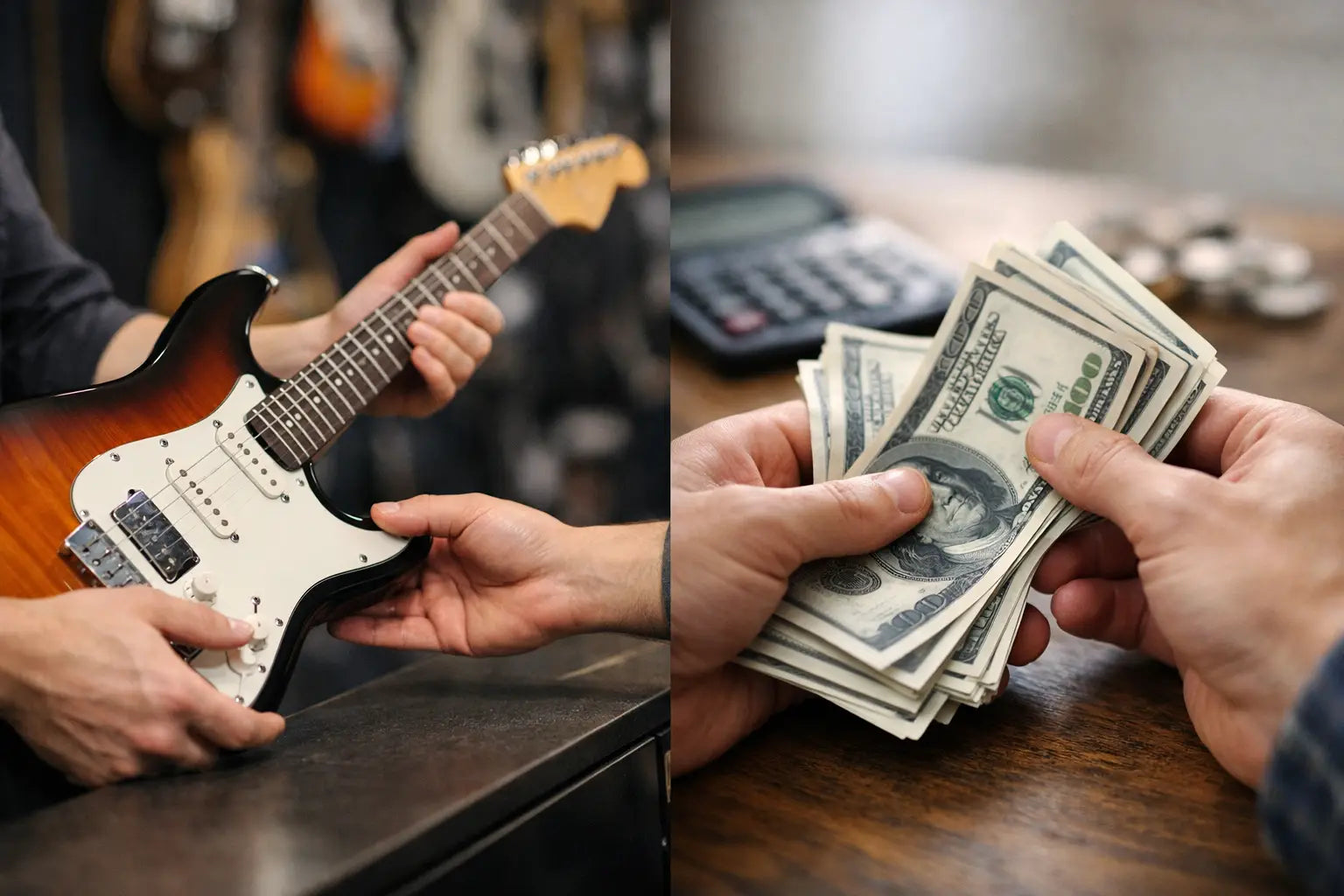
That unused guitar in its case is not just taking up room. It could be the difference between watching a cracking used amp disappear and taking it home, or between making do with a tired instrument and moving into the guitar you actually want to play. The guitar trade-in versus cash decision comes down to one question: do you want the strongest immediate offer, or the strongest value towards your next piece of gear?
There is no one right answer for every player. A clean, desirable guitar with a proper case, useful upgrades and a good service history may be worth more than its owner expects. Equally, a beginner instrument with a few knocks may be far more useful as part of an easy part-exchange than as a private sale that drags on for months.
Guitar Trade-In Versus Cash: The Real Difference
Selling a guitar for cash means you are exchanging it for money and walking away with a clear amount to spend, save or put towards something else later. A trade-in, often called a part-exchange, puts the value of your existing instrument directly against another item from a retailer's stock.
Cash is flexible. You are not tied to choosing your next guitar, pedal or amplifier straight away, and you can compare options wherever you like. It is a sensible route if you are reducing your collection, need funds for a non-musical expense, or simply do not know what you want next.
A trade-in is about momentum. If you have spotted the right guitar, you can use the gear you no longer play to reduce the balance in one straightforward transaction. For many musicians, that is the more satisfying route. One instrument leaves the rack; another that suits the band, the recording project or your current style takes its place.
The key point is that trade-in value is usually higher than a cash-buying offer. A retailer can allow more where the value is being spent back in store, while a cash offer must account for the full cost and risk of buying, checking, preparing, marketing and holding the instrument before it sells.
Why a Cash Offer Can Be Lower Than You Expect
It is easy to look at asking prices online and assume that is what a guitar is worth. Asking prices are not sold prices, though. Some instruments sit listed for weeks or months because the seller has priced them optimistically, used poor photographs, or has not recognised that a particular finish, year or modification narrows the audience.
When a specialist shop buys a guitar for cash, it takes on the work behind the ticket price. That can include inspection, cleaning, a restring and setup, electrical repairs, replacement parts, photography, warranty obligations, secure storage, payment costs and the possibility that the guitar takes time to find its next owner. The offer needs to reflect all of that.
This does not mean a cash offer is unfair. It means you are being paid for certainty and convenience. There is no arranging viewings with strangers, haggling in a car park, worrying about chargebacks, packing a delicate headstock for post, or answering messages that begin with "Still available?" and then go nowhere.
For working players and busy households, that certainty has genuine value. A fair cash offer from a knowledgeable buyer can be the cleanest way to move on gear that has stopped earning its place.
Condition changes the calculation
Condition is not simply about whether a guitar has a few marks. Honest player wear on a sought-after older instrument can be perfectly acceptable, even desirable. Damage, poorly executed repairs, fret wear, unstable electrics, cracks, lifting bridges and missing original parts are different matters.
Be upfront about any issues before asking for a valuation. Clear photographs of the front, back, headstock, neck, frets, hardware, serial number and any damage help a shop assess the instrument properly. Include the make, model, year if known, country of manufacture, finish, modifications, and whether the original case or gig bag is present.
That information protects everyone from disappointment when the guitar is inspected. A great trade starts with an accurate description, not a hopeful one.
When a Trade-In Usually Makes More Sense
A trade-in is strongest when you already have a target in mind. Perhaps your first electric has done its job and you are ready for a better-playing Fender, PRS, Gretsch or Ibanez. Perhaps you want to turn three unused pedals into one quality delay, or swap an acoustic that no longer suits your hands for a slimmer-necked alternative.
It can also work brilliantly when you are moving within a similar price bracket. Trading a reliable mid-priced guitar against a more desirable used model lets you concentrate your budget where it matters: better frets, more stable tuning, more responsive pickups, a proper hard case, or an amplifier with enough headroom for rehearsals.
A good retailer will look at the whole deal, not just the guitar you are bringing in. That matters if you are comparing used and new options, weighing up condition, or trying several instruments in person. The best guitar on paper is not always the one that feels right after ten minutes in your hands.
At Chordplay Guitars, trade-ins are particularly useful for players who want to explore a changing selection of used, rare, Japanese-made and collector-grade instruments without the hassle of selling privately first. If the next guitar is there waiting, a part-exchange can keep the excitement moving while making sure the outgoing gear is assessed by people who understand it.
The part-exchange questions worth asking
Before agreeing a trade, establish the value of the guitar you are taking, the allowance for the one you are leaving, and the cash difference to pay. Ask whether the incoming instrument has been checked and set up, what accessories are included, and whether any work has been carried out.
For vintage, unusual or higher-value guitars, ask how originality affects the valuation. A replaced jack socket might be insignificant; changed pickups, a refinished body or a non-original neck can have a much bigger impact on collector appeal. The same applies to imported guitars where the exact model, year and factory can make a surprising difference.
You should also be honest about what you need from the deal. If your priority is the highest possible amount and you are happy to wait, private sale may still suit you better. If your priority is getting the right instrument quickly, with proper support, trade-in value can be the smarter number.
How to Get a Better Valuation Either Way
A little preparation can make a real difference, especially with a pre-owned instrument that has been played regularly. Do not rush into expensive work purely to sell it, as you may not recover every pound spent. But do make it easy for the buyer to see what they are getting.
Give the guitar a gentle clean, remove dust from the case, and bring every relevant extra you have: tremolo arms, tags, certificates, manuals, spare parts, pickup covers, original pickups and the correct hard case. These details can matter considerably on premium and collectible instruments.
If the guitar has a fault, say so. A crackly pot or high action is not always a deal-breaker, particularly where the workshop can put it right, but hidden issues can change an offer once the instrument is examined. Honesty saves time and makes for a better conversation.
It also helps to be realistic about modifications. A professionally fitted upgrade can improve a player's experience, but it will not automatically add its full cost to resale value. Taste is personal. The next owner may love your locking tuners and boutique pickups, or they may specifically be searching for an original example.
Private Sale Is a Third Option, Not Always the Best One
Private sale may produce the highest headline figure, particularly for a popular, clean and fairly easy-to-price guitar. It is worth considering when you can take excellent photographs, write an accurate listing, respond to enquiries promptly and wait for the right buyer.
But price is not the whole calculation. You need to allow for selling fees, insured postage or collection arrangements, safe payment, the time spent dealing with messages, and the possibility of a buyer changing their mind. If you need funds quickly or want to avoid the uncertainty, cash sale or trade-in can be better value in practical terms.
Rare and vintage instruments deserve particular care. Their value may depend on details that a general marketplace buyer misses: neck date, pot codes, original finish, factory case, Japanese factory history, unusual specification or provenance. A specialist assessment can be more useful than copying the highest listing you can find online.
Choose the Deal That Gets You Playing More
The best choice is rarely the one with the most impressive number in isolation. Cash makes sense when flexibility is your priority. A trade-in earns its place when it gets you into an instrument you will use, enjoy and keep reaching for.
Before you sell, take the guitar out of its case one last time. If it still inspires you, perhaps it needs a setup rather than a goodbye. If it has genuinely had its day, let it help fund the next chapter - ideally one with fresh strings, a great sound and no regrets.
Share:
How to Buy Used Guitars You’ll Keep for Years
Best Guitars for Young Beginners That Fit