A great second-hand guitar can be the most exciting instrument you buy. It may have already settled in, developed real character and offer far more specification for the money than a new equivalent. A proper used guitar inspection, though, is what separates a brilliant find from a guitar that spends its first month on a workbench.
Cosmetic wear is often part of the appeal, particularly on older, Japanese-made, vintage or well-played instruments. Structural trouble is different. The aim is not to find a flawless guitar - few used guitars are flawless - but to understand its true condition, playability and likely future cost before you commit.
Start Your Used Guitar Inspection Before You Play
Begin with the whole instrument in good light. Look at it from the front, back, sides and along the neck. Small dings, buckle rash and light finish checking are usually honest signs of use. They can make a guitar feel lived-in without affecting the way it plays. Deep cracks, loose joints, lifting lacquer around a repair or signs of moisture damage deserve a closer look.
On an electric guitar, pay particular attention to the neck pocket, headstock and the area where the headstock meets the neck. Headstock repairs are not automatically a deal-breaker. A professionally repaired break can be stable and perfectly usable, but it should be clearly described and reflected in the price. A rough repair, fresh-looking cracks, or damage that moves when gentle pressure is applied is another matter.
For acoustics and classical guitars, inspect the top, back and sides closely. A repaired crack may be fine if the work is tidy and secure, but an open crack can worsen with changes in temperature and humidity. Check the bridge is sitting flat against the top, with no obvious lifting at its rear edge. Look inside the soundhole where possible for loose braces, untidy repairs or a strong musty smell that might suggest long-term damp storage.
Do not confuse a naturally aged finish with a damaged instrument. Nitrocellulose checking, faded hardware and a little discolouration can be exactly what collectors and players want. What matters is whether the guitar is solid, stable and ready to be enjoyed.
Check the Neck, Frets and Setup
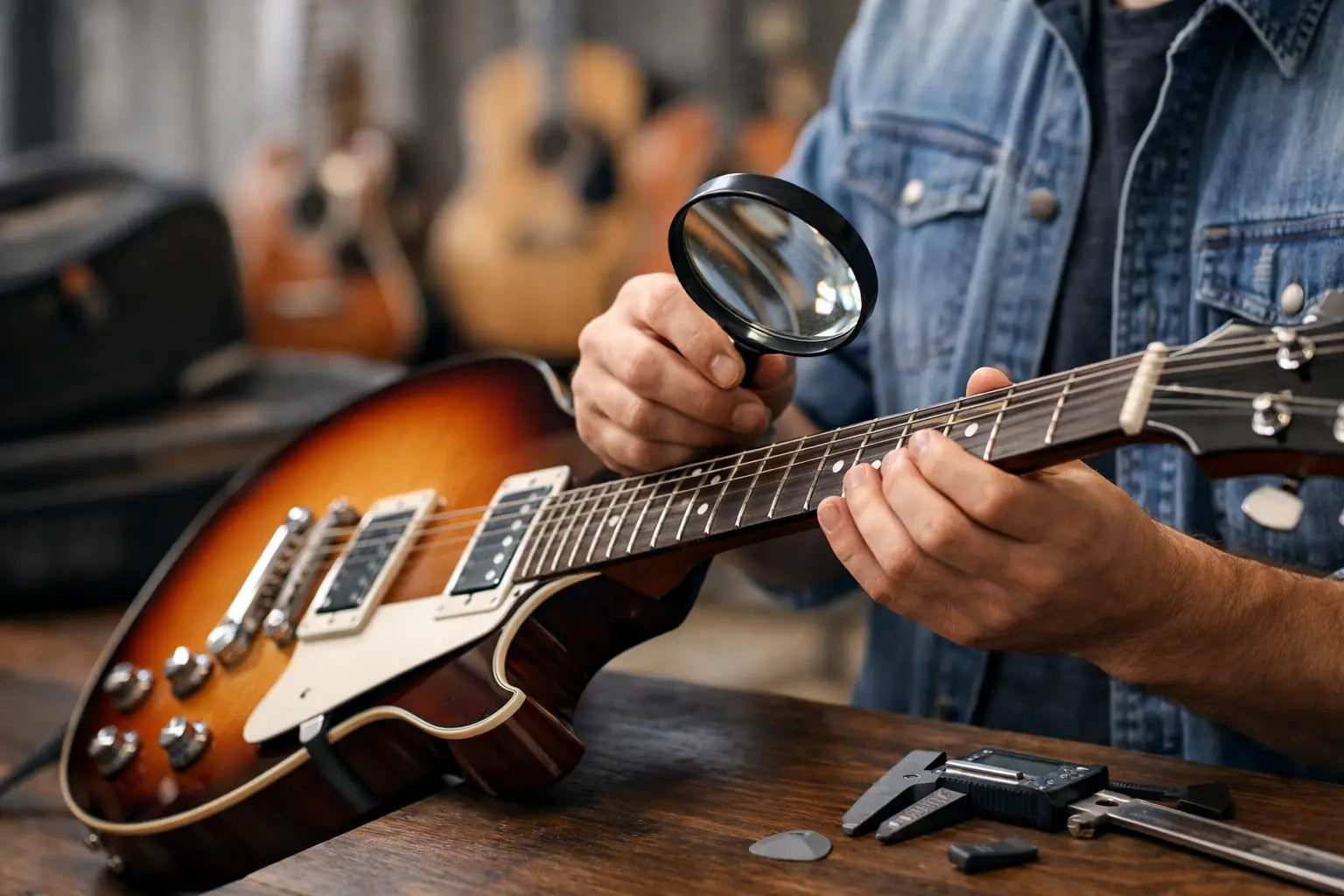
The neck is the heart of any used guitar inspection. Sight down its length from the headstock towards the body. You are looking for a neck that is broadly straight, with a gentle and appropriate amount of relief rather than a dramatic bow, twist or hump. A little relief is normal. A twisted neck is not a simple setup issue and can be expensive, or impossible, to put right properly.
Next, assess the fretboard and frets. Light fret wear is completely normal, especially beneath the first few strings around the open-chord area. Deep grooves, flattened fret tops and loose fret ends can lead to buzzing, poor intonation and uncomfortable playing. None of these necessarily rules out the guitar. A fret dress or refret is workshop work that can transform a favourite instrument, but the likely cost should be part of the buying decision.
Play every fret on every string, ideally both unplugged and through an amp if it is an electric. Listen for buzzing, choking during bends and notes that die away unexpectedly. A few minor setup-related buzzes may be easily corrected. Persistent choking high up the neck, especially on a guitar with plenty of saddle adjustment left, may point to uneven frets or a more involved issue.
String height matters, but it is not the only measure of a good setup. Some players like a low, fast action; others prefer a little more room to dig in. Check that the action feels sensible for the guitar type and that there is adjustment available at the bridge and, where fitted, the truss rod. On an acoustic, very high action combined with a low saddle can suggest a neck reset may eventually be needed. That is a significant job, particularly on an older instrument.
Test the Hardware and Electronics Properly
A guitar can look mint and still have a crackly selector switch or a machine head that slips halfway through a song. Turn each tuner slowly. It should move smoothly, hold tuning and not feel loose, seized or wildly uneven. Check the nut for cracks and make sure strings are not binding in their slots when tuning up or bending.
On electrics, plug into a clean amp setting and work through every control. Turn each volume and tone pot gradually, flick every pickup selector position and gently move the jack plug. Listen for crackles, sudden volume drops, hum that appears only in one setting, or a loose socket. Scratchy pots can often be cleaned, and a worn output jack is a straightforward repair. Intermittent faults that are difficult to reproduce can take more investigation.
Test the tremolo or vibrato system if the guitar has one. A floating bridge does not need to return with laboratory precision, but it should come back close to pitch when used sensibly. Check for missing parts, worn knife edges, seized screws and modifications that have not been completed properly. On vintage-style guitars, originality may matter to value. On a player-grade guitar, a thoughtful upgrade can be a genuine benefit.
Make sure the instrument intonates reasonably well too. Play an open string, then compare the 12th-fret harmonic and fretted note using a tuner. Small differences are normal, especially with heavier strings or vintage hardware. Major discrepancies may be setup-related, but can also reveal a poorly positioned bridge, worn frets or an unsuitable saddle.
Match the Guitar to the Job You Actually Need It For
A used guitar does not have to be universally perfect. It has to be right for you. A heavy Les Paul-style guitar may sound glorious and sustain for days, but it will not suit everyone for a three-hour set. A slim-necked superstrat may feel effortless for fast playing but be less appealing to someone after a chunky, traditional rhythm guitar.
Spend a few minutes playing the parts you genuinely play at home, rehearsal or on stage. Try open chords, barre chords, bends and higher-register lines. Sit down with it, then stand up if possible. Notice where the body sits against you, whether the neck feels comfortable and whether the balance changes with a strap. Neck dive is not always a reason to walk away, but it is much better discovered before the guitar comes home.
With acoustic guitars, play with the picking strength you normally use. A guitar that sounds sweet under a light touch may compress when strummed hard. Likewise, a loud dreadnought is not automatically the right choice if you mainly want a responsive instrument for fingerstyle playing. Condition matters, but so does the simple question of whether the guitar makes you want to keep playing.
Ask About History, Repairs and What Is Included
A good used guitar should come with a clear story where possible. Ask about its age, country of manufacture, previous repairs, replacement parts and recent setup work. Original paperwork can add collector interest, but it is not essential for a guitar to be a superb player. A replacement bridge, refret or changed pickups can even improve usability, depending on the instrument and quality of the work.
Check the serial number and model details against the instrument itself, particularly when buying a desirable vintage or high-value model. Look for details that do not quite line up: incorrect logos, suspiciously new hardware on an allegedly untouched guitar, or mismatched dates and specifications. There are legitimate reasons for many changes, but transparency is key.
Also establish exactly what comes with the guitar. An original hard case can protect a valuable instrument and add to its appeal. A gig bag may be perfectly practical for an affordable working guitar, but make sure it offers enough protection for how you travel. If a case is included, inspect its latches, handle and interior too.
Why a Workshop Check Gives You More Confidence
Private sales can offer bargains, but they also place the inspection entirely on your shoulders. You may have limited time, no suitable amp, poor lighting and no easy route back if an issue appears later. Buying from a knowledgeable guitar retailer gives you a more considered starting point: the condition can be assessed, faults described honestly and setup needs identified before the instrument is presented for sale.
At Chordplay Guitars, that matters because a guitar is more than a list of specifications. A workshop can identify whether a tired instrument simply needs fresh strings and a setup, or whether it requires fretwork, electronics repair or structural attention. For buyers, that knowledge turns the used market from a gamble into a chance to find something genuinely special.
If you are unsure about a mark, a repair or a playing issue, ask the question rather than hoping it will disappear. The right used guitar should leave you excited to plug in, tune up and make some noise - not wondering which fault will show itself first.
Share:
Best Guitars for Young Beginners That Fit
How to Sell Guitars Online Safely and Fairly