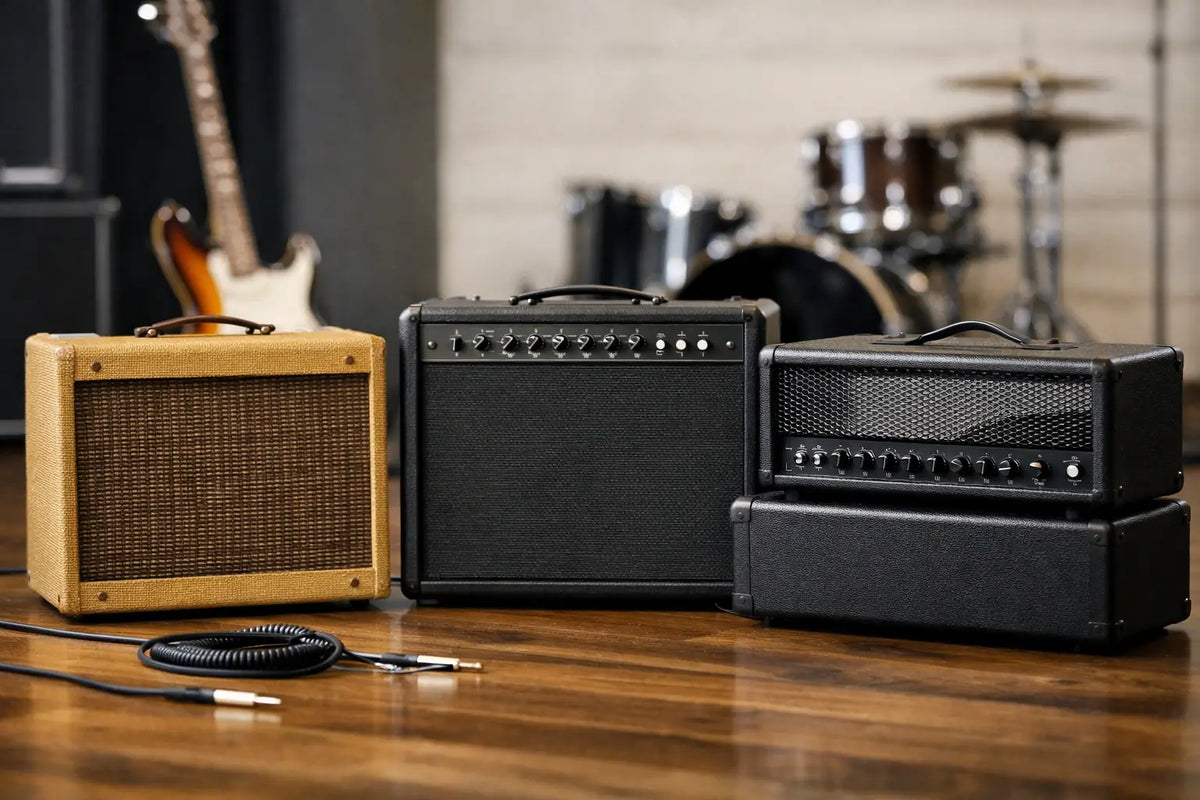
A great guitar can feel strangely flat through the wrong amp. Put the same instrument through a small valve combo, a clean solid-state amp and a modern modeller, though, and you may feel as though you are playing three different guitars. That is why a proper guitar amplifier comparison starts with the sound and situations you actually play in, not simply the biggest wattage figure or the most famous badge.
Guitar Amplifier Comparison: Start With Your Playing
Before comparing circuits, speakers and controls, consider where the amp will live. A player practising in a terrace house needs a very different solution from a guitarist rehearsing with a loud drummer twice a week. Likewise, a recording player may value a convincing direct output and quiet operation more than stage volume, while a regular gigging musician may want an amp that is quick to set up, dependable and easy to carry through a venue door.
Your preferred style matters just as much. Big, clean headroom suits players using pedals, funk rhythm parts and shimmering chorus sounds. Early breakup and touch-sensitive overdrive are often more appealing for blues, classic rock and roots music. High-gain players may need a tighter low end, a noise gate and a speaker that keeps palm-muted riffs defined rather than woolly.
There is no universal winner. The right amplifier is the one that makes you want to keep playing and covers the work you need it to do.
Valve, Solid-State or Modelling?
Valve amps: feel, response and natural breakup
Valve amplifiers remain favourites because of how they react beneath the fingers. Pick softly and they can sound open and clean; dig in and they begin to compress, growl and bloom. That dynamic response is a large part of the appeal, particularly for guitarists who set the amp close to breakup and control the gain from the guitar's volume knob.
A lower-powered valve combo can be ideal for classic tones, rehearsals and smaller gigs, but wattage can be deceptive. A 15-watt valve amp is often far louder than first-time buyers expect. Turning it up to the sweet spot at home may be impractical without an attenuator, a good master volume or very patient neighbours.
Valves also require occasional maintenance. They can last for years, but replacement valves and professional servicing are part of ownership. That is not a reason to avoid them, merely a sensible cost to factor in. For many players, the response is worth it.
Solid-state amps: reliable, clean and excellent value
Solid-state amplifiers use transistor circuitry rather than valves. They are generally lighter, more affordable and extremely dependable, which makes them a strong choice for beginners, schools, rehearsal rooms and players who need a straightforward clean platform for pedals.
Older solid-state designs sometimes earned an unfair reputation for sounding stiff when overdriven. Modern examples can deliver excellent cleans, punchy gain and very usable onboard effects. They tend to retain a cleaner sound as the volume rises, so they are especially useful when you want headroom rather than amp distortion.
If your priority is a practical amplifier that can be switched on, turned up and relied upon night after night, solid-state deserves serious attention. Spend time with the clean channel as well as the drive channel. A clean tone you enjoy will reward every pedal you put in front of it.
Modelling amps: a full rig in one box
Modelling amplifiers recreate the character of numerous amp types and, often, a wide range of effects and speaker cabinet sounds. For home practice and recording, they offer remarkable flexibility: British crunch, American clean tones, high-gain stacks, delay, reverb and headphone practice can all be available from one compact combo.
They are particularly useful for players still finding their sound, cover-band musicians and anyone short on space. Presets can change a whole rig at the press of a footswitch, saving a great deal of tap dancing between songs.
The trade-off is choice. A modeller with hundreds of sounds can encourage endless tweaking when a good basic tone would do. The best approach is to find two or three sounds you genuinely love, set levels carefully, and treat the rest as useful options rather than homework.
Power and Volume Are Not the Same Thing
Watts indicate potential power, not a fixed measure of loudness. Speaker sensitivity, cabinet design and how an amp distorts all affect the real-world result. As a broad guide, 5 to 15 watts is often enough for home use and can handle some rehearsals or smaller stages. Around 30 to 50 watts gives useful clean headroom for band work. A 100-watt head is designed for serious volume and usually makes most sense with a full-size cabinet and a stage to fill.
For home players, a good master volume matters more than headline wattage. It allows you to bring in preamp gain and character without making the room unbearable. Built-in power scaling, attenuators and headphone outputs can be equally valuable. If you mostly practise after work, these are not minor extras - they may decide whether the amp gets used every day.
Speaker Size Changes the Character
The speaker is a huge part of the amplifier's voice. A 12-inch speaker usually delivers a fuller low end, more projection and the familiar authority associated with many classic combos. It is a sensible all-round choice for players rehearsing and gigging, although it adds weight.
A 10-inch speaker can sound focused, lively and immediate, with a slightly tighter bass response. It is a brilliant fit for smaller combos, bluesy drive and practice amps that need to stay manageable. Eight-inch speakers are common in compact beginner amps and can be perfectly enjoyable at sensible volumes, but they rarely move air in the same way as a larger speaker.
Do not overlook cabinet construction either. An open-back combo spreads sound around a room and often feels airy, while a closed-back cabinet produces a firmer, more directional low end. Neither is automatically better. It depends on whether you want spacious cleans or a tighter, more forceful sound.
Features Worth Paying For
Not every useful feature needs a menu or a screen. Reverb remains one of the most worthwhile additions, adding depth to a dry sound without complicating your setup. An effects loop is useful if you run delay, reverb or modulation pedals after the amp's own overdrive. A footswitchable channel can make a two-channel amp far more practical at a gig.
For quiet practice and recording, look for headphones, USB audio or a quality line output with speaker simulation. These features let you capture usable sounds without placing a microphone in front of a loud speaker. Players using a pedalboard should also check the amp's clean headroom and effects loop before deciding. A brilliant high-gain amp is not always the best foundation for a board full of drive pedals.
Weight deserves an honest mention. A handsome 2x12 valve combo may sound enormous, but it is less charming after a late set and a trip down narrow stairs. If you travel often, a lightweight combo, amp head with a compact cabinet, or modeller may be the better long-term choice.
Matching the Amp to Your Guitar
A bright single-coil guitar through a bright amp can be wonderfully cutting, but it may also become sharp in a hard rehearsal room. Humbuckers can push an amp into overdrive sooner and add welcome thickness, yet they may need more treble clarity for complex chords. This is why it is worth trying your own guitar where possible, rather than judging an amp entirely from a video demo.
Consider your pedals as part of the system. Fuzzes often behave differently into a clean amp than into an already driven valve front end. Digital delays and reverbs usually appreciate an effects loop, while a simple boost may sound excellent straight into the input. Small changes to gain, EQ and volume can alter the result more than another expensive pedal.
At Chordplay Guitars, a proper in-person try-out lets you compare the feel as well as the specification. Bring the guitar and pedals you know, play at a realistic level, and ask for an honest second opinion. That is far more useful than chasing somebody else's settings.
New or Used: Buy With Your Eyes Open
A quality used amplifier can offer outstanding value, especially if you are looking at discontinued British-built designs, classic valve combos or unusual Japanese-made pieces. Condition matters, but age alone is not a problem. A well-maintained older amp can be a superb working tool.
Check that every control works quietly, listen for excessive hum, and test both channels and the effects loop if fitted. With valve amps, ask about service history and whether the valves have been replaced recently. Cosmetic wear is often harmless; damaged speakers, intermittent sockets and poorly executed modifications deserve closer attention. Buying from a specialist retailer offers far more reassurance than taking a gamble on an untested private sale.
The best amp purchase rarely comes from choosing the loudest, rarest or most complicated option. Choose the one whose clean sound, gain response and practical features suit the music waiting in your hands. If it makes a simple chord sound exciting, you are already very close.
Share:
Gibson versus Epiphone - Which Guitar Suits You?
10 Best Guitars for Small Hands, Sized Right