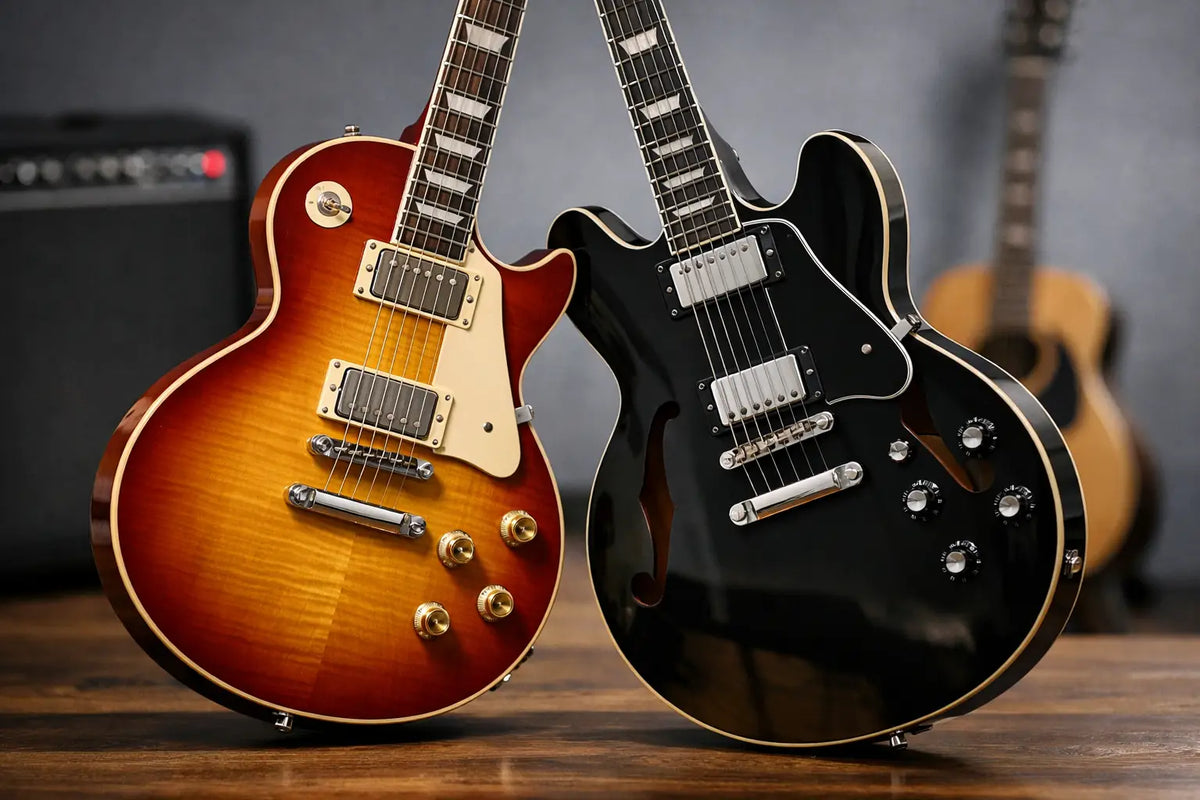
That first proper Les Paul or SG is rarely just a purchase. It is the guitar you have pictured in the mirror, heard on countless records and perhaps promised yourself after years on a starter instrument. Gibson versus Epiphone is therefore not a simple question of expensive versus affordable. It is about where the money goes, how the guitar feels in your hands and what you need it to do when the amp is switched on.
Both brands share historic shapes, familiar headstocks and a family connection. Yet they serve different buyers brilliantly. One player may rightly hold out for a USA-built Gibson with its case, heritage and long-term value. Another may find that a well-chosen Epiphone, given a proper setup, is the more sensible and more playable guitar for the money.
Gibson versus Epiphone: the real difference
Gibson is the original name behind the Les Paul, SG, ES-335 and many other landmark designs. Most core Gibson electric guitars are built in the United States, with a price that reflects American labour, specialist processes, premium hardware, included hard cases and a heritage that matters to players and collectors alike.
Epiphone is Gibson's sister brand, not a copycat trading on a similar look. It produces official versions of those designs at more accessible prices, with much of the range made outside the USA. Modern Epiphone models can be remarkably close in specification to their Gibson counterparts: think mahogany bodies and necks, set neck construction, carved maple caps on many Les Pauls, and proper humbuckers designed around classic Gibson sounds.
The difference is not one single component. It is the cumulative cost of materials selection, factory location, finishing time, hardware, electronics, quality control and final detailing. Gibson instruments often receive more hands-on work and use more costly components and finishes. Epiphone has to hit a price point, so the manufacturing process is organised for consistency and value at volume.
That does not mean every Gibson is automatically better for every musician, nor that every Epiphone is a compromise to endure. Individual guitars matter. Weight, fretwork, neck profile and acoustic resonance can vary, particularly with wooden instruments. The right one is the one that makes you keep playing.
Construction and finish
A Gibson Les Paul Standard is usually built around traditional materials and methods, with a nitrocellulose lacquer finish that ages and wears in a distinctive way. The finish can feel thinner and less plasticky to some players, and it is part of the appeal for anyone who enjoys a guitar developing character over years of gigs, rehearsals and home playing.
Epiphone finishes and construction details vary from model to model. Many are tough, smart-looking and very well applied, but they may not age in the same manner as nitro. Some Epiphone Les Paul models also use weight-relief methods, veneers or different timber combinations depending on the specification. None of that makes them poor guitars. It simply explains why two instruments with a similar silhouette can sit so far apart in price.
Does a Gibson sound better than an Epiphone?
Sometimes, through a good valve amp at sensible volume, the answer can be yes. A fine Gibson often has a lively acoustic response, clear note separation and a particular midrange authority that translates through pickups. It can feel more immediate under the pick, especially when you back off the volume control and expect the guitar to clean up without losing its voice.
But sound is not a logo test. Pickups, pickup height, strings, pots, amp settings and your hands make an enormous difference. Current Epiphone ProBucker and Gibson-designed pickups can produce convincing classic rock, blues, indie and heavier tones straight out of the box. A great Epiphone through the right amp will always beat an uninspiring guitar with a more prestigious name on the headstock.
There is also a practical point for working players. If you use high gain, pedal-heavy sounds or play in a full band, the subtle acoustic differences between two similar guitars may be less obvious than they are in a quiet room. In that situation, tuning stability, comfortable frets and reliable electrics may matter more than whether the finish is nitrocellulose.
Pickups and electronics are worth comparing closely
Gibson commonly fits its own USA-made pickups and higher-spec pots, switches and wiring. They are designed to offer familiar PAF-style warmth, bite and dynamic range, depending on the model. Epiphone electronics have improved substantially, and certain higher-end models use upgraded wiring and pickups, but the parts can still be an area where a player later chooses to personalise the guitar.
That is not necessarily a drawback. An Epiphone can be an excellent platform for a pickup or wiring upgrade, leaving plenty of budget for a quality case, amplifier or pedalboard. On the other hand, if you want a guitar that already delivers the exact specification, feel and resale confidence you have been chasing, the higher initial cost of a Gibson can make sense.
Feel, fretwork and the setup question
Neck shape is often more important than the badge. Gibson and Epiphone both offer slim taper profiles, chunkier 50s-style necks, rounded C shapes and artist-specific variations. Two Les Pauls with the same name can feel completely different after five minutes in the hands. If possible, play them standing up as well as seated, check the balance and pay attention to how your fretting hand feels above the twelfth fret.
Fretwork is another area where a Gibson may justify its premium. The best examples have smooth fret ends, a comfortable crown and low, clean action without buzz. Yet a good Epiphone can arrive with excellent frets, while even a costly guitar may need a small adjustment after travelling or adapting to a different home environment.
A professional setup changes the equation. Nut slots cut to the right height, sensible neck relief, level frets where needed and properly intonated saddles can turn a decent instrument into a favourite. That is why Chordplay Guitars' in-house workshop is useful well beyond repairs: a guitar should be assessed as a musical tool, not judged only by a factory specification sheet.
Value, resale and buying used
A Gibson generally holds its value more strongly than an equivalent Epiphone, especially for desirable USA models in clean condition with their original hard case, paperwork and unmodified parts. Limited runs, historic reissues, interesting finishes and discontinued specifications can attract collectors, although no guitar should be treated as a guaranteed investment.
Epiphone usually depreciates more from new, which is good news for used buyers. A pre-owned Epiphone Inspired by Gibson Les Paul, SG or Casino can offer serious value, particularly when it has already had the initial setup work done. With a careful inspection, a used Epiphone may leave enough budget for the things that genuinely transform your sound: a better amp, a decent lead, a setup and time spent playing.
Condition matters with either brand. Look for honest descriptions of fret wear, dents, repairs, changed parts and whether the original case is included. On set-neck guitars, inspect the headstock and neck area carefully. A well-executed professional repair is not automatically a reason to walk away, but it should be disclosed and reflected in the price.
Which one should you buy?
Choose an Epiphone if you want the classic Gibson design language, a dependable first serious electric, a gigging spare or maximum value from a fixed budget. It is also the sensible choice if you would rather put the difference towards lessons, recording equipment or an amplifier worthy of the guitar. There are excellent Epiphones that will serve a player for decades.
Choose a Gibson if the USA build, traditional finish, higher-grade appointments and long-term ownership appeal are central to the experience. A Gibson can be a special milestone instrument, but it should still earn its place by feeling and sounding right. Do not buy one purely because it is supposed to be the final answer.
For some players, the best route is a clean used Gibson. For others, it is a mint Epiphone with a full setup and no financial regret. Compare the actual instruments, not just the model names, and trust the one that makes you forget you are comparing guitars at all.
Share:
When Guitars Need Refretting and What to Do
Guitar Amplifier Comparison: Find Your Sound