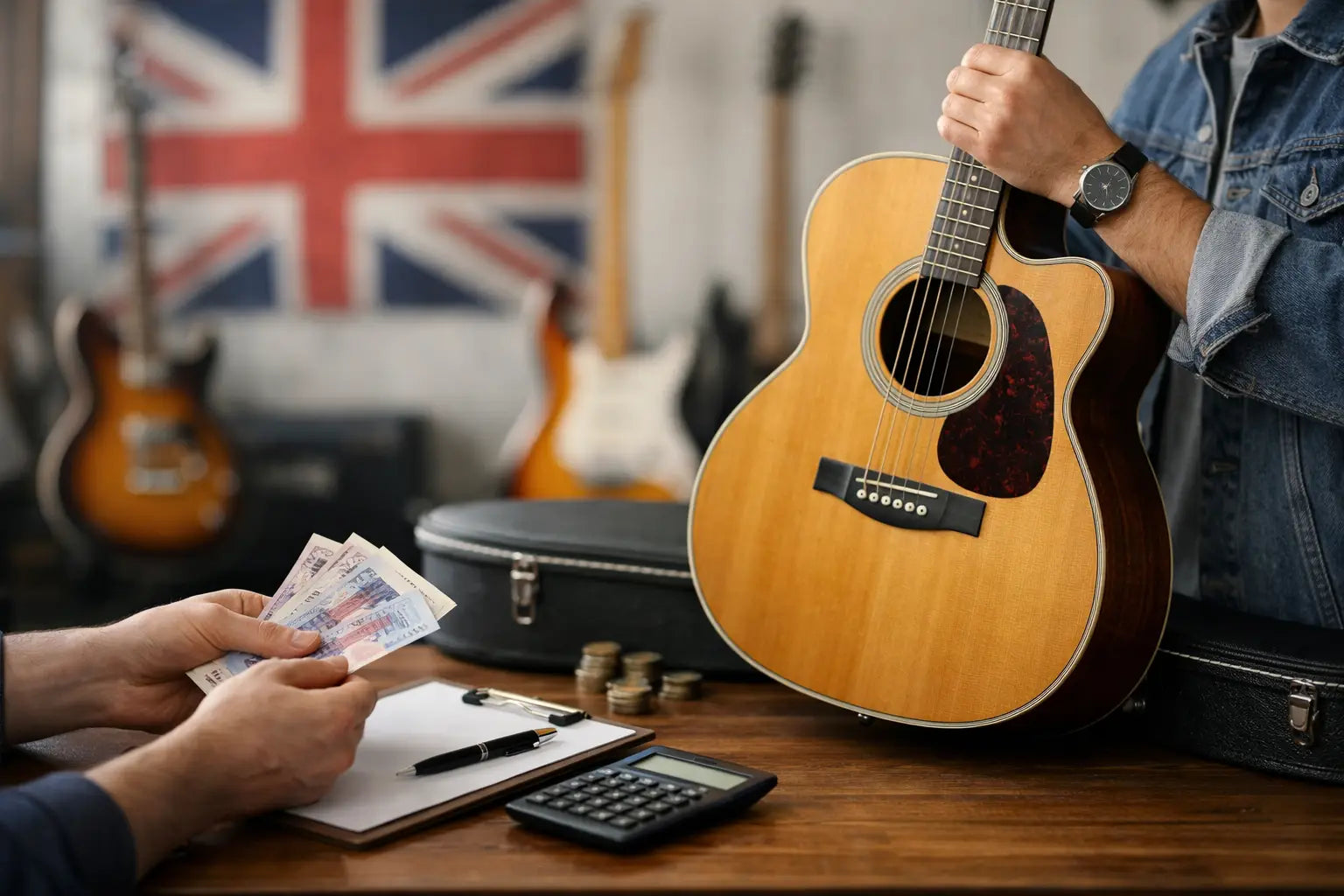
That unused guitar in its case may be the quickest route to the instrument you actually want to play. A guitar trade in valuation UK players can rely on is not a number pulled from a hopeful online listing. It is a realistic assessment of what the instrument is, its condition, what is included and how readily it can find its next owner.
For some guitars, the answer is straightforward: a clean, desirable model from a recognised brand with its case, paperwork and original parts will usually be easy to value. For others, especially vintage, Japanese-made, rare or heavily modified instruments, the details matter far more than the name on the headstock. Knowing what a shop is looking at helps you prepare your guitar properly and decide whether part-exchange, a cash sale or selling privately suits you best.
How a Guitar Trade In Valuation UK Is Worked Out
A professional valuation starts with the exact instrument, rather than a broad label such as “Fender-style electric” or “old acoustic”. The model, year, country of manufacture, specification, finish and serial number all help establish a sensible starting point. A Mexican-made player model, an early Japanese reissue and a US-built custom instrument can look similar at a glance but sit in very different value brackets.
Recent real-world selling prices matter too. Asking prices can be useful for research, but they do not always reflect what buyers are actually paying. A retailer also has to consider the cost of checking, photographing, cleaning, setting up, storing, advertising and warranting a used instrument before it goes back on the wall or online. That is why a trade-in figure will naturally differ from the highest private-sale price you may see advertised.
Demand is the other half of the picture. A popular Strat-style guitar in a sought-after colour, a properly original vintage bass or a well-kept valve amp from a respected maker can attract strong interest. Less fashionable models can still be excellent instruments, but if they are likely to take longer to sell, that affects the offer. This is not a judgement on whether a guitar is good. It is the practical reality of matching used gear with the right player.
Condition Means More Than a Few Marks
Players often worry that every small scratch will ruin the value. Honest playing wear is rarely a problem on a used guitar, particularly on a vintage piece that has earned it. What matters is whether the wear is cosmetic or points to a repair bill, structural issue or missing original component.
The neck is a major consideration. It should be reasonably straight, adjustable via a working truss rod and free from serious twists or instability. Fret wear is also checked closely. Light wear may only need a setup, while deep grooves, lifting frets or very low fret height can mean a level and crown or a full refret. These are worthwhile jobs on the right guitar, but they are costs that need to be allowed for.
Cracks, neck breaks, headstock repairs and water damage deserve a clear, honest conversation. A tidy, stable and professionally repaired break does not automatically make an instrument unsellable, especially if it is a desirable model. It will, however, affect the valuation. Hiding a repair is never worthwhile. Clear photographs and a straightforward description make the process quicker and fairer.
Electronics, hardware and playability count as well. Scratchy pots, a loose output jack, worn machineheads or a tired switch may be simple workshop jobs. A guitar that will not hold tuning, has a lifting bridge or needs major electrical work requires more investigation. At Chordplay Guitars, workshop knowledge is part of what makes an in-person assessment useful: the instrument can be judged as a player’s tool, not just as an object with a resale price.
Original Parts, Upgrades and the Case Question
Originality carries particular weight with collector-grade, vintage and certain Japanese-made guitars. Original pickups, finish, bridge, tuners and electrics can support a stronger valuation, even where the guitar shows decades of honest use. If you have changed parts, keep anything you removed. A bag containing the original machineheads, bridge or pickups can be surprisingly valuable when it comes to a trade.
Upgrades are more nuanced. A high-quality refret, sensible pickup change or upgraded bridge may make a guitar better for you, yet not add the full cost of the work to its trade-in value. Taste is personal. One player’s dream set of boutique pickups may be another player’s first job to reverse.
The best upgrades are usually those that are professionally fitted, documented and appropriate to the instrument. A clean setup, quality replacement nut or properly installed electronics can make a guitar easier to sell because it inspires confidence. Radical routing, non-reversible finish work and poorly fitted parts can reduce its appeal, particularly on guitars bought for originality.
Cases, certificates, tags, manuals and original accessories matter most on premium, limited-run and collectible gear. The correct hard case protects the instrument during transport and gives the next buyer confidence that it has been cared for. On an accessible used guitar, a gig bag will not transform the price, but it still makes the deal more complete. For pedals and amplifiers, original boxes, power supplies, footswitches and covers are worth bringing along too.
Trade-In, Part-Exchange or Cash Sale?
These routes have different advantages, so the best one depends on your next move. Part-exchange is often the simplest choice when you have already spotted another guitar, amp or pedal. Your existing gear contributes directly towards it, reducing the amount you need to pay and saving you the time, messages and no-shows that can come with a private listing.
A straight cash sale is useful when you are clearing space, funding something outside music or simply moving on from gear that no longer earns its keep. The figure may differ from a part-exchange offer because a trade creates a sale at the same time. That flexibility can be helpful if you are upgrading from a starter package to a proper first electric, moving into a better acoustic, or finally buying the amp you have been eyeing up.
Private selling can potentially achieve more money, particularly if you are prepared to wait for the right buyer and handle photographs, listings, packing, postage or collection. It also comes with more responsibility and uncertainty. A fair retailer offer is usually about convenience, speed, safety and a clear route into your next piece of gear.
Get Your Guitar Ready Without Overdoing It
You do not need to spend a fortune preparing an instrument for valuation. In fact, expensive modifications made solely to improve an offer can be a false economy. A little sensible preparation is enough: wipe away dust, remove personal stickers if they will come off safely, make sure the guitar is strung and bring its case and any original parts with it.
Be ready to share what you know. Tell the shop when and where you bought it, whether it has had repairs, who carried out any work and whether there are faults that appear only after playing for a while. If you know the model number or serial number, have it to hand. Good photos of the front, back, headstock, serial number, hardware and any damage are especially useful for an initial remote conversation.
Do not polish aggressively, attempt a home repair just before visiting, or conceal a crack beneath tape. Light cleaning is welcome; rushed fixes can create more work. If the guitar needs attention, it is often better to let a specialist see it as it is and explain the realistic options.
Why Two Similar Guitars Can Receive Different Offers
Two instruments with the same logo may have very different stories. One may be a near-mint example in a rare factory finish, complete with its original hard case. The other may have a replacement neck, heavily worn frets, non-original routing and no case. Both can be enjoyable guitars, but they are not the same proposition for the next owner.
Timing can have an effect as well. Demand for certain models rises when artists tour with them, anniversary editions appear, or a discontinued line becomes harder to find. Conversely, a guitar with a high new retail price does not always command a proportionate used value if there are plenty available. The most useful valuation is honest about the current market, rather than based on what the instrument cost years ago or what someone hopes it might fetch.
If you are unsure whether to trade, bring the guitar in, play a few alternatives and ask questions. The right decision is not always the highest possible figure on paper. Sometimes it is walking out with an instrument that feels right, knowing your old guitar is heading to another player who will give it the time it deserves.
Share:
Where to Sell Your Guitar for Cash in the UK
Guitar Refret Service UK for Worn Frets