A guitar can have great pickups, a lovely neck profile and years of stories behind it, yet still feel hard work to play. Deep string grooves, rattles that a setup will not cure, and notes that choke out during bends are often signs that the frets have reached the end of their useful life. A professional guitar refret service UK players can rely on gives a well-loved instrument a proper second wind - without losing the character that made you keep it in the first place.
For a favourite player, a rare Japanese electric, a vintage acoustic or a dependable gigging bass, refretting is serious workshop work. Done well, it can make an old guitar feel remarkably fresh. Done carelessly, it can affect playability, appearance and, in some cases, value. The right answer depends on the instrument, its condition and how you play it.
What a guitar refret actually involves
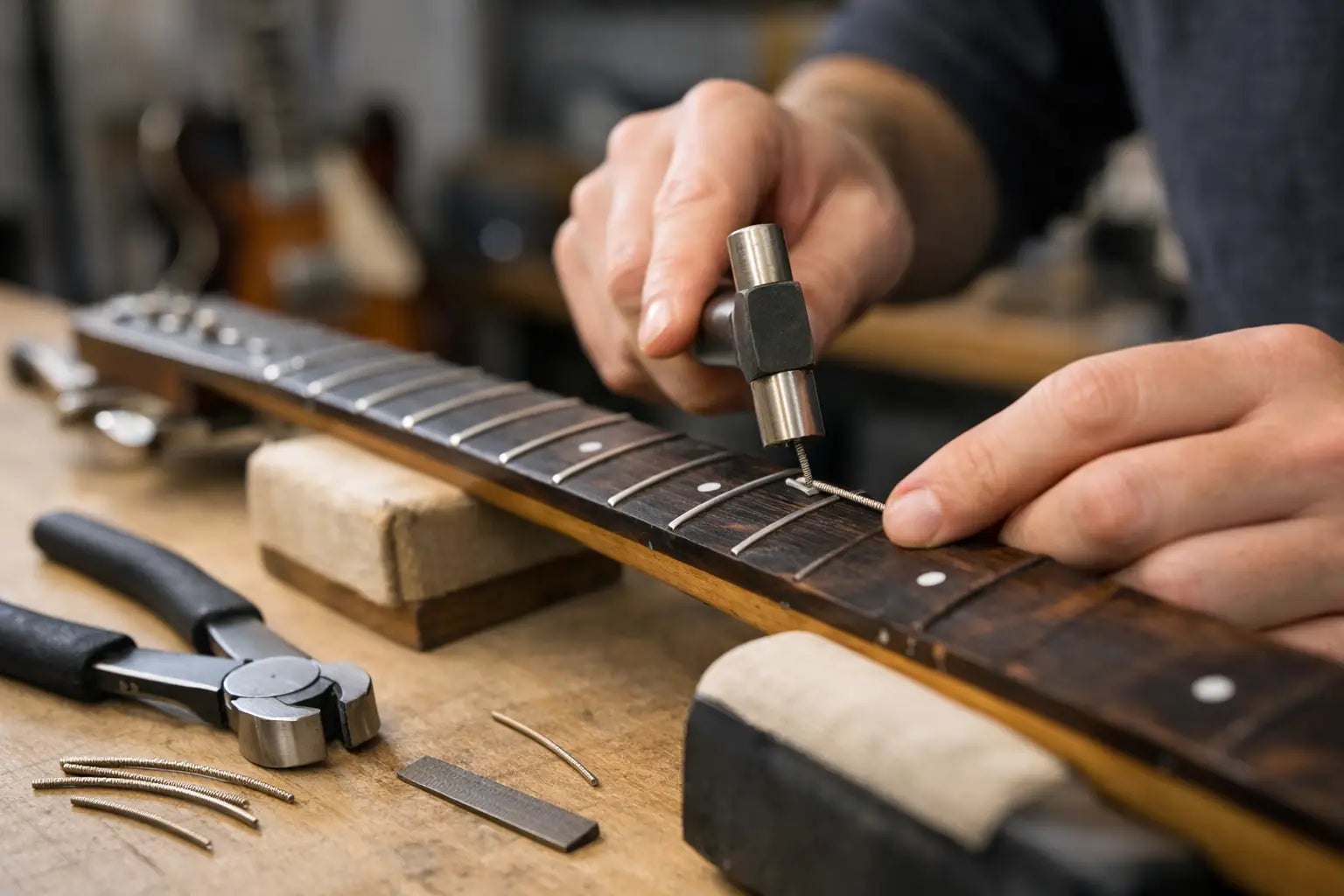
A refret means removing the existing fretwire and fitting a complete new set. It is more involved than simply pulling out old metal and pressing in new pieces. The workshop first assesses the neck, fingerboard, nut, truss rod and existing fretwork to establish whether a full refret is genuinely needed.
Once the old frets are carefully removed, the fingerboard may need gentle levelling or correction. New fretwire is selected, cut and installed, then the fret ends are shaped and dressed. Finally, the frets are levelled, crowned and polished so every note has a clean, consistent playing surface. The guitar is restrung and set up to suit the instrument and player.
That final setup matters. Fretwork and setup are closely connected, but they are not the same job. Even beautifully fitted frets will not feel their best if the neck relief, action, nut slots and intonation have been ignored.
When does a guitar need a refret?
The obvious clue is visible wear. If you can feel deep dents beneath the strings, especially around the first five frets, the wire may be worn enough to cause buzzing or inaccurate notes. You may also notice that strings catch in grooves during bends, or that the guitar has gradually become more difficult to set up with comfortable action.
However, visible wear does not automatically mean a refret. Many guitars only need a fret dress, sometimes called a level and crown. This removes a small amount of material to restore an even surface, then reshapes and polishes the frets. It is usually the sensible choice when the frets are uneven but still have enough height remaining.
A refret is generally the better route when the frets are too low after previous dresses, have pronounced grooves, are lifting from the board, or are so uneven that levelling them further would leave very little usable height. A good technician will explain the difference rather than selling a bigger job by default.
Symptoms worth bringing to the workshop
Persistent buzz in one area of the neck, choking on bends, poor intonation and a noticeably rough feel can all point towards fret issues. But they can also be caused by humidity changes, a bowed or back-bowed neck, an uneven nut, a poorly cut bridge saddle or simply old strings. That is why an in-person assessment is valuable. It avoids paying for a refret when a careful setup or fret dress will do the job.
Choosing fretwire for your playing style
Not all fretwire feels the same, and this is one of the best opportunities to tailor a guitar to its owner. Traditional narrow wire can suit players who prefer a lower, more familiar feel, particularly on older instruments. Medium-jumbo fretwire is a popular all-round option for electric guitars, offering a comfortable balance for chords, bends and lead work. Jumbo wire gives a taller, broader feel that many expressive players enjoy, although it can take a little getting used to if you tend to press hard.
Material is another decision. Nickel-silver fretwire is the familiar standard - it is comfortable to work with, sounds and feels right to countless players, and suits most instruments. Stainless steel wears far more slowly and can be a very appealing choice for heavy gigging, frequent bending or players who wear through standard wire quickly. The trade-off is that it is harder to install and dress, and not every vintage or collectible guitar is the right candidate for it.
For a vintage instrument, originality deserves a proper conversation. A sympathetic refret can preserve a guitar as a working musical instrument, but fret size, material, fingerboard binding and period-correct details can matter to collectors. If retaining the original look and feel is a priority, say so before the work begins.
The details that separate good refret work from a quick fix
Fingerboard condition is central to the job. Maple boards, lacquered maple boards, rosewood, ebony and bound fingerboards all need different care. Removing frets from a dry or brittle board without the right preparation can cause chips along the fret slots. A capable workshop takes its time to minimise this risk and deals properly with any necessary repairs rather than hiding them.
Bound necks require additional attention because the fret ends meet the binding. Some guitars use nibs - small sections of binding that continue over the fret ends. Preserving these may be desirable on certain Gibsons and collector-grade instruments, but it adds labour and can limit fretwire choices. In other cases, a full-width refret with neatly finished fret ends is the more practical playing-focused option.
The nut should be assessed at the same time. New frets alter the relationship between the strings and the first fret, so a previously acceptable nut may now be too low. Sometimes it can be adjusted; sometimes replacement is the cleanest route to reliable open-string action. There is no one-size-fits-all answer, which is exactly why refret work benefits from a proper inspection rather than a postal guess.
Preparing your guitar for a refret
Before booking in, make a note of what you are experiencing. Mention where buzzing occurs, whether it happens on particular strings, what gauge strings you use and whether you prefer low, medium or higher action. If the guitar is used for slide, alternate tunings or heavier strings, tell the technician. These details help shape the finished setup.
Bring the guitar in its case where possible, especially if it is vintage, fragile or has a floating bridge. Remove any personal items from the case pocket and keep hold of unusual parts, certificates or original hardware you do not want separated from the instrument. If your guitar has an aftermarket bridge, locking nut, tremolo system or non-standard wiring, point that out too.
At Chordplay Guitars, the workshop conversation should feel straightforward. The aim is not to turn every worn fret into a major restoration, but to help you understand what will give the instrument the best playing future and what the work is likely to involve.
Refret or replace the guitar?
For a low-cost starter guitar with several other problems, the cost of a refret may be hard to justify. If the truss rod is faulty, the neck is badly twisted or the instrument has structural damage, spending money elsewhere may make more sense. That does not mean budget guitars are not worth repairing - some are excellent players with sentimental value - but the decision should be practical as well as emotional.
For a quality electric, acoustic, bass or treasured family instrument, a refret can be one of the most worthwhile investments you make. It preserves a neck you already know, keeps a great-sounding guitar in service and can improve the feel more dramatically than many hardware upgrades. A properly refretted guitar should not merely be playable. It should invite you to pick it up again.
If your frets are making you fight the instrument, do not assume the guitar is finished. Bring it in, play it, explain what you are hearing and feeling, and let the condition of the neck guide the next step. The right repair can put many more songs under your fingers.
Share:
Guitar Trade In Valuation UK for Players
Guitar Respray Service UK: Is It Worth It?