
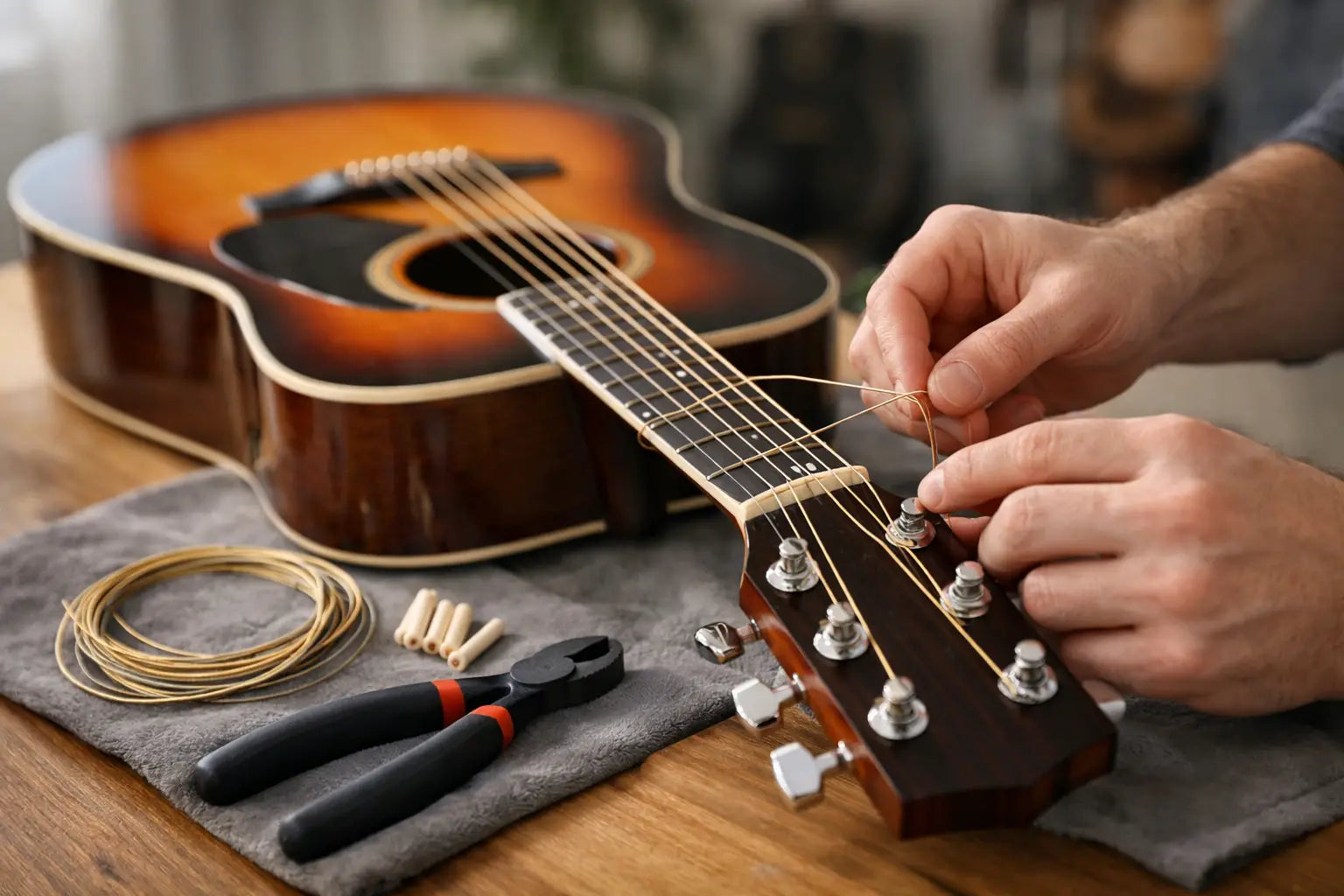
A fresh set of strings can make a familiar guitar feel like a different instrument: clearer chords, more lively response and tuning that behaves itself. If you have been searching “how often should guitar be restrung?”, there is no single calendar date that suits every player. How much you play, how much you perspire, the strings you use and the guitar itself all make a difference.
For most players, the useful rule is simple: change strings when they stop feeling and sounding right, rather than waiting for one to snap. A broken string is a definite prompt, but it is usually the last warning rather than the first.
How Often Should a Guitar Be Restrung?
A guitarist who practises or gigs several times a week will often benefit from a restring every four to eight weeks. Casual players can commonly get three to six months from a set, especially if they wipe the strings down after playing and keep the guitar in a sensible environment.
That range is deliberately broad. A player with acidic sweat may wear through an uncoated set in a few sessions, while somebody who plays gently at home once a week may find theirs remain perfectly serviceable for months. There is no prize for keeping a tired set on a guitar until every string has gone dull, rough and reluctant to stay in tune.
For a busy working player, restringing before an important rehearsal, recording session or show is good insurance. For everyone else, let your ears and fingertips lead the decision. A new set is one of the most affordable ways to bring a well-loved instrument back to life.
The Signs Your Guitar Needs New Strings
Strings do not need to break to be finished. As oil, sweat, dust and tiny particles build up in the windings, the string loses brightness and intonation can become less dependable. You may notice it gradually, then pick up another guitar with fresh strings and immediately hear what has been missing.
Look and listen for a combination of these signs:
- The guitar sounds dull, flat or lacking in definition, particularly on the wound strings.
- Strings feel rough, sticky or unusually stiff under the fingers.
- Tuning drifts more than usual, even after the strings have been properly stretched.
- Notes at the 12th fret sound noticeably out against the open string or harmonic.
- You can see discolouration, corrosion, dark patches or fraying near the bridge and nut.
Your Playing Habits Matter More Than the Date
The guitarist who plays a clean electric at home for twenty minutes on a Sunday is not on the same schedule as the player rehearsing three sweaty sets in a warm room every week. Heavy bending, aggressive picking, tremolo use and regular live work all shorten string life.
Your hands are a major variable too. Some players seem to preserve strings almost indefinitely; others can make a new set feel tired after a handful of sessions. Neither is doing anything wrong. If your strings corrode quickly, coated strings are often worth the extra cost. They may feel slightly different from a traditional uncoated set, but their longer useful life can make them excellent value.
The instrument type changes the equation. Electric guitar strings tend to be replaced more often because players rely on bright attack, accurate bends and a smooth feel. Acoustic strings can lose their sparkle quickly, particularly if you strum hard or use alternate tunings. Bass strings are often left on longer, especially by players who prefer a warmer, settled sound, although funk, slap and modern rock bassists may want the crisp edge of a fresh set more regularly.
Classical and flamenco strings deserve their own approach. Nylon treble strings do not corrode like steel, but they can become tired, marked and less stable. The wound bass strings eventually lose clarity and may show wear. Many classical players change a full set every two to six months, depending on use and the tone they want.
Fresh Strings Are Not Always the Right Answer
There is a trade-off. Brand-new strings are bright, lively and responsive, but they can initially sound a little sharp or overly zingy on some instruments. A vintage archtop, a mellow jazz box or a bass built around a deep, thumping sound may actually suit strings that have had time to settle.
Some players change one broken string and carry on. That is perfectly reasonable if the remaining set is still recent and in good condition. If the strings have already been on the guitar for months, replacing the full set usually produces a more even tone and feel. A lone new string among old ones can stand out in volume, colour and intonation.
Gauge is another consideration. If you love the feel of .010s on an electric, stick with them when restringing unless you have a reason to experiment. Moving from .009s to .011s, or changing acoustic gauge significantly, alters tension. The guitar may need a setup to keep the action, neck relief and intonation where you like them. On a floating tremolo guitar, a gauge change can also alter the bridge balance.
Make Each Set Last Longer
A few good habits can extend string life without making guitar care a chore. Wash and dry your hands before playing when possible, then wipe the strings and fretboard area with a clean, dry microfibre cloth afterwards. This takes seconds and removes the moisture and residue that do much of the damage.
Keep the guitar in its case or gig bag rather than leaving it beside a radiator, in direct sun or in a damp corner. Lancashire weather can be kind to neither strings nor wooden instruments when temperature and humidity swing around. A stable indoor environment is better for tuning, finish and neck health as well as string life.
Use a suitable string cleaner sparingly if you like the feel, but do not let products build up around the fretboard. When changing strings, take the chance to clean the accessible areas of the guitar, check for loose hardware and inspect the nut and saddles for sharp edges. These small checks can prevent an annoying breakage later.
Restringing Is Also a Useful Health Check
Changing strings is the ideal moment to notice issues that become easy to ignore during everyday playing. Is the fretboard looking dry? Are the frets developing grooves? Does the low E sit unusually high at the nut? Is there crackling from the jack socket, or a rattle from a machinehead?
Not every guitar needs a full setup with every restring. If you are using the same gauge, the guitar plays well and the intonation is accurate, a careful home restring may be all it needs. But if the action has changed, tuning is unreliable or you are changing gauges or tunings, a proper setup can make a far bigger difference than strings alone.
For instruments with locking nuts, Floyd Rose-style tremolos, delicate vintage hardware or a complicated wiring fault, there is no shame in handing it to a technician. A good restring should leave the guitar stable, clean and ready to play, not create a battle with bridge angles and tuning.
A Simple Restringing Routine That Works
Keep a spare set in your case, especially if you gig. Fit the same gauge you know works, wind the strings neatly with no unnecessary wraps, and make sure each string is seated properly at the bridge and nut. Bring them gently up to pitch, stretch each string several times along its length, retune and repeat until the tuning settles.
Do not rush this stage. Most complaints about new strings going out of tune come down to insufficient stretching, poor winding or strings catching in the nut. If one string repeatedly pings, sits sharp or refuses to return to pitch after a bend, stop and investigate rather than forcing it.
A restrung guitar should make you want to keep playing. Whether your instrument needs fresh strings every fortnight or twice a year, learn its particular signs and respond before a tired set steals the fun. And if your guitar needs more than a new set, the Chordplay Guitars workshop can help get it feeling right again.
Share:
Guitar Respray Service UK: Is It Worth It?
Where to Buy Used Japanese Guitars in the UK