
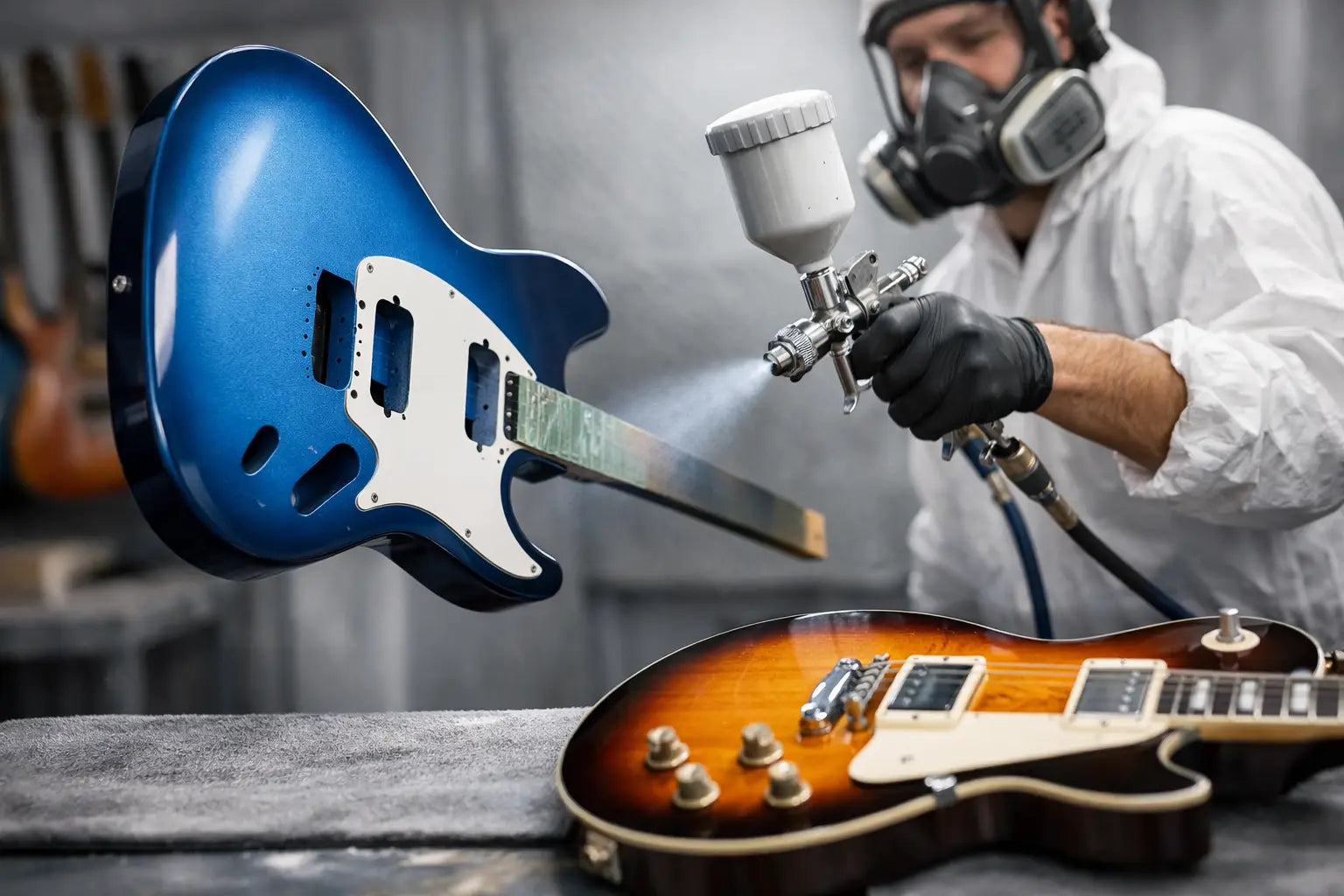
A battered finish can tell a brilliant story. It can also hide cracks, old repairs, cigarette smell, lifting lacquer or a previous DIY job that has gone badly wrong. A professional guitar respray service UK players can rely on is not simply about making an instrument shiny again. Done properly, it protects the wood, respects the guitar’s character and gives you a finish you will be happy to play under stage lights or keep in the collection.
The right choice depends on the guitar in front of you. A road-worn workhorse, a treasured first electric, a modern partscaster and a valuable vintage original should not all be treated the same way. That is where proper workshop advice matters.
What a guitar respray actually involves
A respray is a finishing job, but the preparation decides whether it looks superb in five years or starts to chip, sink and react after a few months. The guitar is stripped down, inspected and prepared before any colour goes near it. Hardware, electrics, neck and fittings may need to be removed, depending on the construction and the extent of the work.
The existing finish is then assessed. Sometimes it can be carefully keyed and sealed; often, particularly where there are dents, flaking lacquer, incompatible paints or deep scratches, it needs removing. The body may require repairs, grain filling or levelling before primer, colour coats and clear coats are applied. Each stage needs time to cure. Rushing a finish is one of the quickest ways to spoil it.
After curing, the surface is levelled and polished, then the guitar is reassembled and checked. A decent workshop will not treat the respray as separate from the instrument. The bridge, nut, neck alignment, pickup height and final setup all affect whether the guitar feels as good as it looks.
Why preparation matters more than colour
Most players first think about colour: Fiesta Red, Lake Placid Blue, black, white, metallic flake, a natural refinish or something completely one-off. Colour is the exciting bit, but sound preparation is what earns the finish its depth and durability.
A solid alder or basswood body is generally straightforward compared with an ash-bodied guitar, where the open grain needs careful filling if you want a smooth, glass-like result. Mahogany can also show pores and movement if it has not been properly sealed. Veneers, laminate tops and thin finishes need a more cautious approach again, because aggressive sanding can cause irreversible damage.
The finish system matters too. Nitrocellulose lacquer has a classic feel and can age beautifully, but it is less forgiving and requires suitable curing conditions. Modern polyurethane and polyester finishes are tough and practical, although they can be harder to repair invisibly and may feel different to players chasing a vintage-style result. There is no universal best option. It depends on the guitar, the look you want and whether daily gigging durability or period-correct character is the priority.
When a respray is a great idea
A respray makes real sense when the guitar has little collector value in its current condition but plays well, feels right and deserves another chapter. Plenty of excellent Japanese-made guitars, older imports and honest working instruments fall into this category. If the body is structurally sound but the finish has suffered badly, a professional refinish can turn an unloved guitar into your favourite again.
It is also a strong option for personal instruments. Perhaps you have owned a guitar since school, inherited one with a colour you never liked, or built a partscaster around a neck that feels perfect. A custom colour can make it feel genuinely yours without forcing you into a costly replacement.
Resprays can be particularly worthwhile after structural repair. Once a crack, dent or damaged area has been professionally stabilised, refinishing can blend the repair into a clean, coherent result. On a regularly played instrument, that can be far better value than living with exposed wood and a finish that continues to deteriorate.
The vintage and collector caution
For a rare, original or collector-grade guitar, an all-over respray can significantly reduce value. Original finish, even when worn, is often a major part of what collectors are buying. Honest checking, lacquer wear and age-related marks are very different from a poor refinish.
That does not mean an old guitar should never be refinished. Some have already lost their original finish, have extensive prior repairs or have been altered beyond collector specification. But this is the point to pause, establish exactly what you have and seek an informed opinion. A sympathetic local repair or careful preservation may be the smarter move than a full colour change.
Choosing a guitar respray service in the UK
Ask to see real examples of finished work, ideally in different colours and on different timber types. Good photographs should show more than a flattering front-on shot. Look for clean edges around neck pockets and cavities, even colour, tidy masking, a level gloss or satin sheen, and no obvious sinkage around grain or repairs.
It is worth discussing the job before agreeing to it. A knowledgeable workshop should ask what model the guitar is, whether it has previous repairs, how you use it and what finish you are hoping for. They should also explain any limitations. For example, an exact match to a faded 1960s custom colour is rarely as simple as ordering a paint code, and a thin neck finish cannot always be stripped and refinished without changing its feel.
Turnaround times deserve an honest conversation as well. Proper curing cannot be wished away, particularly during colder or more humid periods. Be wary of promises that sound too quick for the amount of preparation involved. The best result is worth waiting for.
At Chordplay Guitars, the workshop approach is rooted in the practical side of ownership: assess the instrument properly, recommend the sensible route and return it ready to enjoy. That may mean a full respray, but it may equally mean targeted repair, a clean and polish, or leaving valuable original wear alone.
What affects the cost of a respray?
There is no meaningful one-price answer, because two guitars described as “needing a respray” can be completely different jobs. A stripped-down solid-body refinish in a straightforward opaque colour is very different from repairing a cracked finish, filling ash grain, colour-matching a burst and spraying a neck to match.
The biggest factors are the condition of the existing finish, timber and body construction, required repairs, number of colours, binding, decals, metallic or burst effects, and whether the neck also needs work. Disassembly and reassembly can add time, particularly on guitars with complicated wiring, vibrato systems or fragile ageing parts.
A quality respray should be viewed as skilled restoration work rather than a cosmetic shortcut. A cheap finish can cost more in the long run if it reacts, chips prematurely or leaves you needing the job done again. If the projected cost approaches the guitar’s realistic used value, ask whether you are restoring it for resale or because it is the guitar you genuinely want to keep. Both are valid reasons, but they lead to different decisions.
Before you hand your guitar over
Take clear photographs of the guitar and make a note of existing marks, modifications and serial details. Remove personal straps, cases full of loose bits and anything not needed for the job. If there is a particular shade, finish level or reference guitar you have in mind, bring examples. A photo helps, but be open to the fact that screens, lighting and aged lacquer can make colours look very different in person.
Be clear about what must remain original. That could include a neck stamp, a decal, a worn headstock face, an old bridge or a particular set of pickups. A careful discussion at the start prevents disappointment later, especially where originality and resale value matter.
A well-chosen respray should make you reach for the guitar more often, not turn it into something precious and untouchable. Whether you are bringing a hard-played electric back from the brink or creating a custom finish for a long-term keeper, choose the route that suits the instrument and the player - then let the guitar earn its next set of marks honestly.
Share:
Guitar Refret Service UK for Worn Frets
How Often Should a Guitar Be Restrung Today?