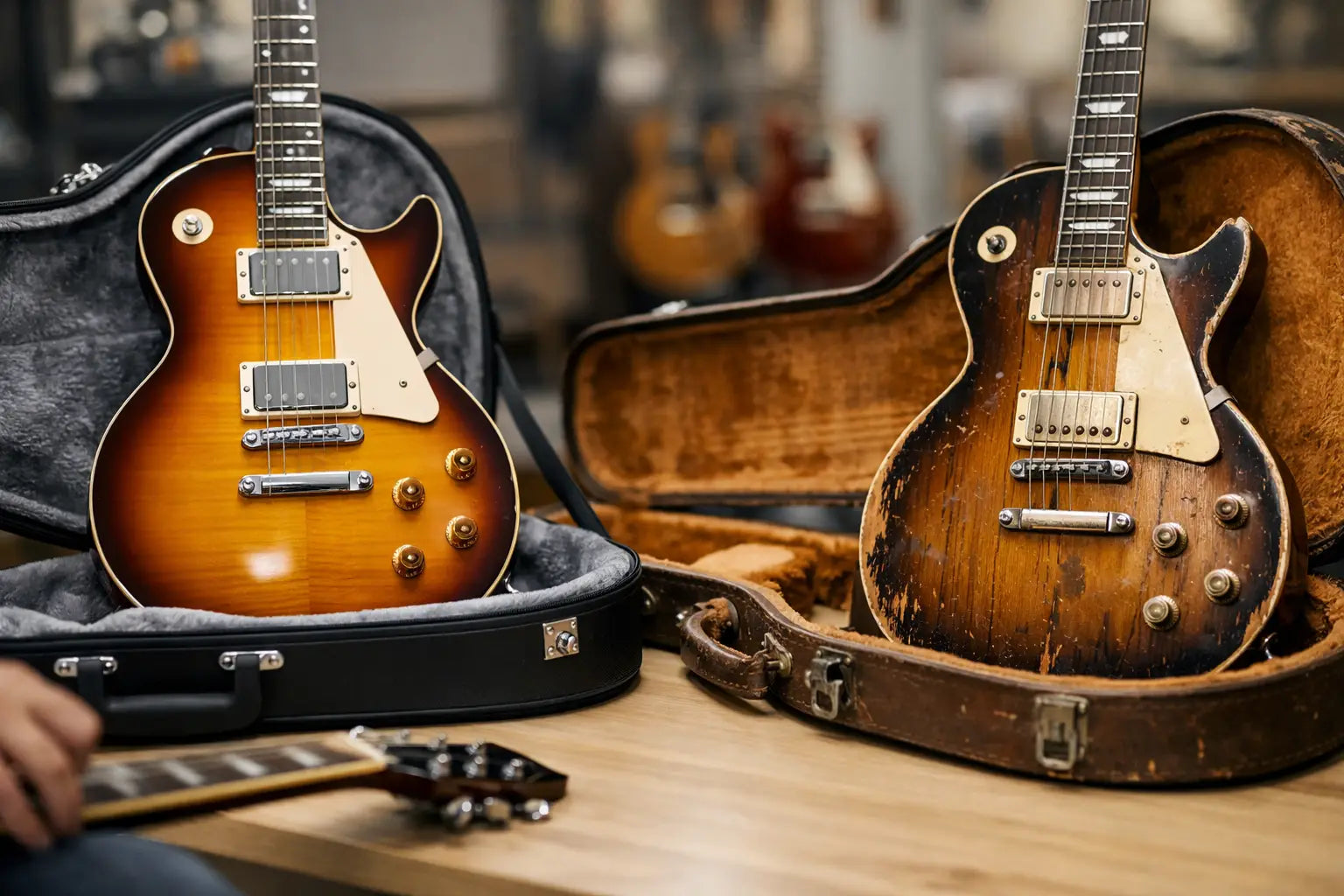
A glossy new guitar can feel like the obvious choice until you pick up a well-loved instrument that simply rings, plays beautifully and costs less than you expected. New versus used guitar buying is not really a question of which is better. It is about finding the guitar that suits your hands, your music, your budget and the way you want to buy.
For some players, that means a fresh-from-the-box first guitar with a warranty and no history. For others, it means a Japanese-made classic, a discontinued model, or a properly set-up used guitar with a few honest marks and a lot more character. Both routes can lead to a brilliant instrument.
New versus used guitar buying: start with your priorities
Before comparing finishes, brands or price tickets, decide what you need this guitar to do. A beginner may value easy playability, dependable tuning and the reassurance that everything is as it should be. A gigging player may be looking for a dependable backup, a particular pickup layout or a guitar they will not be frightened to take into a busy pub venue. A collector may be chasing a specific year, factory or limited finish that is no longer available new.
New instruments usually make the decision straightforward. You can compare current models side by side, choose the specification you want and know that the guitar has not had a previous owner making modifications, repairs or questionable home adjustments. If there is a fault covered by the manufacturer, there is a clear route to put it right.
Used instruments make the search more interesting. The pre-owned market is where discontinued favourites, older Japanese production, unusual finishes and genuinely rare pieces appear. It is also where a budget that reaches a basic new model can sometimes buy a higher-specification guitar from a few years ago.
Neither choice removes the need to judge the individual guitar. A new guitar can need a setup after travelling from factory to shop. A used guitar can be in excellent condition, freshly restrung and playing better than many instruments that have never left a box.
Why a new guitar makes sense
A new guitar is often the right call when certainty matters most. This is particularly true for a first instrument, a gift, or a player who knows exactly which current model they want. You get a clean starting point: new frets, unworn hardware, original electronics and the full manufacturer specification.
There is also something pleasingly simple about it. You can choose the finish you actually want rather than settling for what happens to be available. Current ranges tend to offer predictable specifications, making it easier to compare a maple-board Strat-style guitar against its rosewood-board equivalent, or decide whether a modern neck profile suits you better than a vintage one.
Warranty support is another genuine advantage. It does not mean a new guitar will never require attention, but it gives reassurance if a manufacturing fault appears. For parents buying for a young learner, that peace of mind can be worth as much as the untouched finish.
The trade-off is value. Like many things, a new guitar may lose a chunk of its value once it becomes used. That matters less if you intend to keep it for years. It matters more if you are still working out whether you prefer acoustic or electric, humbuckers or single coils, short scale or full scale.
New does not always mean perfectly set up
A guitar is made from wood, metal and moving parts. Temperature and humidity changes during shipping can affect neck relief, string height and tuning stability. A good setup is not an admission that a guitar is poor - it is normal care that helps it perform at its best.
If the guitar feels stiff, buzzes excessively or will not stay in tune, ask for advice rather than assuming you have chosen the wrong model. A simple adjustment, fresh strings or a correctly cut nut can transform the experience.
The case for buying used
Used guitars can represent exceptional value, especially once you move beyond entry-level instruments. A player upgrading from their starter guitar might find that the same money buys better pickups, higher-quality tuners, a hard case or a more desirable country of manufacture when buying pre-owned.
Then there is the choice. Brands change ranges constantly. A favourite neck shape may disappear, a finish may be discontinued, or a model may become more sought-after precisely because it was only produced for a short period. The used market keeps those guitars in play.
A used instrument has often already passed its settling-in period. If it has been owned, played and cared for, its neck may be stable and its sound well established. Cosmetic wear does not necessarily affect performance either. Light buckle rash, small dings and faded hardware can reduce the price without reducing the fun.
For many players, those marks are a bonus. You can take the guitar to rehearsals and gigs without spending the whole night worrying about the first scratch.
What condition really means on a used guitar
Condition needs more than a quick glance at the finish. Cosmetic grading is useful, but playability and structural health matter far more. A clean-looking guitar with worn frets or a twisted neck is not a bargain. Conversely, a guitar with a few visible marks but healthy frets, a straight neck and working electrics may be a superb buy.
When assessing a used guitar, look for sensible detail: the year and origin where known, its finish, modifications, case or gig bag, fret condition and any repairs. Original parts can matter to collectors, while practical players may welcome a quality upgrade such as better tuners or a professionally replaced bridge.
Check that the truss rod works, the neck has no concerning movement or cracking, and the bridge is secure. Plug in an electric guitar and work every switch and control. Scratchy pots can sometimes be a simple clean, but intermittent pickups, loose sockets or unexplained noise should be understood before money changes hands.
Acoustic buyers should pay particular attention to the neck angle, bridge, top condition and humidity-related issues. A low saddle with high action can signal expensive work ahead. Classical guitars, basses and folk instruments each have their own details, but the same principle applies: buy the condition beneath the surface, not just the photograph.
Private bargain or specialist used guitar?
Private listings can occasionally produce a bargain, but they also require confidence. Descriptions may be brief, provenance can be unclear, and phrases such as “just needs a setup” cover everything from a minor tweak to a major repair. If you cannot inspect the guitar in person, the risk becomes harder to judge.
Buying used from a specialist retailer offers a more reassuring route. Instruments can be properly identified, condition described clearly and checked by people who understand what they are handling. At Chordplay Guitars, the workshop perspective matters because the team can spot the difference between normal player wear and work that needs attention.
That does not mean every used guitar should look immaculate. A pre-owned guitar should be judged honestly and priced accordingly. What you want is clarity: what is original, what has been changed, what is included and how the instrument plays now.
Factor in the cost after the price tag
The cheapest guitar is not automatically the best value. Leave room in the budget for the things that make it enjoyable to play: a proper setup if needed, a case or gig bag, leads, a strap, picks and perhaps an amplifier or headphone solution.
With a used guitar, ask whether it will soon need a refret, new nut, replacement tuners or electronic work. Those jobs can be worthwhile on a great instrument, but they should be part of the buying decision rather than an unpleasant surprise. With a new guitar, consider whether the shop can tailor the setup to your preferred string gauge and playing style from the start.
If you are trading in an existing instrument, compare the overall deal rather than focusing only on the sticker price. A fair part-exchange can make an upgrade easier, while releasing a guitar you no longer play gives another musician the chance to enjoy it.
Let your hands make the final call
Specifications are useful, but they cannot tell you how a neck sits in your hand or whether an acoustic responds to your picking attack. If you can visit a showroom, play a few guitars through an amp similar to your own. Try them seated and standing. Bend strings, play clean, turn the volume down and listen for unwanted noises.
Online buyers should read condition notes closely, ask sensible questions and think about their non-negotiables before ordering. A great guitar does not have to be a famous model or a pristine collector piece. It has to make you want to pick it up again tomorrow.
Choose the instrument with the right feel and a history you understand - whether that history begins with you or continues with you.
Share:
How to Choose a Classical Guitar for Adults
How to Buy Used Guitars You’ll Keep for Years