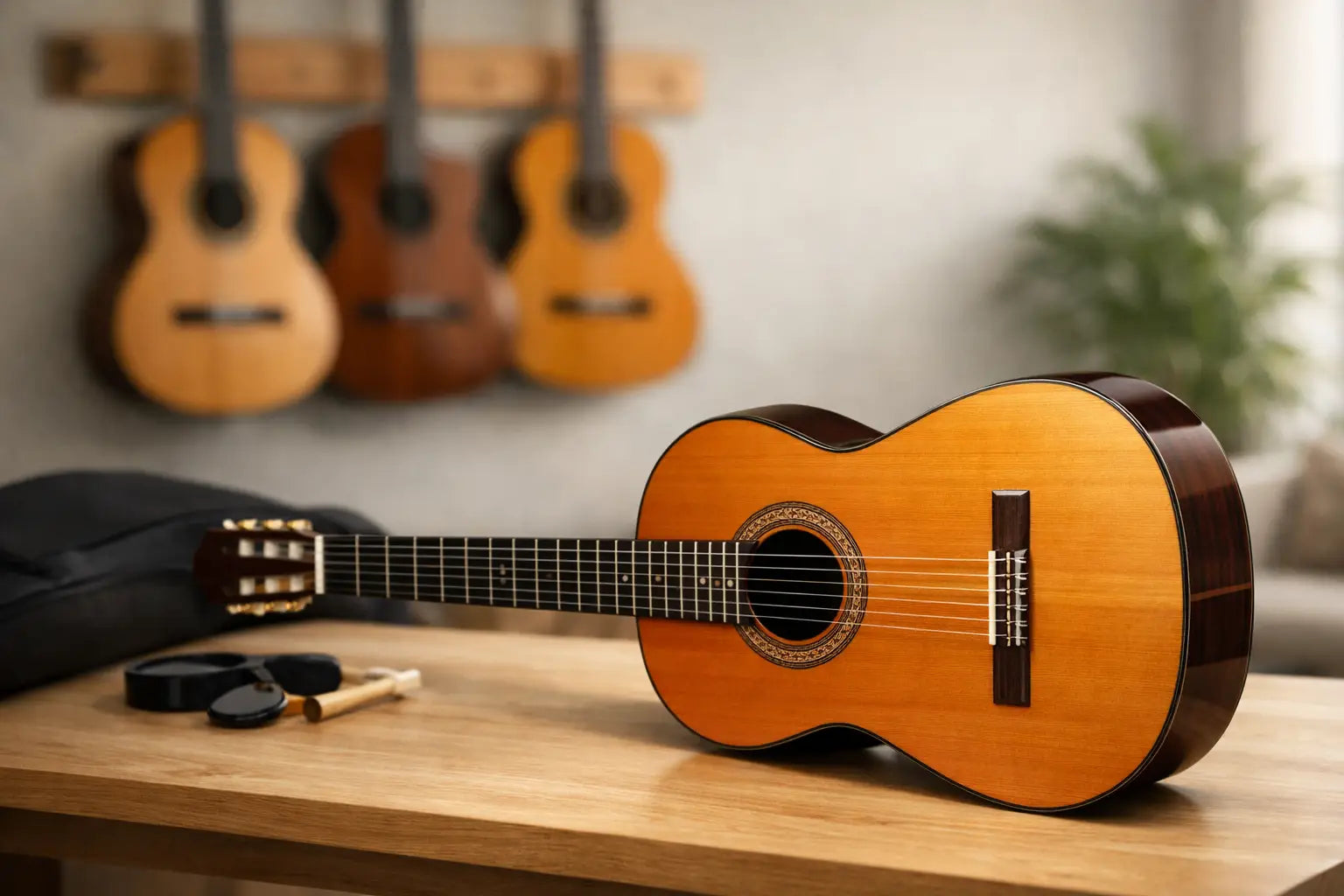
A nylon-string guitar can make the first few weeks of learning far more enjoyable. For anyone looking at a classical guitar for adults, that matters more than a flashy finish or a big brand name. The right instrument should feel comfortable in your hands, hold its tuning, play cleanly up the neck and give you a sound that makes you want to pick it up again tomorrow.
Adult beginners often arrive with a clear musical goal: Spanish pieces, fingerstyle arrangements, classical repertoire, songwriting or simply playing favourite tunes at home. A classical guitar is a brilliant starting point for all of those. It is also not just a beginner's instrument. A well-made nylon-string can be a deeply expressive, lifelong companion.
Why choose a classical guitar as an adult?
Classical guitars use nylon strings rather than steel strings. They have a warmer, rounder voice and generally feel gentler under the fingertips, particularly while your fretting hand is getting used to the pressure needed to form chords. There is still work to do - every guitarist develops a little fingertip toughness - but nylon strings remove one unnecessary barrier at the start.
The wider neck is the main difference you will notice. Many full-size classical guitars have a nut width around 52mm, compared with roughly 42-44mm on a typical steel-string acoustic. That extra room lets each finger sit more cleanly on its own string, which is excellent for fingerpicking, scales and careful chord shapes. Players coming from electric or steel-string guitar may find it broad at first, but many come to appreciate the precision it gives them.
There are trade-offs. A classical guitar will not deliver the bright, driving strum of a dreadnought acoustic, and it is not designed for heavy bends or high-gain amplification. If your main aim is Oasis-style rhythm parts, country strumming or acoustic rock, a steel-string may suit you better. If you like intimate melodies, fingerstyle playing and a softer response, nylon is hard to beat.
The right classical guitar for adults starts with fit
Most adults will be best served by a full-size 4/4 guitar. This is the standard concert size, usually with a scale length around 650mm. It gives the familiar classical sound, sensible string spacing and the full playing area needed as your technique develops.
That said, full size does not mean one shape suits everyone. If you have a smaller build, shorter reach, shoulder discomfort or simply prefer a more compact instrument, a 7/8 classical guitar can be a very sensible choice. It is not a compromise in musicality. A good 7/8 model can be wonderfully balanced and may make regular practice much more realistic.
Before focusing on timber specifications, sit with the guitar properly. In the traditional position, the waist rests on your left leg if you are right-handed, with the neck angled upwards. You do not have to play in a strictly formal posture, but you should be able to reach the first few frets without stretching your shoulder or twisting your wrist. A footstool or purpose-made guitar support can make an immediate difference.
The body depth also matters. Shallower models sit closer to the player and can feel less cumbersome on the sofa or in a practice room. A traditional full-depth body often produces a fuller bass response. Neither is automatically better - comfort is the feature you will notice every day.
What to look for before you buy
A beginner-friendly price does not have to mean a frustrating guitar. The essential distinction is between an instrument built to be genuinely playable and one built only to hit the lowest possible price point. A guitar that fights you can make straightforward chords feel impossible.
Action and setup
Action is the height of the strings above the frets. Classical guitars generally have slightly higher action than many electric guitars, as this gives the strings room to vibrate clearly. But excessively high action makes fretting tiring, throws notes sharp and can discourage a new player quickly.
Check that open chords are manageable, notes around the seventh to twelfth fret do not require unreasonable force, and there is no persistent buzzing. A modest buzz can sometimes be related to playing technique or humidity, but an instrument should not rattle and choke its way through normal playing. A professional setup can transform a decent guitar, which is one reason buying from a proper guitar shop with workshop knowledge is reassuring.
Solid top or laminate?
This is one of the most useful specifications to understand. The soundboard, or top, has the greatest influence on a classical guitar's voice. A solid spruce or cedar top is made from a single piece of tonewood, while a laminate top uses layers.
A solid top usually offers more complexity, responsiveness and room to open up over time. Cedar tends to sound warm and immediate, with a rich, singing quality that suits many fingerstyle players. Spruce is often clearer and more focused, with plenty of headroom when played firmly. These are tendencies, not rules - each individual guitar has its own character.
Laminate construction can still be a smart choice at the entry level. It is generally more resistant to changes in temperature and humidity, and it lets makers produce dependable instruments at lower prices. If your budget is limited, prioritise comfortable playability and stable tuning over chasing a solid-top specification at the expense of everything else.
Neck shape and tuning machines
Classical necks are often flatter and wider than acoustic necks, but their depth and shoulder shape vary. A slimmer, more rounded profile can feel friendlier to players used to electric guitar. A traditionally substantial neck can feel stable and secure. This is where trying a few examples is far more helpful than reading measurements alone.
Turn each machine head slowly. It should move smoothly and hold its position. Nylon strings need time to settle, especially after a restring, so some early retuning is completely normal. Slipping tuners are not.
Set a budget that leaves room to progress
For a first serious instrument, it is worth buying the best guitar you can comfortably afford rather than selecting purely by the lowest ticket price. The difference between a basic package guitar and a well-set-up entry-level model is often felt in the first chord.
A sensible budget should also account for a padded gig bag or hard case, a spare set of nylon strings, a tuner and perhaps a footstool. You do not need a mountain of accessories. A capo is useful for some popular arrangements, but it can wait. Classical players usually do not use plectrums, though there is no rule stopping you from experimenting if it suits the music you enjoy.
Pre-owned instruments deserve a proper look too. A used classical guitar can offer excellent value, particularly from respected makers, but condition matters. Inspect the top for cracks, check that the bridge is firmly attached, look along the neck for excessive bow and make sure the guitar is not suffering from loose braces or serious fret wear. Cosmetic marks are often harmless. Structural repairs need knowledgeable assessment.
At Chordplay Guitars, the ability to inspect an instrument in person, or ask a real player about its condition and setup, takes much of the guesswork out of buying used gear. That is especially useful when two guitars with similar specifications feel completely different in the hands.
Do not confuse classical with flamenco
Flamenco guitars are part of the nylon-string family, but they are built with a different job in mind. They are commonly lighter, more percussive and set up with lower action for fast rasgueado strumming and rhythmic attack. Their sound is dry, immediate and brilliantly direct.
For general adult learning, classical study or relaxed fingerstyle, a standard classical guitar is usually the more versatile choice. Choose flamenco if that punchy style is the music you genuinely want to play, not simply because it looks similar to a classical guitar.
Make your new guitar easy to reach
The best instrument is the one that becomes part of your routine. Keep it on a secure stand in a stable room rather than hidden in a loft or under a bed. Avoid radiators, direct sun, damp corners and leaving it in a cold car. Wood responds to its surroundings, and sudden changes can affect tuning, action and, in severe cases, cause cracks.
A short daily session is more valuable than one punishing weekend practice. Start with clean single notes, simple right-hand patterns and chord changes you can make without tension. Listen for clarity rather than speed. Nylon strings reward a lighter touch and careful control, and those habits will serve you whether you later stay with classical music or add acoustic and electric guitar to the collection.
Choose the guitar that feels inviting when you sit down with it. A beautifully figured premium model is wonderful, but a modest, well-set-up classical that fits your hands and your budget may be the guitar that carries you from your first open chord to your first complete piece.
Share:
Second Hand Electric Guitars: Buy With Confidence
New Versus Used Guitar Buying for Every Player