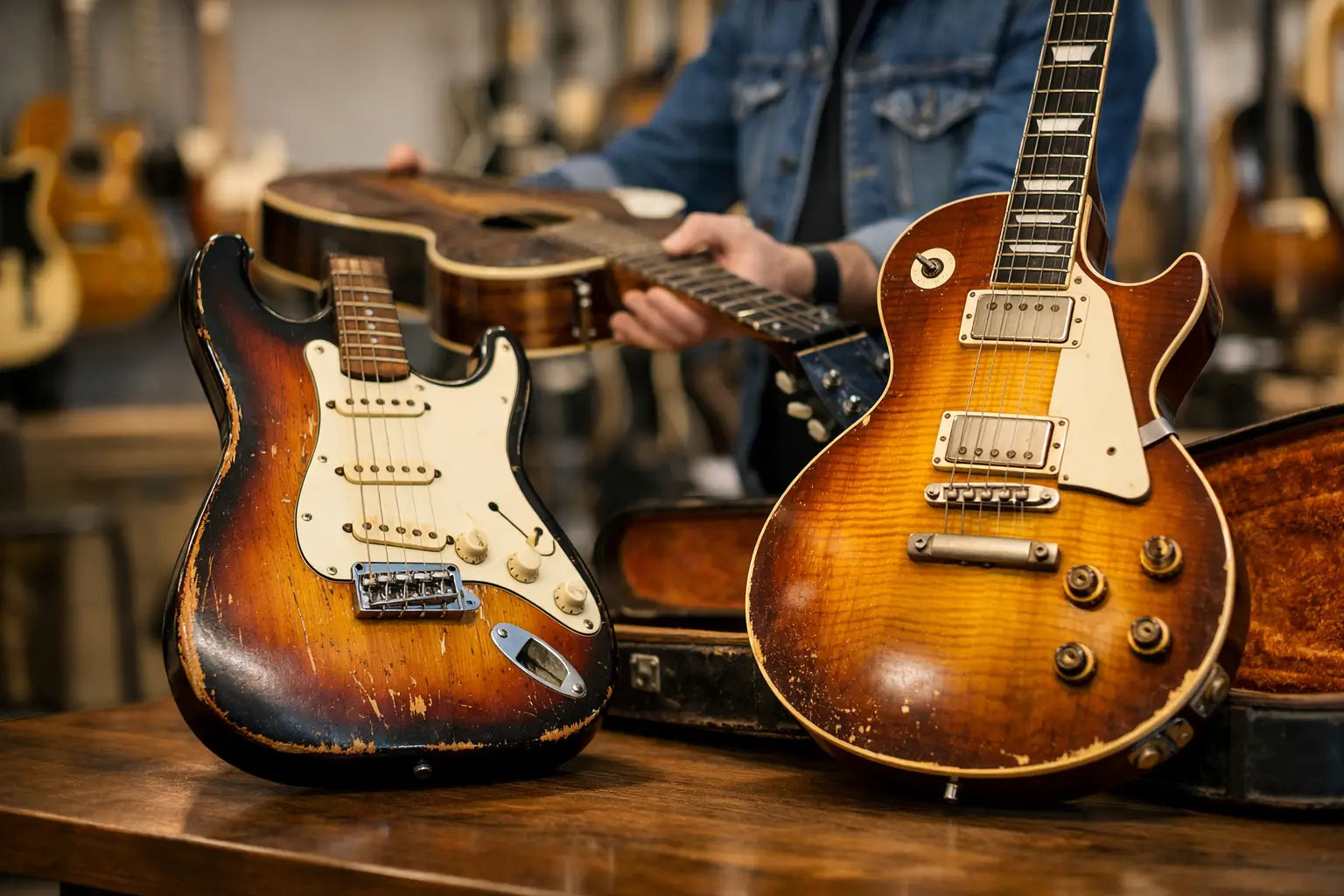
A 1960s guitar can make a modern production model feel slightly anonymous before you have even plugged it in. The worn finish, the neck profile, the old case and the story behind it all have real appeal. But are vintage guitars worth buying when the price can be several times that of a brilliant new instrument? For the right player, absolutely. The key is buying the individual guitar, not simply the year on its serial number.
Vintage instruments can be inspiring, valuable and genuinely superb to play. They can also need costly work, have replaced parts that affect value, or suit a collector far better than a working musician. A sensible purchase starts with being clear about what you want it to do.
Why vintage guitars have such a pull
A great old guitar is more than a replica of its original specification. Decades of playing can settle a wooden instrument in ways a brand-new one cannot copy exactly. An older acoustic may develop a more open, responsive voice. A well-played electric can have a neck that feels immediately familiar, with fretboard edges softened naturally by years of use.
There is also the matter of period-correct design. A 1970s Japanese guitar, an early British-built oddity or a classic American model may offer pickups, hardware, finishes and construction details that are unavailable on current models. Some were made in smaller numbers, some came from factories with a particular character, and some have become important in their own right.
That does not mean every old guitar sounds better. Age is not a tone control. Plenty of modern guitars are more consistent, more stable and easier to maintain, while a poorly stored vintage instrument may have problems hidden beneath its charm. The best vintage guitars earn their reputation through condition, sound, feel and originality together.
Are vintage guitars worth buying for your needs?
The answer changes depending on whether you are a player, collector, investor or a mixture of all three.
For a player, vintage can be worth the extra money when the guitar offers something you cannot find in a current model: a remarkable neck, a specific pickup voice, a lightweight body, a mature acoustic response or simply a connection that makes you want to practise. If it will be played regularly, it needs to be structurally sound, comfortable and practical enough for your gigs, rehearsals or home sessions.
For a collector, originality and provenance often carry greater weight. Correct pickups, hardware, finish, case and paperwork can affect desirability substantially. A rare finish or an unusual factory specification may be exciting, but only if it is documented and properly understood.
Buying solely as an investment is less straightforward. Desirable vintage guitars have often held their appeal well, but values move with fashions, condition and the wider market. Fees, insurance, maintenance and the risk of damage all matter. Buy a guitar you would be pleased to own and play even if its value stayed exactly where it is.
Condition matters more than the date
Two guitars from the same year can be worlds apart in price and usefulness. One may be original, healthy and ready for another fifty years of music. The other may require a neck reset, refret, electronics work and structural repair before it is enjoyable to play.
On an acoustic, look closely at the neck angle, bridge condition, top bellying, cracks, braces and humidity-related movement. A clean-looking instrument with high action and little saddle left can be heading towards significant work. That work is not automatically a reason to walk away, but the price should reflect it.
With electrics, inspect the neck for straightness and stability, test the truss rod where appropriate, and check that the frets have enough life left. Listen for noisy pots, intermittent switches and weak output. Original electronics are attractive to collectors, but a guitar that crackles through every song may need careful attention.
Finish wear is different. Honest play wear, small dings and lacquer checking can add character without affecting function. Water damage, serious cracks, a twisted neck or evidence of poor repairs are another matter. A vintage guitar should be assessed with clear eyes, not through the romance of a faded sunburst.
Originality affects value, but not always enjoyment
Originality is one of the most misunderstood parts of vintage buying. It matters hugely for high-value and collector-grade instruments, especially where original pickups, finish and hardware are major parts of the appeal. A refinished guitar, changed tuners or replaced pickups can reduce collector value considerably.
Yet a sympathetic repair can make a guitar a better musical tool. A professional refret can transform a worn but exceptional neck. A replacement bridge on an acoustic may be necessary to keep the instrument healthy. Updated wiring can improve reliability for someone who intends to perform with it every weekend.
Ask what has been changed, why it was changed and how well the work was carried out. Good disclosure is worth far more than vague claims of originality. If a guitar has modifications, that is not necessarily bad news. It may represent a chance to own a wonderful player-grade vintage instrument at a more approachable price.
Original finish is a major conversation
A factory finish is often a large part of a vintage guitar's value. Refinishing can be very well executed, but it usually changes collector desirability. It can also hide repairs, altered woodwork or a previous break. Look for an honest description and consistency between the finish, hardware wear and the instrument's overall history.
The hidden costs to budget for
Vintage ownership is not always a case of buying once and simply changing strings. Even an excellent guitar may benefit from a proper setup suited to your preferred string gauge and tuning. Older instruments sometimes need fret dressing, nut work, replacement capacitors, cleaning or a case upgrade.
More substantial jobs can include a refret, neck reset, crack repair, headstock repair or electronic restoration. These are specialist jobs, and the quality of the work matters greatly. Poor repairs can hurt value and playability; thoughtful restoration can preserve a guitar that deserves to be played.
Factor those costs into the real purchase price. A cheaper vintage guitar that needs £800 of work is not necessarily a bargain against a fully sorted example at a higher ticket price. At Chordplay Guitars, our workshop perspective is simple: a guitar should be honestly assessed and properly set up so you know whether you are buying a project, a collector piece or a ready-to-play instrument.
How to buy with confidence
Private sales can produce a genuine find, but they also demand homework. A trusted specialist gives you a clearer route to ask about condition, repairs, serial numbers, provenance and setup. If you can visit a showroom, spend time with the guitar rather than making a decision from photographs alone.
When assessing an instrument, focus on these five areas:
- Playability: Check action, intonation, neck comfort, fret condition and tuning stability.
- Structure: Look for cracks, breaks, neck angle issues, loose braces and signs of damp or heat damage.
- Originality: Establish which parts, finish and electronics are original, replaced or restored.
- Sound: Play it clean and through an amp you know if possible. Listen for the response you actually want.
- Paper trail: Cases, receipts, previous appraisals and credible history can support a guitar's story and value.
When a modern guitar may be the better choice
If you need flawless tuning stability, predictable build quality, a warranty and worry-free touring reliability, a modern guitar may make more sense. Current instruments often provide excellent value, particularly for players who want a specific neck profile, modern hardware or noiseless pickups without vintage pricing.
There is also no prize for owning a guitar you are afraid to take out of its case. If your budget is fixed, a quality used modern guitar plus a professional setup, good amplifier and decent pedals may serve your music better than stretching for an older name on a headstock.
The right vintage guitar should feel like an invitation, not an obligation. If its sound, feel and history keep pulling you back for one more riff, and its condition and price stand up to proper scrutiny, it may be worth far more than its age alone.
Share:
What Causes Guitar Fret Buzz? Fix the Rattle
Valve vs Solid State Amplifiers: Which Suits You?