Turn a valve combo up until the speaker starts working hard and there is a reason guitarists grin. The notes seem to push back, chords gain texture and the volume control on the guitar becomes part of the performance. But valve vs solid state amplifiers is not simply a contest between old-school tone and modern convenience. The better choice depends on where you play, how loud you can be, what sounds you need and whether you want an amp that asks a little care in return.
A great amplifier should make you want to keep playing. For some, that is a small valve combo with a simple control panel and a proper speaker. For others, it is a dependable solid state amp that sounds good at flat volume in the spare room, survives a busy rehearsal schedule and offers several useful voices at the turn of a dial.
What makes a valve amplifier feel different?
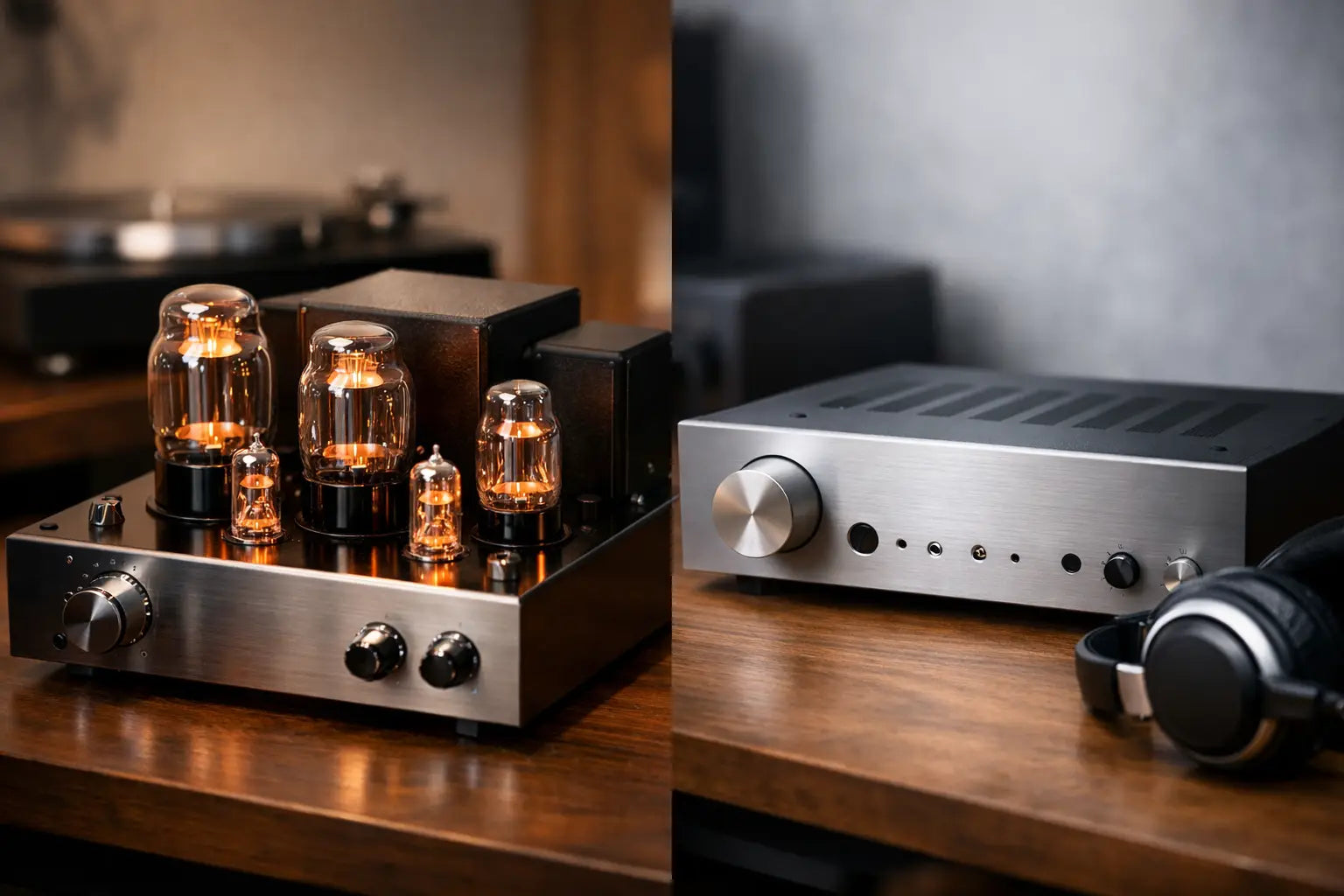
Valve amplifiers use vacuum tubes to amplify the guitar signal. They are not automatically better than every solid state design, but their response has earned its reputation. As the power section and speaker are driven harder, many valve amps compress gently and add harmonic richness. Players often describe this as warm, touch-sensitive or three-dimensional.
The useful bit is how that feels under your fingers. Pick lightly and a well-set valve amp can clean up. Dig in and it can snarl, bloom or break up without touching a pedal. That interaction is a big part of classic blues, rock, country and vintage-inspired guitar sounds. It is also why a modest 15-watt valve amplifier can feel surprisingly loud next to a much higher-rated practice amp.
Not all valve amps do the same job. A sparkling Fender-style circuit, a mid-forward British combo and a high-gain modern head will react very differently. The valves are only one part of the recipe. The circuit, transformer, speaker, cabinet and setup matter just as much.
The volume catch
Many valve amps sound their most exciting when they are working hard. That is brilliant on stage, in a rehearsal room or in a detached house with tolerant neighbours. In a terraced home at 9pm, it can be less practical.
A master volume helps, and modern valve amps may include low-power modes, built-in attenuation or headphone outputs. Even so, some classic non-master-volume designs need real volume before they deliver their signature drive. If most of your playing happens quietly, do not buy an amp solely because it has your favourite artist's name attached to it. Try it at the level you will genuinely use.
Maintenance and ownership
Valves wear out. Preamp valves can last for years, while power valves generally take more punishment and may eventually need replacing. Some amplifiers also need biasing when power valves are changed, which is a job for a qualified technician unless you fully understand the risks involved.
That does not make valve amps fragile museum pieces. Plenty of properly maintained older amps are still gigging after decades. It does mean you should budget for occasional servicing, keep the correct speaker load connected and avoid transporting a hot amp straight after a set. For players who enjoy owning gear with character and a serviceable future, that is part of the appeal.
Why solid state amplifiers deserve a serious look
Solid state amplifiers use transistors rather than valves. They are usually lighter, more affordable at a given power rating and ready to perform at the same level from the moment they are switched on. There is no warm-up period and no regular valve replacement to consider.
Older solid state guitar amps sometimes get dismissed because early examples could sound stiff or harsh when pushed. That is far too broad a judgement now. Good transistor amps can be full, punchy and exceptionally clear, while current digital modelling amplifiers can reproduce a remarkable range of amplifier and cabinet sounds. Jazz players, clean-tone specialists, touring musicians and home players all have very good reasons to choose them.
Solid state power also makes sense where clean headroom is the priority. If you need loud, clean rhythm sounds, a pedal platform for delay and modulation, or an amp that stays composed with a bass-heavy guitar, a solid state design can be excellent. Its character often changes less dramatically as the volume rises, which can be exactly what you want.
Analogue solid state and digital modelling are not identical
It helps to separate two categories often thrown together. An analogue solid state amp creates its sound with transistor-based circuitry. It may have a straightforward clean channel and a drive channel, much like a traditional combo, with a particular voice of its own.
A digital modelling amp uses processing to emulate different amplifiers, speaker cabinets and effects. It can be a brilliant all-in-one choice for a beginner building their first rig, a covers player needing several sounds, or anyone recording directly at home. Presets, USB recording and headphone practice are genuine advantages, not gimmicks.
The trade-off is choice. A modelled amp may offer dozens of convincing sounds, but more menus and options can distract from playing. A simple solid state combo or valve amp may give you one sound you learn inside out. Neither approach is more serious. It is about whether you want breadth or a familiar foundation.
Valve vs solid state amplifiers for real playing situations
For home practice, solid state and modelling amps often have the edge. They tend to sound complete at low volume, and useful features such as headphones, an aux input and built-in effects save space and extra expense. A low-watt valve amp can still be a lovely home companion, particularly with a good master volume, but wattage figures can be misleading. A five-watt valve amp is not automatically bedroom quiet.
For rehearsals and gigs, both can be superb. A valve combo gives a responsive, familiar feel that many guitarists love in a band mix. A solid state combo gives reliable clean volume with less weight and less worry about valves being knocked about on the journey. If you play venues with decent PA support, a smaller amp that can be mic'd up is often more useful than a huge stack.
For pedals, there is no universal winner. Many valve amps make an outstanding pedal platform, especially if their clean sound remains clear at the volume you need. Solid state amps can be equally friendly, particularly for modulation, delay and high-headroom clean sounds. The key question is whether the amp's gain structure complements your pedals. Take your own overdrive or multi-effects unit when trying an amp if you can.
For recording, a modelling amp's direct output and cabinet simulation can be very convenient. A valve amp recorded with a microphone can sound magnificent, but it involves volume, room acoustics and microphone placement. A small valve combo, a load box or an attenuator can close that gap, although each adds cost and complexity.
Do not judge an amp by watts alone
A common mistake is comparing a 50-watt solid state amp directly with a 50-watt valve amp. They do not behave in the same way when pushed, and perceived loudness is affected by speaker efficiency, cabinet design, frequency response and how clean the amp remains.
A loud, efficient 12-inch speaker can make a modest amp feel far bigger than its specification suggests. Conversely, an amplifier with plenty of advertised watts can seem underwhelming through a small speaker or closed-off cabinet. When possible, listen with the guitar you own or one with similar pickups. A bright single-coil guitar and a high-output humbucker will reveal different things.
Also think about carrying it. A valve 2x12 combo may sound glorious but becomes less romantic after a wet load-in and three flights of stairs. A compact solid state combo, lightweight head or powered modeller might get used more often simply because it is easy to take with you.
Choosing without chasing somebody else's tone
Start with the sound you use most, not the sound you might use once a year. If your ideal tone is edge-of-break-up rhythm, expressive lead playing and a simple pedalboard, a valve amp may be the inspiring choice. If you need quiet practice, a broad palette, dependable clean headroom or low-maintenance gigging, solid state may fit your life better.
Set a realistic budget for the whole rig. A valve amp may need a service down the line. A modeller may reduce the need for separate effects pedals. Factor in a cover, lead, stand, footswitch and any attenuation or recording equipment you actually need. A fairly priced used amplifier can be particularly good value, provided its condition has been checked and you understand its history.
Most importantly, trust your hands and ears rather than forum mythology. Spend time with both types, use the controls on your guitar and play at a sensible volume. At Chordplay Guitars, that is exactly the sort of comparison worth making in person: the right amp is the one that makes the next chord feel like a song is about to happen.
Share:
Are Vintage Guitars Worth Buying for Players?
Why Rising Japanese Guitar Values Matter Now