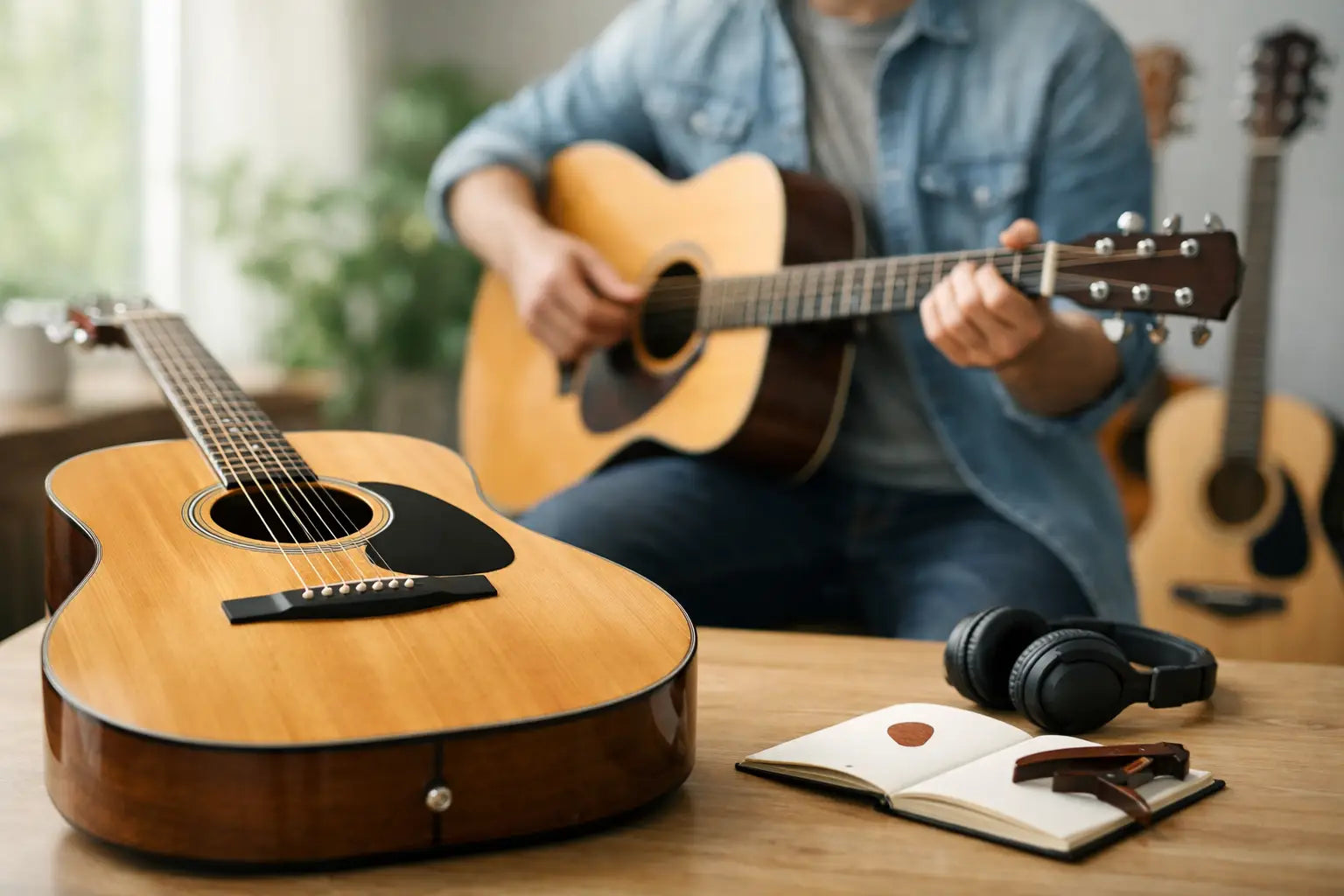
That first guitar needs to make you want to pick it up again tomorrow. The best acoustic guitar for beginners is not automatically the most expensive, the loudest or the one with the biggest name on the headstock. It is the guitar that feels comfortable in your hands, stays in tune, sounds good enough to reward early progress and does not fight you while your fingertips are still getting used to strings.
A beginner can learn on almost any playable acoustic, but a poorly set-up instrument with a thick neck, high strings and unreliable tuning can turn a brilliant new hobby into a frustrating chore. Get the fundamentals right and even a modestly priced guitar can become a trusted companion for years.
What makes the best acoustic guitar for beginners?
Comfort comes before specification. You may eventually care deeply about solid tops, vintage-style bracing, exotic tonewoods and the subtle difference between a dreadnought and an auditorium body. Those things can matter, but your first job is to find an instrument that feels inviting.
Start with the body size. A full-size dreadnought is the classic acoustic shape: bold, punchy and great for big open-chord strumming. It is also fairly deep and broad. For an adult with a larger frame, it can be a fine first choice. For younger players, smaller adults or anyone who wants a guitar for the sofa rather than a campfire singalong, it can feel like a lot of instrument.
Concert, orchestra and auditorium-bodied acoustics are often easier to hold. They sit closer to the player, tend to offer a more balanced sound and respond nicely to both strumming and fingerpicking. Parlour guitars are smaller again, with a focused, characterful voice and a very approachable feel. Do not mistake smaller for lesser - plenty of experienced players choose a compact acoustic because it is comfortable and inspiring.
Scale length matters too. A shorter-scale guitar has slightly lower string tension, so fretting notes can feel easier. Neck shape and nut width also affect comfort. A slim neck with a reasonably narrow nut is familiar territory for many first-time players, while a wider neck may suit fingerstyle playing but can initially feel more demanding.
Steel string, classical or electro-acoustic?
Most people searching for an acoustic guitar mean a steel-string model. Its bright, ringing sound works brilliantly for pop, rock, indie, folk and singer-songwriter material. It is the sound behind countless chord-based songs, and it is the obvious choice if that is what you want to play.
A classical guitar uses nylon strings, which are gentler on new fingers and produce a warmer, rounder sound. They are ideal for classical repertoire, flamenco-inspired styles and some fingerpicking approaches. Their necks are wider, however, and the feel is quite different from a steel-string acoustic. Choosing nylon strings solely because they feel softer can be a false economy if your favourite music is built around steel-string strumming.
An electro-acoustic is simply an acoustic guitar with a pickup system for plugging into an amplifier or PA. It is useful if you expect to perform, record directly or play with a band. For home learning, it is not essential. A well-made standard acoustic usually gives better value at the same budget, because none of the price is going into onboard electronics.
Spend on playability before fancy features
The most useful word in beginner guitar buying is “setup”. This means the practical adjustment of the instrument: string height, neck relief, nut slots and intonation. When these are right, chords need less pressure, notes ring cleanly and the guitar plays in tune further up the neck.
A guitar can have attractive wood grain, a glossy finish and a famous logo yet still be awkward to play straight from the box. Equally, a sensibly priced guitar that has been checked and set up properly can feel remarkably good. This is one reason a proper guitar shop is worth considering, particularly for a first instrument. At Chordplay Guitars, the in-house workshop perspective is useful because the conversation can focus on whether the guitar suits the player, not just whether it looks impressive on a stand.
Look along the neck from the headstock towards the body. You are not trying to diagnose every tiny detail, but obvious twisting, severe bowing or strings sitting unusually high are warning signs. Play each fret if you can, listening for buzzing or notes that choke out. Tune the guitar, strum a few open chords, then tune it again after a few minutes. Budget machines are not always flawless, but the tuners should hold their position well enough for a normal practice session.
If you are buying for a child, avoid the temptation to buy a tiny, toy-like guitar simply because it is cheap. A correctly sized 1/2, 3/4 or short-scale instrument from a reputable maker will be far more enjoyable. The right size depends on the child’s height, reach and hand size, so trying one in person is ideal where possible.
How much should a first acoustic guitar cost?
There is a sensible middle ground between a bargain-basement guitar and a premium instrument that deserves to be kept for life. At the very lowest prices, quality control can be inconsistent and the cost of putting faults right may outweigh the original saving. A little more budget usually brings better tuners, more reliable construction and a guitar that stays enjoyable beyond the first few lessons.
For many beginners, a realistic starting budget should allow for the guitar, a case or gig bag, a tuner and a few picks. A strap is useful for standing practice, although it will need a secure strap button arrangement. If the guitar does not include a professional setup, keep a little aside for one. That money often makes a greater difference than upgrading from one entry-level finish to another.
Used guitars deserve serious consideration. A pre-owned Yamaha, Fender, Epiphone, Ibanez, Takamine or similar mainstream acoustic can offer excellent value, provided its condition has been assessed properly. Cosmetic marks are often harmless and can save money. Structural issues are different: lifting bridges, cracks, serious neck problems and damp-related damage can be costly. Buying used from a specialist retailer removes much of the uncertainty of a private sale, especially when you are still learning what to inspect.
Solid top or laminate?
You will see these terms regularly. A solid top is made from a single layer of wood and can offer more detail, projection and responsiveness as it is played over time. Laminated construction uses layers of wood and is generally tougher against changes in temperature and humidity.
A solid-top guitar can be a lovely purchase if the budget allows, but it is not compulsory for a beginner. A well-built laminate acoustic with a comfortable neck and a good setup is a better choice than an uncomfortable solid-top guitar bought for the specification sheet. If you travel frequently, leave a guitar in changing environments or simply want fewer worries, laminate can be a very sensible option.
Try these checks before taking a guitar home
When you have narrowed the choice, spend ten minutes with each guitar rather than making a decision from looks alone. A beginner does not need to play a full song to learn a great deal. Check the following:
- Sit down with the guitar and see whether your picking arm rests naturally over the body.
- Form a G, C and D chord. Notice how much pressure the strings need and whether your wrist feels cramped.
- Pick individual notes on every string, then strum firmly to listen for unwanted rattles.
- Turn each machine head gently and make sure tuning changes feel smooth and controlled.
- Play a note around the 12th fret and compare it with the same open string an octave lower. If it sounds noticeably out, ask for advice on intonation.
The extras that genuinely help you learn
A clip-on tuner is not optional in practice. Playing an out-of-tune guitar makes even correct chords sound wrong, which can be discouraging when you are trying to train your ear. A gig bag protects the instrument from knocks and dust, while a hard case is worthwhile if the guitar will travel regularly or if you have bought something more valuable.
Buy a small selection of picks rather than a huge bag of one thickness. Thin picks make relaxed strumming easy but can feel floppy; medium picks are a useful all-round starting point; heavier picks give more control for single-note playing. There is no correct answer, and they cost little compared with the difference they can make to your right hand.
A spare set of strings is also wise. Steel strings eventually lose brightness, become harder to tune and may break. New players do not need to change them every few weeks, but learning basic string care and wiping the guitar down after playing will keep it feeling better for longer. Never fit steel strings to a classical guitar, or nylon strings to a steel-string acoustic without checking first - the instruments are built for different tensions and setups.
Choose the guitar you will keep playing
It is easy to overthink a first purchase, particularly when every model has a long list of specifications. Give yourself permission to choose the one that makes you smile when you strum an E minor chord. It might be a compact folk body, a classic dreadnought, a tidy used instrument with a few honest marks or a fresh-out-of-the-box starter model in your favourite finish.
The right guitar will not teach your fingers for you, but it should make the work feel worthwhile. Keep it within reach, keep it in tune, and let the first few slightly clumsy chords become songs.
Share:
How to Identify a Vintage Guitar: 9 Checks
What Bass Guitar for Beginners Should You Buy?