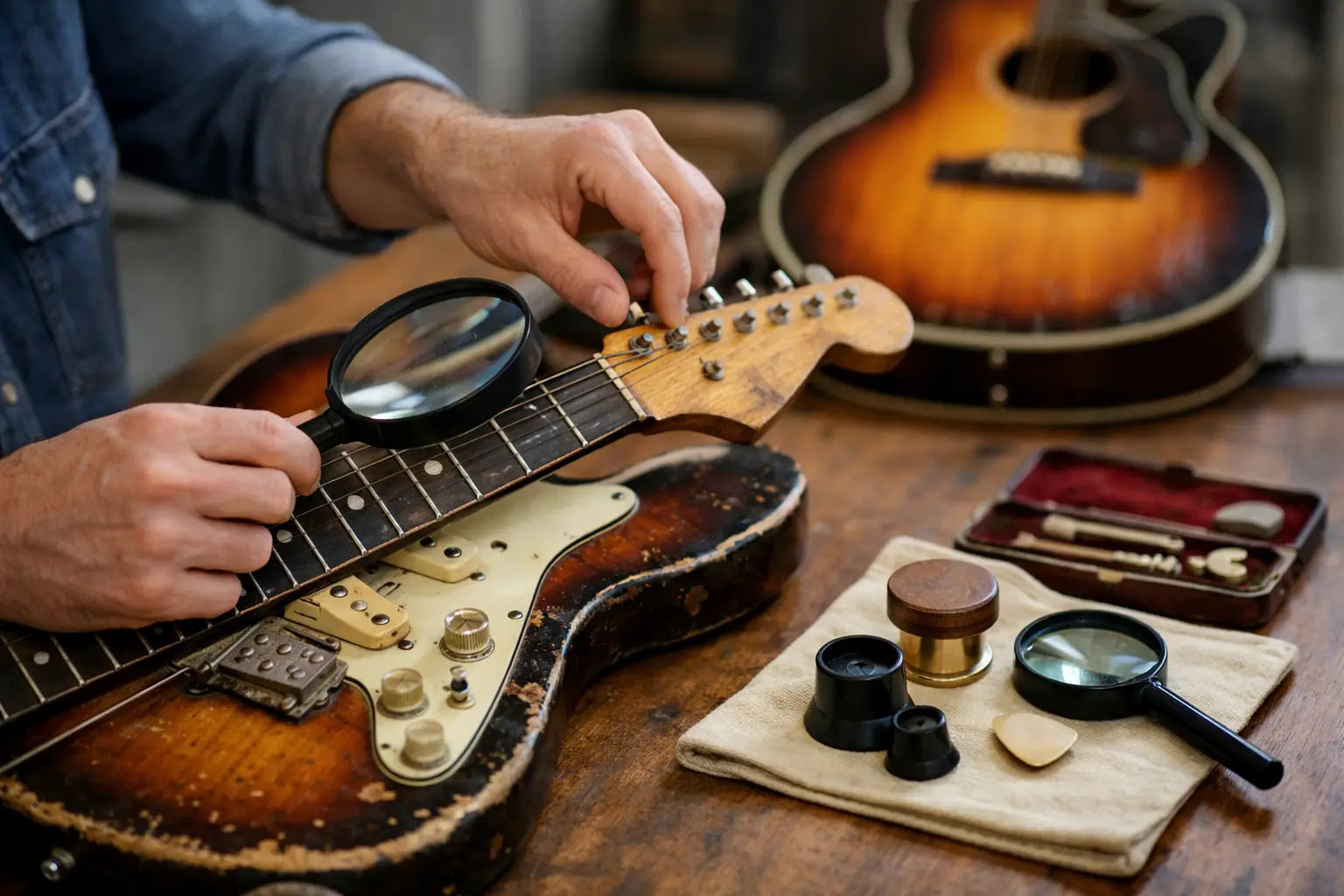
A faded finish, worn frets and a hard case do not automatically make an instrument vintage. Plenty of guitars have been aged deliberately, modified over decades or assembled from parts that never shared a factory floor. Knowing how to identify vintage guitar details properly means separating honest age from useful history, then deciding whether that history adds value, risk or simply character.
For a player, the right older guitar can be a seriously inspiring thing: a well-played 1960s acoustic, a lively Japanese electric from the 1970s, or a dependable 1980s workhorse with the original pickups still singing. For a collector, the details matter even more. A changed bridge, refinished body or replacement neck can alter value dramatically, even when the guitar remains a cracking instrument to play.
Start with the whole guitar, not one serial number
The serial number is a sensible starting point, but it is not a complete answer. Different makers used different systems, changed them over time and occasionally reused or inconsistently applied numbers. On some vintage instruments, a number gives a narrow production window; on others, it only confirms the broad era.
First, identify the make, model and likely country of origin. Look at the headstock shape, logo style, truss-rod cover, body outline, control layout, bridge, pickup design and hardware. These features often tell a more reliable story together than a single stamped number.
A Fender-style headstock, for example, is not enough to identify a Fender. Japanese copies from the 1970s and 1980s can be excellent guitars in their own right, but their construction details, decals and fittings differ from a USA-made original. Likewise, a Gibson-style open-book headstock deserves close inspection, as it has long been copied.
Take clear photographs before researching: front and back of the headstock, serial number, neck joint, control cavity, pickups, bridge, tuners and any stamps or labels. Good photographs make it much easier to compare details without relying on memory.
Check the serial number in context
Serial numbers may appear on the back of the headstock, neck plate, label, inside the body, or occasionally in more than one place. Write it down exactly, including prefixes, suffixes, letter stamps and unusual spacing.
Then ask whether the number belongs where it is found. A neck plate serial number may date the plate rather than the complete guitar. A neck can be swapped. A paper label can be copied. On bolt-on instruments especially, the neck, body and hardware may have been changed independently.
Treat online serial number charts as guides, not proof. They can be especially unreliable for brands with overlapping ranges, export models and factory transitions. If the number suggests 1965 but the logo, tuners and electronics point to the late 1970s, stop and investigate rather than choosing the date you prefer.
Look for factory date marks
Many guitars carry less obvious dating clues. Removing the pickguard or control plate may reveal potentiometer codes, pickup dates, neck stamps, pencil marks or inspection markings. On acoustics, labels and internal stamps can be useful, while neck blocks and bracing patterns may help confirm the period.
Potentiometer codes can provide a useful earliest possible date. A pot made in the 20th week of 1972 means the guitar cannot have left the factory before then, but it may have been assembled months or even years later. Original pots are valuable evidence; replacement pots date the repair, not the instrument.
Only inspect internal areas if you know what you are doing. Old screws strip easily, brittle solder joints can be damaged and an original component is worth more intact than disturbed for curiosity. A workshop can inspect these areas safely when the stakes are higher.
Read the construction details
Vintage guitars were made with particular methods, materials and parts that changed from year to year. This is where patient observation pays off.
On an electric guitar, inspect the neck joint and body routs. Are the routs clean and factory-like, or do they show fresh tool marks, uneven edges or non-original holes? Look beneath the pickguard for extra screw holes, altered pickup cavities and plugged routes. A professional modification can be tidy and worthwhile for a player, but it still needs declaring when assessing originality.
For acoustics, examine the bridge, bridge plate, braces, binding and neck angle. An old acoustic may have an original finish and label yet require expensive structural work. A lifting bridge, loose braces, bellying top or pronounced neck angle problem matters more than a few scratches. Vintage should not mean fragile, but it does mean you should inspect with open eyes.
Hardware also gives useful clues. Tuners, bridge saddles, pickup covers, knobs and screws may all be period-correct, even if they are not original to that particular guitar. Compare the style, dimensions and fixing holes with known examples from the same model and year range.
Learn the difference between wear and ageing
Real wear is rarely neat. A guitar played for decades tends to show use where hands, arms, straps and cases meet it: finish dulling on the neck, fretboard wear under common chord shapes, small dents around the edges, tarnished hardware and modest checking in older nitrocellulose finishes.
Artificial ageing often looks too evenly distributed. Uniform scratches, identical dulling across every metal part and dramatic bare wood in places a player would not touch deserve a second look. That does not make a relic guitar bad - many are made deliberately and very well - but it should never be priced as naturally aged vintage stock.
Finish checking is another area where context matters. Fine lacquer checking can be entirely genuine, especially on guitars exposed to temperature changes. It can also be encouraged artificially. Check whether the finish wear aligns with the guitar's construction, hardware and claimed age.
Establish what is original and what has changed
Originality is not an all-or-nothing badge. Most older working guitars have had some maintenance, and sensible repairs can keep them playable for another generation. A refret, replacement nut, new switch or changed capacitor may have little effect on a player-focused purchase. A refinish, replaced pickups, changed neck or altered headstock is a bigger conversation.
Ask for a clear parts history. Which components are original? Has the finish been refinished or touched up? Has the neck been reset, repaired or refretted? Are the pickups original, rewound or replaced? Is the case original to the guitar? Straight answers are a good sign, and vague language around major work is not.
Be especially careful with phrases such as “all original apart from”. That final part can be minor, or it can be the feature that defines the guitar's value. A 1960s electric with replacement tuners may still be a great buy. The same guitar with a replacement body, modern pickups and a refinished neck should be valued very differently.
Assess condition as a player would
A vintage guitar can be historically correct and still be a poor fit for your needs. Check the neck relief, action, fret life, truss rod operation, electronics, tuning stability and intonation. Listen for crackles, dropouts and excessive hum. On acoustics, look closely at the neck angle and whether there is enough saddle height left for a proper setup.
Do not assume an old guitar should play badly. Plenty do need careful work, but a properly set-up vintage instrument can feel remarkably immediate and alive. Equally, do not dismiss a guitar because it has had a professional refret or neck reset. For musicians, those repairs may be exactly what makes it a reliable instrument rather than a display piece.
The trade-off is simple: collector originality and everyday usability do not always travel together. Decide which matters most before you negotiate.
Check provenance, but keep it proportionate
Original receipts, photographs, service records, old cases and a believable ownership story can all strengthen confidence. They are particularly valuable on rare, high-value instruments. However, a great many genuine vintage guitars arrive with no paperwork at all, especially those that have spent years under beds, in lofts or on local pub stages.
Provenance should support physical evidence, not replace it. A handwritten note claiming a famous year does not outweigh incorrect construction details. Conversely, a guitar with correct features, sensible wear and consistent internal dates does not become suspicious simply because its original sales receipt has disappeared.
When to get a second opinion
If the guitar is expensive, unusual or carrying a strong vintage premium, expert inspection is money well spent. A knowledgeable dealer or repairer can spot issues that are easy to miss in photographs: repaired headstocks, hidden overspray, changed solder joints, neck twist, non-original finish under black light, or a body and neck from different instruments.
At Chordplay Guitars, our workshop perspective is always practical: a guitar's story matters, but so does whether it can be set up, played and enjoyed. Bring a potential purchase in where possible, or provide detailed photographs before committing to a private sale.
The best vintage guitar is not necessarily the oldest, rarest or most untouched one. It is the instrument whose age, originality, condition and price all make sense together - and the one that still makes you want to plug in, tune up and play another song.
Share:
Where to Buy Used Japanese Guitars in the UK
Choosing the Best Acoustic Guitar for Beginners