A first bass that feels awkward in your hands is far more likely to end up in a corner than one that makes you want to play another riff. Searches for “what bass guitar for beginners” often bring up huge lists of models, but the right answer is usually more personal: choose a bass that is comfortable, stays in tune, sounds good through a real amp and leaves enough of your budget for the essentials.
You do not need a rare vintage instrument or a high-end boutique build to get started. You do need a bass that is properly set up, physically manageable and inspiring enough to pick up every day. That is where a little sensible guidance beats chasing the biggest specification sheet.
What Bass Guitar for Beginners Should Feel Like
The best first bass is normally a four-string electric bass. It is the format used on an enormous range of records, the tuning is straightforward - E, A, D and G - and most beginner lessons, song charts and band rehearsals assume it. Five-string basses add a low B string and can be brilliant for modern metal, gospel, prog and heavier music, but the wider neck and extra string give a new player more to manage. Start with four unless you already know that a five-string is essential to the music you want to play.
Comfort matters more than almost any headline feature. Sit down with the bass, stand with it on a strap and reach the first few frets. Your fretting hand should not feel as if it is being forced into an uncomfortable stretch. A full-scale bass has a 34-inch scale length and delivers the familiar tight, punchy bass response heard on countless records. It is the safe, versatile choice for many adults and teenagers.
That said, a short-scale bass is not a compromise or a toy. With a shorter neck, usually around 30 inches, the frets sit closer together and the string tension feels softer. It can be an excellent choice for younger players, anyone with smaller hands, or players who simply prefer a more relaxed feel. Short-scale instruments often have a warm, rounded character too, which suits indie, soul, classic pop and vintage-inspired rock beautifully.
Body shape also changes the experience. A contoured body tends to sit comfortably against you, while a compact offset shape can feel less bulky for a smaller player. Weight is worth checking, especially if you expect to practise standing up or play long rehearsals. A heavier bass is not automatically better sounding, and an instrument that causes shoulder ache will not get much playing time.
Choose a Sound That Covers Your Music
For a first bass, versatility is useful. You may begin by learning punk lines, then join a school band playing funk, or find yourself working through Motown classics at home. A bass with simple, usable controls gives you room to explore without making every practice session a lesson in electronics.
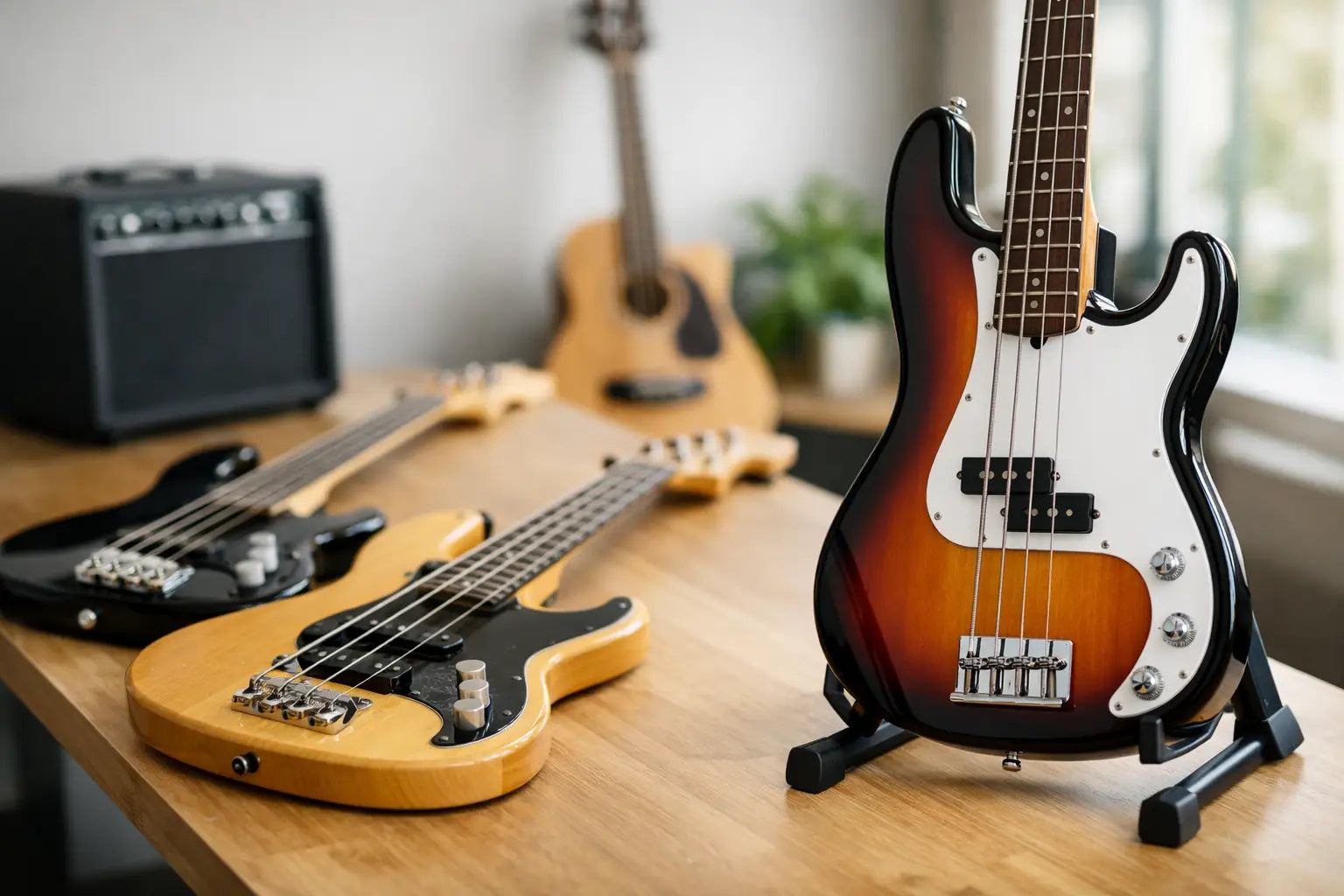
A Precision-style bass, with its split single-coil pickup, is known for a strong, solid sound that works especially well in rock, punk, blues and pop. It sits in a band mix with very little fuss. A Jazz-style bass uses two narrower single-coil pickups and usually offers more brightness, definition and tonal variation. It is a favourite for funk, indie, jazz and players who like a clear, articulate sound.
A PJ bass combines both approaches: a Precision-style pickup in the middle position and a Jazz-style pickup near the bridge. For many beginners, this is a very sensible arrangement. You can use the P pickup for a thick foundational tone, blend in the bridge pickup for extra cut, and learn what different pickup positions actually do.
Active basses include a battery-powered preamp, often with extra bass and treble controls. They can offer plenty of output and tonal flexibility, but a passive bass is often the easier starting point. Passive controls are simple, dependable and quick to understand. There is less to adjust and no battery to discover has gone flat halfway through a practice session. Neither system is objectively superior - it depends on the bass and the player - but uncomplicated is a good quality in a first instrument.
New or Used: Buy Condition, Not Just the Badge
A well-chosen used bass can be fantastic value. You may find a higher-specification instrument than your new budget would normally allow, and a quality bass that has already been played can have plenty of years ahead of it. The key is condition and preparation.
On a used instrument, check that the neck is straight, the tuners work smoothly, the controls do not crackle excessively and the frets are not badly worn. Plug it in and listen for unwanted hum, cutting out or loose sockets. Cosmetic marks are usually no concern if you are buying a player’s bass, but structural cracks, lifting bridges and serious neck issues deserve careful inspection.
This is where buying from a specialist shop can make a major difference to a first-time player. A properly assessed instrument, with its condition clearly described and a workshop available when it needs attention, removes much of the uncertainty that comes with a private sale. At Chordplay Guitars, that practical knowledge matters whether you are choosing a modest first bass or a more unusual pre-owned piece.
Do not rule out beginner-friendly ranges from respected makers. Squier, Yamaha, Ibanez, Epiphone, LTD and Sterling by Music Man have all produced dependable entry-level and mid-priced basses over the years. Individual instruments vary, though. The particular bass in your hands matters more than the logo on the headstock.
Set Aside Budget for the Bits That Make It Playable
The bass is only part of the purchase. A beginner who spends every penny on the instrument but has no suitable amplifier, lead or tuner will have a frustrating start. Budget for a small bass amp for home use, a proper instrument lead, a tuner and a strap. A gig bag is useful for getting to lessons and rehearsals, while a stand keeps the bass accessible at home rather than hidden away in a case.
A bass amplifier is not just a guitar amp with the word “bass” written on it. Bass frequencies need a speaker and circuit designed to handle them. Playing a bass through a small guitar amp at volume can sound thin and may strain the speaker. For quiet practice, a compact bass combo with a headphone output and auxiliary input is a genuinely useful choice. You can play along with lessons or songs without filling the house with low-end rumble.
You will also need a setup you can trust. String height, known as the action, has a big effect on how a bass feels. If it is too high, pressing notes takes unnecessary effort. If it is too low, the strings can buzz. Intonation matters too, ensuring notes higher up the neck play in tune. Even a good bass can feel poor if it has not been adjusted properly, while a modest instrument with a careful setup can be a joy.
Avoid These Common First-Bass Traps
Do not buy solely because a bass is the cheapest available. Very low-priced instruments can occasionally be fine, but poor tuning stability, sharp fret ends and difficult action create obstacles before you have learned your first full song. The goal is value, not simply the lowest price.
Likewise, do not assume a larger amp, more strings or more controls will make you progress faster. Bass playing is about time, touch and serving the song. A straightforward four-string with a decent practice amp will teach the fundamentals better than an overcomplicated rig you do not fully enjoy using.
Appearance still counts, of course. If a sunburst Precision-style bass, a blacked-out modern shape or a bright vintage finish makes you excited to practise, that feeling has real value. Just make sure the bass feels as good as it looks. Play open strings, fret notes across the neck and try it both sitting and standing. If possible, ask someone to play while you stand a few feet away - bass tone changes dramatically once it is moving air rather than sitting under your ear.
A Sensible First-Bass Shortlist
If you are unsure where to begin, narrow the choice by feel rather than getting lost in hundreds of options. A full-scale Precision-style or PJ bass is an excellent all-round starting point for most players. A Jazz-style model makes sense if you are drawn to brighter, more detailed sounds, while a short-scale bass deserves serious consideration for smaller hands or anyone who values a lighter, looser-playing instrument.
Try to buy the best example your budget permits, rather than stretching for features you may not use. A stable neck, comfortable profile, reliable hardware and professional setup will matter every time you play. The perfect first bass is not necessarily the one you will own forever. It is the one that gets you through your first grooves, first favourite songs and, ideally, your first rehearsal with a band.
Share:
Choosing the Best Acoustic Guitar for Beginners
How to Choose a Guitar Amplifier for Your Sound