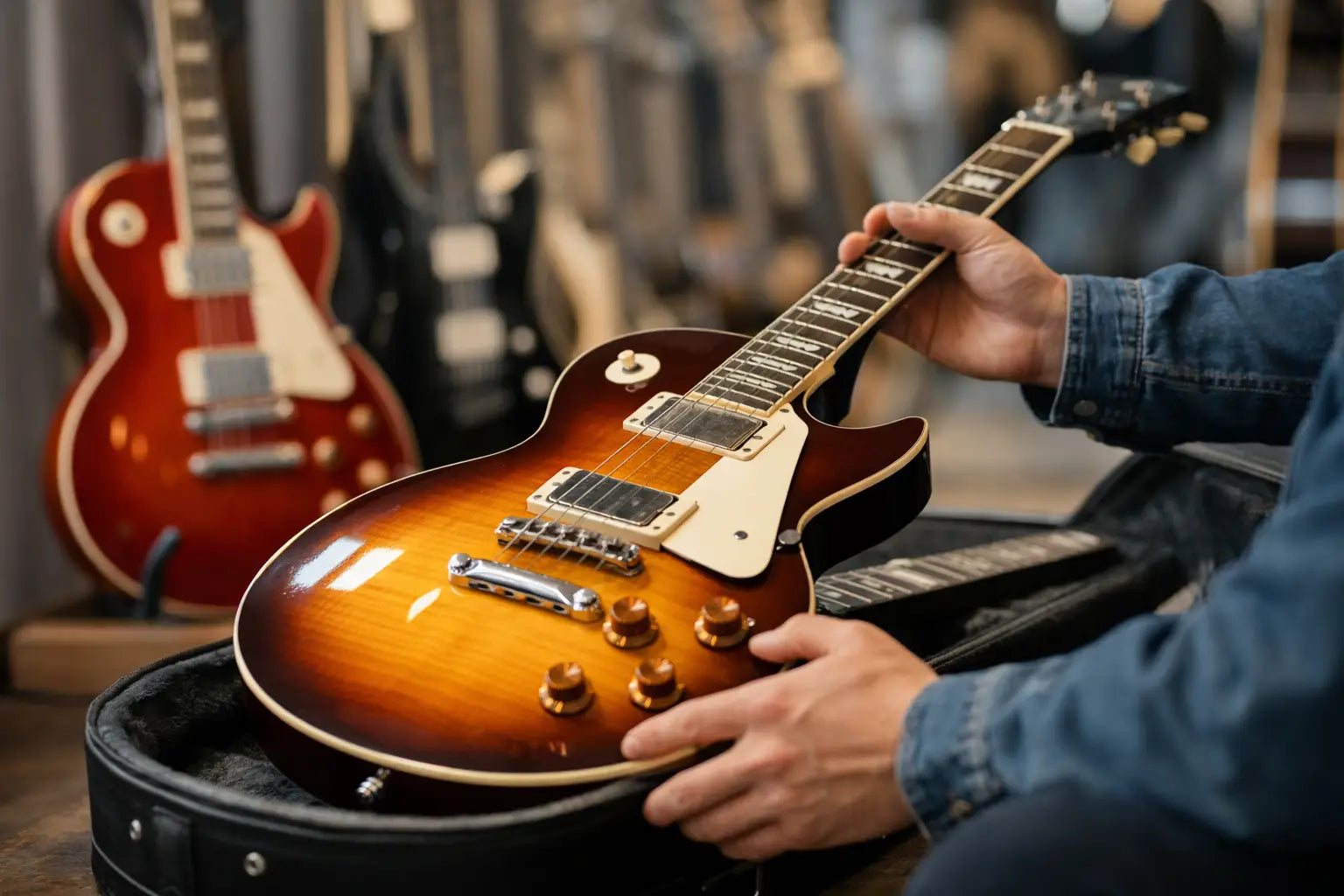
That guitar with a few honest marks, a proper set of pickups and a neck that feels instantly right can be far more exciting than a sealed box. Second-hand electric guitars give players access to better specifications, discontinued finishes and genuinely characterful instruments for the same money as a new entry-level model. The key is knowing the difference between a well-played guitar and one that is quietly asking for a costly rescue.
For a first-time buyer, a used electric can be a brilliant step up in quality. For an experienced player, it may be the route to a Japanese-made classic, a sought-after early model or simply a guitar that has already settled into its best self. Condition matters, but it is not the whole story. Playability, originality, sensible pricing and a trustworthy inspection matter just as much.
Why second-hand electric guitars make sense
The used market is full of instruments that have already taken the initial depreciation, yet still have years of playing ahead of them. A used Fender Player, PRS SE, Epiphone Inspired by Gibson, Gretsch Electromatic, Ibanez or LTD can often offer stronger hardware, pickups and finishing than a brand-new guitar at the same budget.
There is also more choice. New ranges change quickly, while pre-owned stock opens the door to colours, neck profiles and specifications that are no longer available. Maybe you prefer a chunky 50s-style neck, a slim Japanese superstrat profile, or a classic sunburst that has picked up a little natural ageing. Those preferences are easier to satisfy when the market is not limited to this year's catalogue.
Then there is the practical point: a guitar that has been played for a few years reveals its strengths. If the neck has stayed straight, the frets remain healthy and the electronics work cleanly, that is useful evidence. It does not guarantee perfection, but it tells you far more than a showroom-fresh instrument whose long-term behaviour is still unknown.
Start with the player, not the badge
A famous logo can be reassuring, but it should not make the decision for you. The right guitar depends on what you play, how you hold it and what you expect it to do.
A Les Paul-style guitar brings weight, sustain and a full humbucker sound that suits rock, blues and heavier styles. A Strat-style model offers comfort, clarity and a wide range of sounds, especially where clean and edge-of-breakup tones matter. Telecaster-style guitars have a direct, punchy response, while offset designs can be perfect for players who want a different feel and a broader soundscape. If you need high output, fast access above the 12th fret or a locking tremolo, a superstrat from Ibanez, ESP/LTD or similar makers may be the more sensible choice.
Try not to buy a guitar purely because it is collectable, rare or currently fashionable. Those can be excellent reasons to take notice, but a guitar still needs to suit your hands. Neck shape, nut width, fret size, scale length and body weight are not dry specification-sheet details when you are playing a two-hour rehearsal.
If you can visit a showroom, play the instrument standing up as well as seated. Use an amp that is reasonably close to your own. A guitar that feels good unplugged but sounds thin or noisy through an amp deserves a closer look. Equally, do not judge every small acoustic rattle as a disaster - some are simple setup jobs rather than structural problems.
What to check before you buy
Used condition should be described honestly, with the good and the less glamorous details clearly shown. Cosmetic wear is often harmless. A few dings, buckle rash or faded hardware can reduce the price without affecting how the guitar performs. Structural and electrical issues need more care.
Neck, frets and truss rod
Sight along the neck from the headstock towards the bridge. You are looking for a neck that is broadly straight, without a twist or dramatic hump. A little relief is normal and desirable on many setups; the concern is an obvious irregularity that cannot be corrected.
Check the fretboard edges and fret tops. Moderate fret wear is common, particularly under the first few strings around the lower positions. Deep grooves, sharp protruding fret ends or widespread flattening may mean a level, crown and polish or a refret is approaching. That work can be worthwhile on a special instrument, but its likely cost should be reflected in the price.
A working truss rod is essential. It is not something to force or casually adjust without experience, but a professional seller should be able to confirm the neck is adjustable and set up properly. At Chordplay Guitars, the workshop perspective matters here: a straightforward setup can transform a guitar, whereas a twisted neck is a different conversation altogether.
Electronics, hardware and tuning stability
Plug in and use every pickup position. Turn each volume and tone control slowly, listening for crackling, dropouts or a control that does nothing. Minor pot noise can sometimes be cleaned, but intermittent output, loose jack sockets and unexplained buzzing are worth identifying before money changes hands.
Test the tuners, bridge and tremolo. Fixed bridges are generally simple and stable, but check for seized screws, lifting bridge posts or missing parts. With a traditional tremolo, make sure it returns close to pitch after use. A Floyd Rose-style locking system can be superb for players who use it properly, though it takes more time to restring and set up than a fixed bridge. That is not a fault - it is a trade-off.
Repairs, modifications and originality
Repairs are not automatically bad. A clean, stable headstock repair carried out professionally can leave a guitar playing brilliantly and make an otherwise expensive model more affordable. It will usually affect resale value, so the price should acknowledge it.
Modifications deserve the same balanced approach. Upgraded pickups, locking tuners or a better bridge can make a working guitar more useful. On a vintage or collector-grade instrument, however, changed parts may reduce originality and value. Ask what has been changed, whether the original components are included, and who completed the work. A documented, sensible modification is very different from an unknown home wiring job.
Condition grades are a starting point, not a verdict
Terms such as MINT, excellent and very good are helpful shorthand, but photos and a proper description tell the fuller story. A mint modern guitar may be ideal if you want something immaculate. A well-worn 1970s instrument with replaced frets and a few scars might be the better buy if it has a great neck, healthy electrics and the sound you have been chasing.
Look for clear details on year, country of manufacture, serial number where appropriate, finish, pickup configuration, case and accessories. Original hard cases, certificates and period-correct parts can matter greatly on rare and vintage guitars. On a practical everyday instrument, a solid gig bag and a professional setup may be more valuable than a box full of paperwork.
Be realistic about relic finishes too. Some guitars are deliberately aged at the factory, while others have earned every mark on the road. Neither is automatically superior, but they should be represented accurately. Honest wear tells a story. Misleading condition descriptions create expensive disappointment.
Price the whole guitar, not just the purchase
The best deal is not always the lowest ticket price. Allow for the things you will need on day one: a setup, fresh strings, a case, a lead, perhaps a small amp or pedal. If a guitar needs a fret dress, replacement pickups and a new tremolo, its apparent bargain price can disappear quickly.
At the same time, do not overpay for imagined future value. Some Japanese-made models, discontinued runs and genuinely rare guitars deserve a premium because the quality and demand are there. Others are simply old. Buy collectable instruments because you understand what makes them desirable and would be happy to own them, even if the market softens.
A reputable specialist can make this part much easier. You should be able to ask direct questions about fret life, repairs, modifications, weight, setup and included extras, then receive a straight answer. That reassurance has real value compared with taking a chance on a poorly described private listing, especially when the guitar is being posted rather than played in person.
Buying online without the gamble
When buying remotely, photographs should show more than the attractive front angle. Ask to see the headstock, neck joint, fretboard, back of the body, hardware and any notable marks. For higher-value guitars, detailed images of serial numbers, repairs and original parts are sensible. Read the condition description closely and make sure you understand the returns process before committing.
A professionally prepared used guitar should arrive ready to enjoy, not as a project disguised as a bargain. Wood moves with changes in temperature and humidity during transport, so a minor adjustment after delivery is not unusual. But the instrument should be fundamentally sound, safely packed and accurately described.
The best used guitar is rarely the one with the fewest marks. It is the one that makes you want to put the kettle on, plug in and keep playing long after you meant to stop.
Share:
How to Set Up a Pedalboard That Works Every Gig
How to Choose a Classical Guitar for Adults