That favourite guitar can feel familiar enough to play with your eyes shut, yet a set of tired frets can quietly make it harder work than it should be. Knowing when guitars need refretting helps you protect an instrument you love, avoid chasing setup problems that will not go away, and make a sensible call on repair costs.
Frets are consumable parts. Every string bend, barre chord and enthusiastic vibrato leaves a tiny mark, especially beneath the plain strings and in the first few positions. It can take decades for a lightly played guitar to need serious attention, while a regularly gigged instrument may show real wear far sooner. Nickel-silver frets, despite the name, contain no silver and are softer than stainless steel, so they tend to wear more quickly.
The signs that guitars need refretting
The clearest sign is visible fret wear. Look along the fretboard in good light, particularly around frets one to seven. Small, shallow flats beneath the B and high E strings are normal on a well-played guitar. Deep grooves, pronounced flat spots or frets that look noticeably lower in the chord positions deserve a closer look.
What you feel and hear matters even more. A guitar with worn frets may buzz in isolated areas despite a sensible setup, choke out on bends, or play cleanly only with action set higher than you would like. Notes can sound duller and less defined because the string is no longer making a crisp contact point at the top of the fret. Intonation can also become frustrating, particularly if the frets are deeply grooved.
Be careful not to assume every buzz means a refret. Seasonal movement, a neck that needs a small truss-rod adjustment, uneven humidity, a worn nut or a poorly cut bridge saddle can all create symptoms that feel similar. A good workshop diagnosis is worth more than guessing from one annoying buzz at the fifth fret.
A fret dress or a full refret?
There is a useful middle ground between leaving worn frets alone and replacing every one. A fret dress, also called a level, crown and polish, is often the right first answer. The frets are carefully levelled to remove minor unevenness, then re-crowned so each fret has a precise rounded peak and polished to a smooth finish. It can transform a guitar that feels rough, buzzy or resistant to bends.
The trade-off is height. Every fret dress removes a little material. If the frets still have enough height above the fretboard after levelling, the guitar can have years of enjoyable life left. If wear is deep or the frets are already low from previous work, levelling them enough to remove the damage may leave them too short for comfortable playing. That is when a refret becomes the more lasting repair.
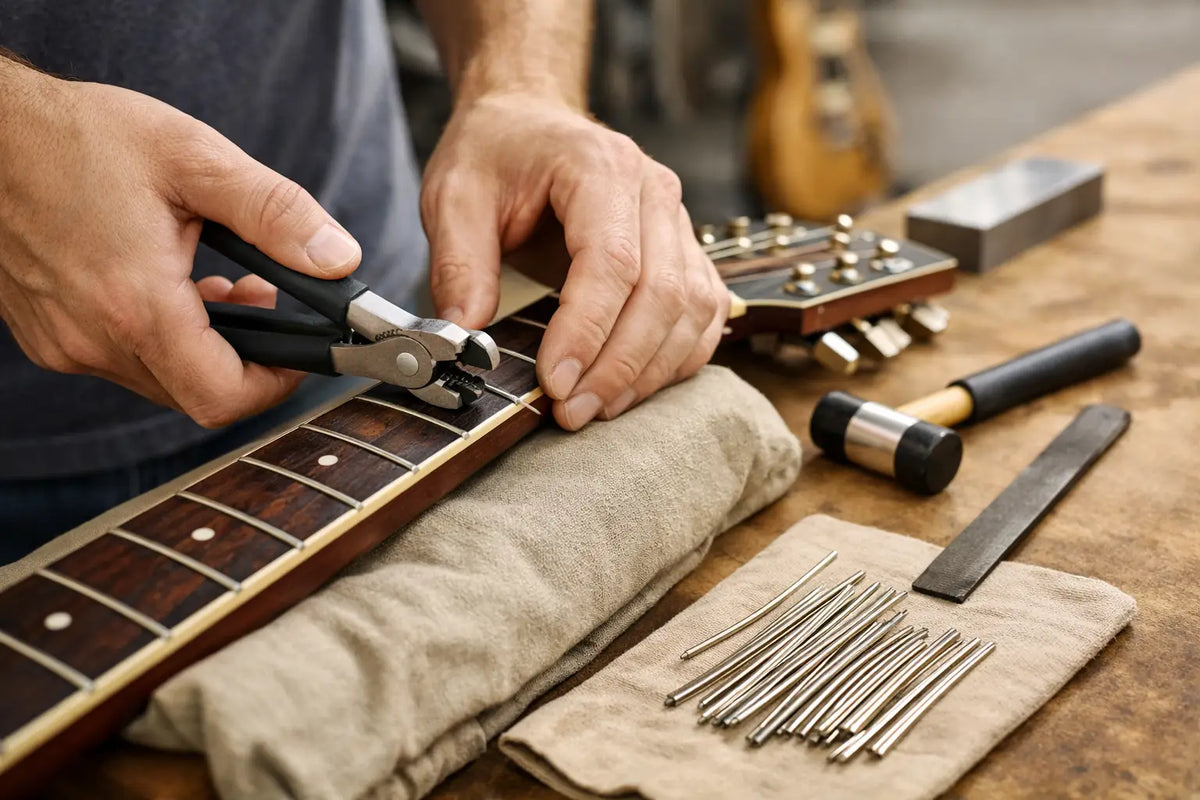
A full refret means removing the existing frets, preparing the fret slots and fingerboard, fitting new wire, levelling, crowning, polishing and setting the instrument up again. Done properly, it is detailed work rather than a quick fix. On a treasured vintage guitar, the process may also involve decisions about preserving the original fingerboard edge, binding, finish and character of the instrument.
How low is too low?
There is no single measurement that applies to every player. Some brilliant players prefer low, narrow vintage-style frets, while others want tall wire for a lighter touch and big bends. The important question is whether there is enough usable fret height to level the board properly and still give you clean notes, reliable bends and your preferred action.
A technician will assess the remaining fret height, the depth of wear, neck relief, fretboard condition and whether the frets are lifting at their ends. They will also ask how you play. A jazz player using flatwounds with a clean touch has different requirements from a blues player putting wide bends through a loud valve amp.
What refretting changes on a guitar
Fresh frets can make an older instrument feel remarkably alive. Notes speak more cleanly, bends feel smoother and a lower, more accurate action often becomes possible. If you have been compensating for worn frets by pressing harder or avoiding certain positions, the guitar may suddenly feel easier and more musical.
It is also an opportunity to choose fret wire that suits the instrument and your hands. Traditional nickel-silver wire offers a familiar feel and is easy to dress in future. Stainless steel lasts much longer and has a very slick surface, but it is harder to work and can cost more. Wire height and width change the playing experience too: narrow vintage wire feels different under the fingers from modern jumbo fretwire.
This is not always about making a guitar feel modern. A sympathetic refret can retain the spirit of a 1960s archtop, a well-loved Japanese-built electric or a cherished acoustic while making it properly playable again. The right choice depends on the guitar's value, originality, intended use and, most importantly, the player using it.
Is a refret worth the cost?
For a good instrument, very often, yes. A refret is a meaningful investment, but it is generally far less expensive than replacing a guitar you already know suits your hands and sound. It can be particularly worthwhile on a quality acoustic, a professional electric, a bass with an otherwise healthy neck, or a family instrument with genuine sentimental value.
Value needs a little more thought with collectable guitars. Original frets can matter to some buyers, especially on exceptionally clean vintage examples, and any major work should be carefully considered. Yet frets are expected to wear. A well-executed, appropriately specified refret by a respected workshop is usually preferable to an unplayable guitar with frets worn down to the board. Keep any paperwork describing the work, particularly for a rare or higher-value instrument.
At the other end of the scale, a budget guitar with severe fret wear, structural issues and tired hardware may not justify a full refret financially. That does not mean it has no future. It may still be ideal as a practice instrument, a project guitar or a trade-in conversation. The sensible route is based on the whole instrument, not just the fretboard.
Looking after new frets
New frets are not fragile, but a few habits extend their life. Wipe down the strings after playing, keep the guitar at stable indoor humidity, and do not let heavily corroded strings live on the instrument for months. Dirt and oxidation are abrasive, and aggressive string bending on gritty old strings adds needless wear.
When changing strings, inspect the fretboard and fret ends rather than attacking the frets with household polish or abrasive pads. Some cleaning products can mark lacquered maple boards, dull binding or leave residue where you do not want it. A proper setup once in a while is also valuable: small adjustments made early can prevent you from playing around a developing issue.
If your guitar is buzzing, feeling strangely stiff or showing obvious grooves, bring it in before deciding it needs drastic work. At Chordplay Guitars, a workshop assessment can establish whether a setup, fret dress or full refret will genuinely give the instrument its best chance. A great guitar earns its scars - but it should never have to fight you to make music.
Share:
Guitar Collecting for Players and Collectors
Gibson versus Epiphone - Which Guitar Suits You?