A 1960s guitar can look beautifully played-in and still be a far better buy than a cleaner example with the wrong neck, refinished body and a box of replacement parts. That is why a guide to vintage guitar grading needs to look beyond a single label. Condition matters, but originality, structural health, provenance and playability all shape what an instrument is worth - and whether it is the right guitar for you.
Vintage grading is not an exact science with one universal rulebook. A collector seeking a case-candy, time-capsule instrument will judge a guitar differently from a working player who wants a great-feeling original example that can handle regular gigs. The best descriptions are clear about what is present, what has changed and what the guitar needs.
What vintage guitar grading really measures
A grade is a useful shorthand, not the whole story. It should communicate the overall state of the instrument quickly, then be supported by honest detail. On a vintage guitar, a small finish chip may have little impact on musical usefulness, while a replaced bridge, changed pickups or poorly repaired headstock can make a major difference to collector value.
Think of grading as four questions: how clean is it, how original is it, how sound is it structurally, and how well does it play? A truly useful listing answers all four.
Cosmetic condition
Cosmetic wear includes scratches, lacquer checking, edge chips, buckle rash, tarnished hardware, faded plastics and honest fretboard wear. Some of this is expected. Nitrocellulose checking on an older Gibson or Fender, for example, can be completely natural and often adds character rather than concern.
What matters is whether wear matches the guitar's age and story. Artificial relic work, overspray and concealed refinishing need identifying clearly. A well-executed period refinish may still result in a superb player, but it is not equivalent to original finish when grading a collector instrument.
Originality and specification
Original parts are a large part of what makes vintage instruments desirable. Pickups, pots, switches, tuners, bridges, tailpieces, pickguards and even screws can help establish whether a guitar remains close to factory specification. Date codes on potentiometers, serial numbers, neck stamps and construction details can all support a correct identification.
That said, originality is rarely all or nothing. A guitar with a professional refret and one replacement tuner may remain an excellent vintage instrument. A guitar with changed pickups, replacement electronics, non-original bridge and a refinish belongs in a different category. Neither is automatically a bad purchase - they simply suit different buyers and should be priced accordingly.
Structural condition
This is where the glamour of vintage ownership meets practical reality. Check the neck angle, truss rod operation, fretboard condition, headstock, body joints and any signs of cracks or repairs. On acoustic guitars, inspect the bridge area, top bellying, bracing and neck reset history. On bolt-on electrics, look for stripped neck screws, neck-pocket damage and signs that the neck and body do not belong together.
A properly repaired crack is not necessarily a deal-breaker. In fact, a stable, professionally repaired headstock break can give a player access to a wonderful old Gibson at a more attainable price. It will, however, affect collectability and future resale, so it must be disclosed plainly. A hidden or unstable repair is another matter entirely.
Playability and workshop condition
A vintage guitar should not be treated as a museum piece by default. Neck relief, action, fret life, nut condition, intonation, electronics and tuning stability all deserve attention. Original frets are desirable to some collectors, but heavily worn frets can make an otherwise brilliant guitar difficult to enjoy.
There is often a sensible trade-off. A careful refret can dramatically improve a guitar for daily use, while preserving the original fingerboard and feel. Similarly, replacement capacitors or wiring may be worthwhile where original electronics have failed, provided the work is tidy and documented. Good workshop work protects an instrument; careless work costs it value.
A guide to vintage guitar grading: common terms
Condition terms should be read alongside photographs and a full specification, particularly when buying at a distance. These descriptions are a sensible starting point:
- Mint means exceptionally clean, with little or no visible wear. On a genuinely old instrument, this is uncommon and deserves close scrutiny of originality.
- Excellent means light, age-appropriate signs of use with no major cosmetic or structural concerns. It may have sensible maintenance work.
- Very good describes a clean, honest guitar with noticeable play wear, minor marks or changed service parts, but no serious compromise to function.
- Good usually means clear cosmetic wear and possibly repairs or replaced components, while remaining structurally sound and playable.
- Fair signals substantial wear, repairs, faults or missing originality. These guitars can be rewarding restoration projects, but the details matter more than the label.
Original finish, refinishes and overspray
Finish is one of the most misunderstood areas of vintage guitar grading. Original finish generally carries the strongest collector appeal, even when it has checking, fading and small marks. A guitar that has been refinished may look strikingly fresh, but it often loses a meaningful portion of its vintage value because the factory finish is part of the instrument's history.
Overspray is a thinner later coat applied over some or all of the original finish. It can range from a small touch-up around a repair to a near-complete cosmetic intervention. Its effect on value depends on extent, quality and visibility. Ask where it is, why it was applied and whether it conceals damage.
Do not confuse honest patina with neglect. Faded cherry, dulled gold hardware and lacquer checking can be exactly what a buyer wants. Fresh paint, on the other hand, is not automatically wrong - it simply shifts the guitar away from collector-grade originality and towards player-grade value.
Repairs that matter most
Not all repairs carry equal weight. A replacement nut, setup, refret or refreshed solder joint can be normal responsible maintenance. A changed neck, repaired headstock, replaced top, altered pickup routes or bridge relocation has a far greater effect on identity and value.
The quality of the repair matters as much as the repair itself. Clean, stable work by an experienced technician is preferable to a guitar left with a worsening fault. Documentation helps too: invoices, photographs taken before and during work, and retained original parts all provide reassurance when it is time to sell or trade.
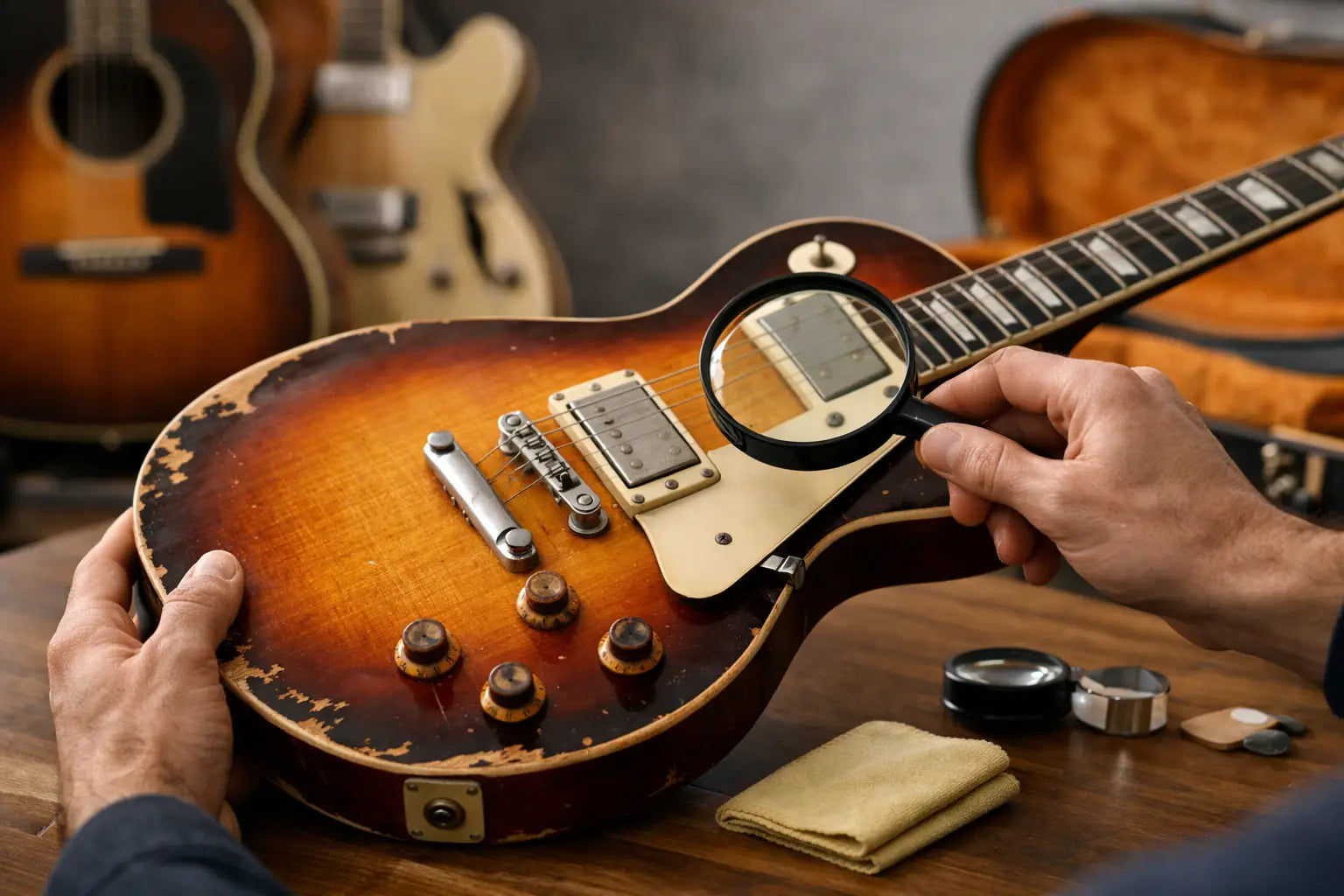
If you are assessing an older guitar in person, look closely under strong light and do not rush. Run a finger along the neck edges, inspect the headstock front and rear, test each pickup position and control, and play notes across the whole fretboard. A good instrument should tell you what it is within a few minutes.
How grading affects value
Age alone does not create value. A 1970s guitar with non-original pickups and a refinish may still be an inspiring, affordable route into a classic model. A fully original example from the same year may command far more because it appeals to collectors as well as players.
Rarity, desirability, model year, colour, provenance and included original case also influence the final figure. A rare factory finish or desirable early specification can outweigh ordinary cosmetic wear. Conversely, a common model in unusually clean condition may be worth a premium, but only if its parts and finish support the claim.
For sellers, accurate grading builds trust and avoids difficult conversations after the sale. For buyers, it prevents the common mistake of paying collector money for a player-grade instrument. At Chordplay Guitars, the useful approach is always to match the guitar to the musician: some buyers want untouched originality, while others want the best-playing old guitar their budget can reach.
Questions worth asking before you buy
Ask whether the finish is original, whether the neck and body are original to one another, and which parts have been changed. Confirm any cracks, breaks, routes, refinishing or overspray. Find out whether the truss rod works, whether the frets are original or replaced, and whether the guitar has recently been set up.
If the instrument includes an original case, paperwork, photographs or known ownership history, ask for those details too. Provenance does not make a poor guitar good, but it can make a desirable guitar more interesting and easier to value.
The best vintage guitar is not always the cleanest one in the room. It is the one whose history is honestly understood, whose condition matches its price, and whose feel makes you want to keep playing long after the first chord.
Share:
Guitar Setup Checklist for Better Playing
Guitar Pickup Selection for Better Tone