A guitar can feel absolutely right in the hands yet still fail to give you the sound in your head. That is where guitar pickup selection matters. Pickups do far more than make an electric guitar louder: they shape attack, clarity, warmth, sustain and the way your instrument reacts when you roll back the volume or dig in with a plectrum.
Whether you are buying your first serious electric, choosing between two tempting used guitars, or planning an upgrade in the workshop, the aim is not to find the ‘best’ pickup. It is to find the pickup that suits your guitar, amp, pedals and hands.
Start With the Sound You Actually Want
Before comparing magnet types and output figures, think about the music you play most often. A player chasing crisp indie rhythm sounds has different needs from someone playing high-gain metal, bluesy neck-pickup leads or big, clean funk chords.
It also helps to be honest about the rig you already own. A bright single-coil guitar through a naturally bright amp can be wonderfully lively, but may become sharp at rehearsal volume. A warm humbucker guitar through a dark-sounding amp can feel smooth and thick, but might lose definition when the full band comes in. The guitar is only one part of the chain.
Try to describe the sound in practical terms. Do you want more bite, less hum, tighter bass, clearer chords, fatter lead tones or a stronger output for driving an overdrive pedal? Those answers narrow the field quickly.
Single-Coils: Clear, Immediate and Full of Character
Single-coil pickups are closely associated with Strat-style, Tele-style and many vintage-inspired guitars. Their sound is often open, detailed and fast to respond. You hear the note’s edge clearly, which makes them a brilliant fit for clean rhythm parts, country, funk, surf, indie, blues and classic rock.
A bridge single-coil can be bright and cutting, helping a guitar stay present alongside drums and bass. The neck position is usually rounder and sweeter, often ideal for clean melodies or expressive blues playing. Positions that combine pickups can offer the familiar glassy, scooped sounds many players expect from a Strat-style instrument.
The trade-off is hum. Traditional single-coils can pick up electrical interference from lights, power supplies and certain venues. This is normal, not necessarily a fault. At home it may be barely noticeable; under stage lighting with gain and compression, it can be more obvious.
If you love the single-coil voice but need a quieter setup, noiseless designs are worth considering. They reduce unwanted noise, though some players feel the very best vintage-style single-coils retain a slightly more raw and airy edge. Neither choice is wrong - it depends how much gain you use and how sensitive you are to background hum.
Humbuckers: Power, Warmth and Less Noise
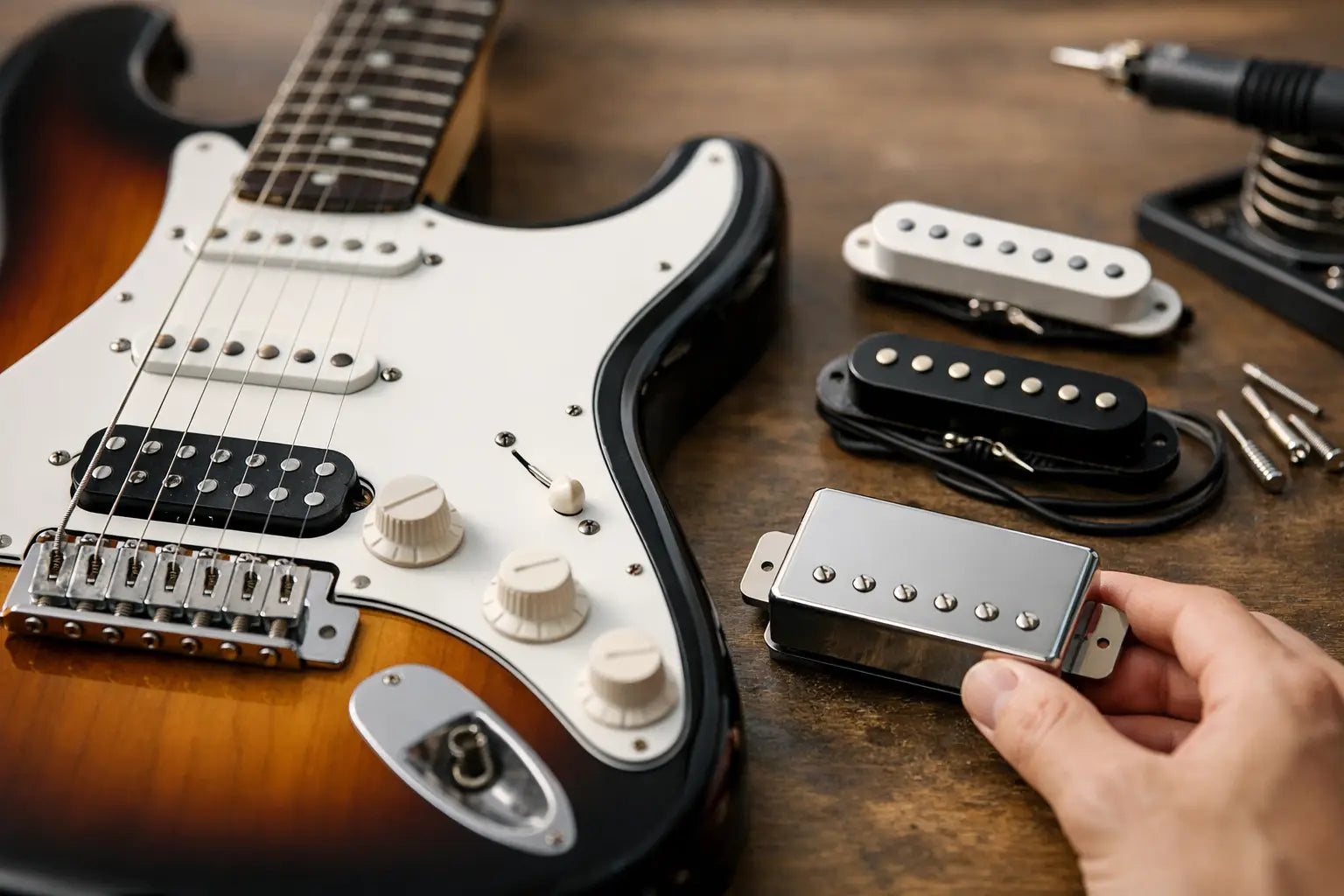
A humbucker uses two coils wired together to cancel much of the interference associated with a traditional single-coil. The result is generally thicker, louder and smoother, with more midrange weight and a quieter performance under gain.
This makes humbuckers a natural choice for rock, hard rock, metal, jazz, blues and any player wanting a fuller sound from an overdriven amp. A bridge humbucker can push an amp or pedal harder, while a neck humbucker often delivers rich lead tones and warm chord work.
Do not assume every humbucker is dark or high output. A lower-output PAF-style humbucker can be bright, articulate and beautifully dynamic, particularly in a good semi-hollow or a classic single-cut guitar. Higher-output models tend to compress more and drive the front of an amp harder, giving a tighter, more forceful sound for heavy riffing.
The compromise is that very powerful humbuckers may lose some of the sparkling clean detail associated with lower-output pickups. If you play varied sets, a medium-output humbucker is often the sensible middle ground.
P90s Sit Happily Between the Two
P90 pickups deserve their own place in any guitar pickup selection conversation. Technically they are single-coils, but they have a broader, thicker voice than the narrow single-coils found in many Fender-style guitars. Expect strong mids, plenty of attitude and a gritty response when pushed.
A good P90 can move from warm, woody cleans to raunchy rock tones simply by changing picking strength or your guitar’s volume control. They suit garage rock, punk, blues, classic rock and players who want character without the polished feel of some humbuckers.
Like traditional single-coils, P90s can hum. That noise is part of the old-school package, so decide whether the sound is worth it for your rig. For many players, it absolutely is.
Guitar Pickup Selection: Output Is Not a Quality Score
Pickup output is one of the most misunderstood specifications. A higher-output pickup is not automatically better, newer or more professional. It simply produces a stronger signal, which can hit your amp, pedal or interface harder.
Lower-output pickups often offer more dynamics and separation between notes. They can stay clearer with complex chords and clean up beautifully when you lower the guitar volume. Vintage-style players often favour them for precisely that reason.
Higher-output pickups can feel more immediate and muscular. They are useful for saturated sounds, palm-muted riffs and sustain-heavy lead work, especially when you do not want to rely on a boost pedal. However, too much output into an already hot amp can make everything feel compressed and congested.
If possible, judge output in context rather than from a number on a specification sheet. DC resistance is frequently quoted, but it does not tell the whole story. Magnet material, coil design, pickup height and the guitar’s construction all play a part.
Magnets, Materials and Why They Change the Feel
You will often see Alnico and ceramic magnets mentioned in pickup specifications. Alnico magnets are common in vintage and modern designs, with different grades affecting pull, warmth and attack. Alnico II is often associated with softer, sweeter response, while Alnico V can offer firmer lows, stronger highs and a little more punch.
Ceramic magnets are regularly found in higher-output designs. They can deliver a bold, focused sound with a fast attack and tight low end, making them popular for heavier styles. That does not mean ceramic pickups are harsh or inferior, and it does not mean all Alnico pickups are vintage sounding. The whole design matters more than one component.
A guitar’s wood, bridge, scale length and hardware also affect the final result. The same pickup can sound noticeably different in two guitars, which is why personal experience matters more than chasing a specification alone.
Think About Pickup Positions and Switching
A bridge pickup needs to cut through. A neck pickup needs to stay clear enough that it does not turn woolly with gain. The middle pickup, where fitted, should add useful contrast rather than sit unused for years.
HSS guitars - usually a bridge humbucker with middle and neck single-coils - are popular because they cover a lot of ground. You get bright, familiar single-coil sounds for clean work and a fuller bridge voice for rock. HSH layouts add a neck humbucker too, offering a flexible choice for players who use gain but still want varied switching options.
Coil-splitting is another useful feature on humbucker-equipped guitars. It shuts off one coil to create a leaner, single-coil-like sound. It can be very handy, although a split humbucker rarely sounds identical to a purpose-built single-coil. Think of it as an extra colour rather than a complete replacement for another guitar.
Series and parallel wiring can also change how a humbucker behaves. Series wiring is the familiar fuller, louder humbucker sound. Parallel wiring is clearer and lower in output while remaining hum-cancelling, which can be a smart option for players who need cleaner rhythm sounds.
Do Not Forget Pickup Height and Setup
Before replacing pickups, check the basics. Pickup height makes a surprising difference to output, clarity and balance between strings. Set too close to the strings, a pickup can sound harsh, lose sustain or create strange warbling tones from magnetic pull. Set too low, it may feel weak and distant.
A proper setup can reveal far more from the pickups already in your guitar. Fresh strings, sensible action, accurate intonation and carefully adjusted pickup heights often cost less than a full electronics swap and can transform how an instrument responds. This is particularly worthwhile with a used or vintage guitar, where preserving original parts may matter to future value.
For an upgrade, keep the original pickups safely labelled in the case. Original components can be important on desirable Japanese-made, vintage and collector-grade instruments, even if you prefer a different sound for day-to-day playing.
Play Before You Commit Where You Can
Videos and specifications are useful starting points, but they cannot tell you how a guitar will react to your touch. Play clean and with gain. Try open chords, single-note lines, bends and palm-muted riffs. Use the guitar’s volume and tone controls rather than leaving everything on ten.
At Chordplay Guitars, a proper play through an amp in the showroom can make the decision much clearer, especially when you are comparing different pickup layouts side by side. If you are shopping online, focus on clear specifications, honest condition details and ask about the guitar’s existing electronics before making a decision.
The right pickup should make you want to keep playing. Choose the sound that serves your songs and your hands, then give it time to become part of your voice.
Share:
A Practical Guide to Vintage Guitar Grading
What Causes Guitar Fret Buzz? Fix the Rattle