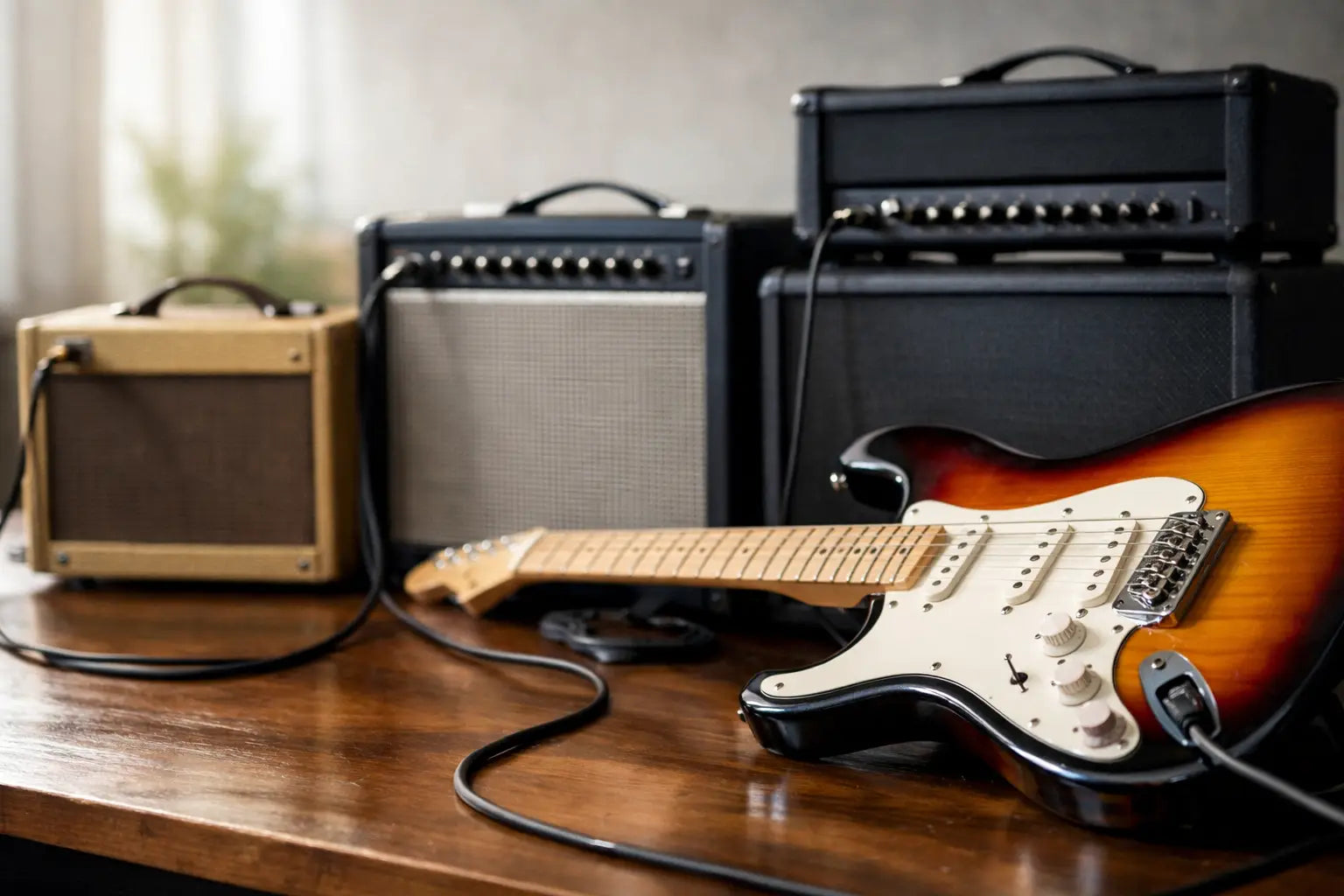
A brilliant guitar through the wrong amplifier can feel flat, fizzy or strangely unresponsive. The reverse is true too: a modest guitar can come alive through an amp that suits your hands, your room and the music you actually play. Knowing how to choose a guitar amplifier is less about chasing the biggest name or the highest wattage and more about finding the right match.
The best amp for quiet practice in a Lancashire terrace is rarely the best choice for a loud drummer, and neither may be right for a player who wants sparkling country clean tones, saturated metal gain or the warm break-up of an old valve combo. Start with where and how you will use it, then let that narrow the field.
How to choose a guitar amplifier for where you play
Before comparing controls, speakers or valve types, be honest about volume. This one decision prevents many disappointing purchases.
For home practice, a compact modelling amp, small solid-state combo or low-watt valve amplifier can be ideal. Look for a useful master volume, headphone output and, if you value variety, built-in effects or amp voices. A 5-watt valve amp can still be surprisingly loud when it is pushed, so do not assume low wattage means bedroom-friendly at every setting.
For rehearsals with a full band, you need clean headroom as well as volume. Guitarists playing with a drummer often find that 30 to 50 watts of solid-state power, or around 15 to 30 valve watts, is a sensible starting point. That is not a hard rule. A loud drummer, a clean funk sound and a player using a 1x12 or 2x12 cabinet all change the equation.
For regular gigs, think about the venues you play. Many pubs and small stages now mic guitar amps through the PA, so a sensible 15- to 30-watt combo can be more useful than a huge stack. It is easier to carry, easier to turn up into its sweet spot and kinder on the sound engineer. If you need big, pristine clean tones at high volume, more power and speaker area become worthwhile.
Weight matters more than people expect. A 2x12 valve combo might sound glorious, but it is no fun on a wet load-in after work. If you travel often, try lifting the amp before committing. A lighter combo, compact head and cabinet, or quality modelling unit may leave more energy for the actual gig.
Valve, solid-state or modelling?
There is no single winner here. Each design offers a different feel, feature set and maintenance commitment.
Valve amplifiers
Valve amps are loved for their touch response. Pick softly and they can stay clean; dig in and they begin to compress, thicken and break up in a very musical way. They suit players who want their guitar volume control and picking dynamics to be part of the sound.
They also have trade-offs. Valves wear out, can need replacing, and an amp may occasionally require a technician's attention. They can be heavier and costlier than comparable solid-state designs. If you buy used, ask about its service history and listen for unwanted crackles, hum or rattles. A well-kept older valve amp can be a superb long-term companion, but it should be assessed as carefully as any vintage guitar.
Solid-state amplifiers
Solid-state amps tend to be reliable, lighter and excellent value. They often deliver a clear clean sound at lower cost and are a strong choice for beginners, schools, rehearsal rooms and players who simply want dependable plug-in-and-play performance.
Older solid-state distortion circuits sometimes earned an unfair reputation, but plenty of modern examples sound excellent. The key is to play one with your own guitar if possible. If your sound depends on gain from pedals, a clean, well-voiced solid-state platform can be exactly what you need.
Modelling amplifiers
Modelling amps recreate the character of numerous amplifiers, cabinets and effects digitally. They are brilliant for players who enjoy moving between classic rock, indie, blues, metal and ambient sounds without filling a room with separate gear.
For home use, they are particularly practical: many offer headphone practice, USB recording and very low-volume sounds that remain convincing. The trade-off is choice. Hundreds of presets can mean more tweaking and less playing. A good approach is to find two or three sounds you genuinely love, save them, then spend your time making music.
Choose the sound before the specification
Specifications matter, but your ears matter more. Think in broad sound families first.
If you want bright, articulate cleans with plenty of sparkle, look for an amp known for clean headroom and a clear top end. This suits funk, country, surf, indie and players who use modulation or delay pedals. Single-coil guitars can sound wonderfully open through this style of amp, though a very bright pairing may need careful treble adjustment.
If you are after blues, classic rock and expressive lead tones, consider an amp that breaks up smoothly as the volume rises. Midrange is your friend here. The guitar should feel responsive rather than harsh, with enough body for chords and enough bite for solos.
For heavier rock and metal, assess the gain channel at realistic volume. You want definition in palm-muted riffs, a controlled low end and enough midrange to be heard alongside bass and drums. Plenty of high gain on its own can sound impressive in a bedroom, yet disappear in a band mix.
Try the amp with the kind of guitar you own. Humbuckers generally push an amp harder than single coils, while P90s sit somewhere between, with their own lively midrange character. A guitar with active pickups may need more headroom than a vintage-style low-output instrument. If you are choosing both guitar and amp, test the pairing together whenever you can.
Speakers change more than you think
The speaker is a major part of an amplifier's voice. A 1x10 combo can feel focused and compact. A 1x12 is a popular all-round choice, offering enough body for rehearsals and gigs without becoming excessive to transport. A 2x12 generally sounds bigger and fuller, but brings extra weight and volume. A 4x12 cabinet has undeniable stage presence, but it is rarely necessary for home use and can be awkward to move.
Speaker size is only part of the story. Different speaker models can be warm, bright, efficient, compressed or very loud for a given wattage. An efficient speaker makes an amp feel louder, which is useful on stage but may be less helpful at home.
If you are buying a separate head and cabinet, check impedance carefully. The amp and cabinet must be compatible. This is especially vital with valve heads, where using the wrong speaker connection can cause expensive damage. If in doubt, ask before switching it on.
Features worth paying for
Do not buy an amp just because it has a long list of functions. Buy the features that remove friction from your playing.
A good master volume is valuable if you need power-amp character without shaking the house. An effects loop is useful for delay, reverb and modulation pedals, particularly if you use the amp's overdrive. Built-in reverb is a lovely everyday convenience. A footswitchable second channel helps at rehearsals and gigs, while an external speaker output adds flexibility.
For home recording and silent practice, headphone outputs, cabinet simulation and USB connectivity may matter more than a second speaker. For gigging, a direct output can make life easier, although it is worth checking whether it sounds convincing through a PA.
Buying used with confidence
Used amplifiers can offer exceptional value, including discontinued favourites and properly made older models that would cost far more new. Condition is part of the purchase, not an afterthought.
Check that every control works smoothly, channels switch correctly and the speaker has no obvious buzzing at moderate volume. Inspect the mains lead, cabinet corners, handle and grille. With a valve amp, ask whether it has been serviced and whether the valves are recent. Cosmetic wear is often harmless and can be part of an amp's character; electrical faults are a different matter.
A specialist retailer gives you a clearer route than an unknown private sale, especially for a used, rare or vintage piece. At Chordplay Guitars, the advantage of trying equipment in person is simple: you can hear whether an amp inspires you before it earns a place in your rig.
Give yourself permission to choose practical
The amplifier that makes you want to pick up your guitar every day is the right one. It might be a small practice combo with headphones, a tidy 1x12 valve amp with one great sound, or a feature-packed modeller that covers every set you play. Choose for your real rooms, real band and real songs, then turn the knobs until it feels like yours.
Share:
What Bass Guitar for Beginners Should You Buy?
How to Set Up a Pedalboard That Works Every Gig