That first low B or A chord is usually the moment it clicks. A baritone has the weight and growl of a downtuned guitar, but it can still feel familiar under the fingers. The catch is that baritone guitar buying is not simply a case of choosing the darkest-looking guitar on the wall. Scale length, string gauge, pickups and setup all decide whether it becomes your favourite writing tool or an instrument that spends too much time in its case.
For players chasing modern metal, country twang, ambient textures, doom riffs or a fuller rhythm sound without stepping into bass territory, a well-chosen baritone can be properly addictive. Here is what is worth considering before you buy.
Start with the tuning you actually want to use
A baritone guitar is designed for lower tunings with enough string tension to keep notes clear and stable. Most six-string models arrive in B standard, which is five semitones below a regular guitar: B, E, A, D, F#, B. That makes familiar chord shapes immediately useful, just at a lower pitch.
B standard is a brilliant all-round starting point, but it is not the only reason to buy one. A longer-scale instrument can also make C standard, drop A and A standard feel far more controlled than they do on a typical 24.75-inch or 25.5-inch guitar. If you already know you will live in drop A, buy for drop A rather than hoping a lighter-stringed B-standard setup will cope.
The lower you tune, the more the rest of the specification matters. Very loose strings can sound exciting through a wall of gain, but they lose definition when recording, intonating chords higher up the neck, or playing clean parts. A baritone should make low tuning easier, not turn every riff into a fight with floppy strings.
Baritone guitar buying starts with scale length
Scale length is the distance from nut to bridge, and it is the single most useful number to check. It changes the feel of the guitar, the tension of the strings and how clearly low notes speak.
A 26.5-inch scale is common on modern, metal-focused baritones. It is a sensible middle ground: noticeably tighter than a standard guitar, yet still comfortable for players used to familiar electric necks. For B standard and drop A, it is often the sweet spot.
A 27-inch scale delivers more tension and a more piano-like attack. Players who pick hard, use thick strings or want a clean, immediate low A will appreciate it. The trade-off is reach. Open-position stretches and big chord shapes ask a little more of your fretting hand, particularly if you are moving from a short-scale Gibson-style guitar.
Longer instruments of 28 inches and beyond are increasingly specialised. They can be superb for A standard, lower tunings and extremely articulate heavy sounds, but they will not suit everyone. Try a few scale lengths where possible. The best specification on paper is no use if the neck feels awkward after twenty minutes of playing.
Multi-scale or straight frets?
Multi-scale baritones use angled frets, with a longer scale on the bass strings and a shorter scale on the treble strings. The aim is simple: keep the low strings taut while avoiding an unnecessarily long feel for leads and chords higher up the neck.
For some players, a multi-scale neck feels natural almost immediately. Others simply prefer straight frets, especially if they play lots of traditional chord shapes. Neither is automatically better. A straight 27-inch baritone remains a seriously capable instrument, while a well-designed multi-scale can be a real advantage for low tunings and detailed recording work.
Pickups should match your gain and your amp
It is tempting to assume a baritone needs the hottest humbuckers available. High-output pickups can be brilliant for tight palm mutes, saturated riffs and aggressive attack, but they are only one option.
Ceramic humbuckers commonly suit modern metal because they offer a firm bass response and plenty of output. Alnico humbuckers can feel more open and dynamic, which is ideal if you want the guitar to cover indie, alternative rock, post-rock or cleaner sounds as well as heavier material. A baritone with a lower-output pickup can be surprisingly huge through the right amp, and it may clean up more gracefully from the volume control.
Single-coil and P-90-equipped baritones deserve attention too. They bring snap, grit and definition that suit country, surf, spaghetti western parts and atmospheric music. The low register can get busy quickly, so a pickup with clear note separation is often more valuable than sheer output.
Think about your current rig. If your amp and pedals already add plenty of compression and gain, a very hot pickup may make the low end congested. If you play through a clean, high-headroom amp, a more powerful humbucker might supply the push you need.
Do not overlook strings, bridge and tuning stability
Baritones need appropriate strings. A typical B-standard set may start around .012 or .013 on the first string and reach .060 to .068 on the lowest. Drop A players often prefer a heavier bottom string, although there is no magic gauge. Your picking style, scale length and preferred feel all matter.
A fixed bridge is the simplest, most stable choice for many baritone players. It makes alternate tunings, heavier strings and routine setup changes straightforward. Tune-o-matic-style bridges, hardtail string-through designs and modern fixed bridges can all work well, provided the saddle travel gives enough room for accurate intonation.
Tremolo-equipped baritones are great fun, particularly for shoegaze, ambient and experimental music, but they need a little more commitment. Changing gauge or tuning affects the bridge balance, so regular tuning experiments may mean more setup time. A locking tremolo can be very stable once dialled in, but it is not the easiest route for a player who changes between B standard and drop A every rehearsal.
Good machineheads, a properly cut nut and sensible string fitting are not glamorous details, yet they make an enormous difference. Low strings expose every weak point in a setup. If the nut slots pinch, the strings are badly wound or the intonation is adrift, no boutique pickup will rescue the experience.
Neck shape, weight and body style still count
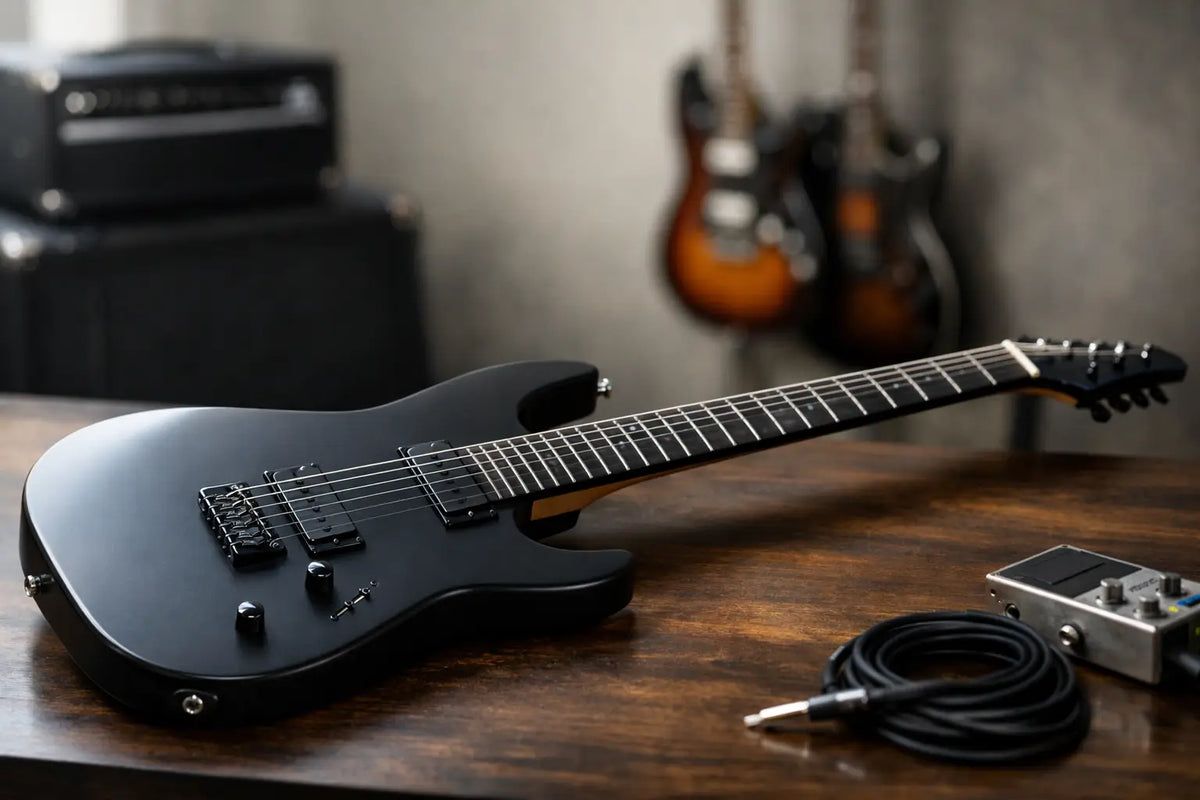
Baritone guitars are often marketed at heavy players, which can lead to sharp body shapes, slim necks and stealth finishes. There is nothing wrong with that, but do not let the styling make the decision for you.
A Telecaster-style baritone can be an outstanding studio and live instrument, particularly for players who need cut and clarity. An offset body may sit beautifully when seated. A single-cut design can offer familiar balance and sustain, while a superstrat may be the practical answer for fast playing and upper-fret access.
Pay attention to the instrument's balance on a strap. Longer necks can make a guitar feel neck-heavy, especially with a light body or an awkward strap-button position. Weight is personal too. A heavier guitar may feel solid and resonant, but a lighter one can be the wiser choice for a two-hour set.
New, used or collectable: buy condition with confidence
A used baritone can represent excellent value, especially as many owners buy one for a single project and move it on when their musical direction changes. You may find upgraded pickups, locking tuners, a quality case or a professional setup included in the price. Rare Japanese-made models, discontinued finishes and unusual factory specifications can also be genuinely exciting finds.
Condition matters more than a few cosmetic marks. Check fret wear, neck relief, truss-rod function, bridge hardware, electronics and the condition of the nut. Ask whether the guitar has been kept in a case, whether it has had any repairs, and what tuning and string gauge it has been set up for. A baritone that feels wrong may only need a thoughtful setup, but a worn fretboard or troubled neck is a different proposition.
Buying from a guitar specialist removes much of the guesswork found in private sales. At Chordplay Guitars, an in-house workshop can assess and prepare instruments properly, which matters when string tension and intonation are central to how the guitar performs. If you have a standard guitar gathering dust, part-exchange can also make a dedicated low-tuned instrument easier to justify.
Budget for the setup that makes it yours
Even a superb baritone may need adjusting to suit your hands and tuning. Factory setups are necessarily broad compromises, and a pre-owned guitar may have been set up for a completely different player. Budget for the right gauge of strings, a nut adjustment if required, intonation and a full setup.
This is especially worthwhile if you are moving below B standard. A professional setup transforms the feel of the instrument: chords ring more accurately, palm-muted notes stay focused and the action can be set low without every low string buzzing against the frets. Tell the technician exactly how you tune, which strings you use and whether you play gently or attack the strings hard.
A good baritone does not have to be an extreme metal machine or a specialist novelty. Choose one that supports the songs you want to write, feels comfortable enough to keep reaching for, and has the clarity to make those low notes sound intentional. Then give it the strings and setup it deserves, turn the amp up, and let the room shake a little.
Share:
10 Best Guitars for Small Hands, Sized Right
Ibanez AZ Guitar Review: Is It Right for You?