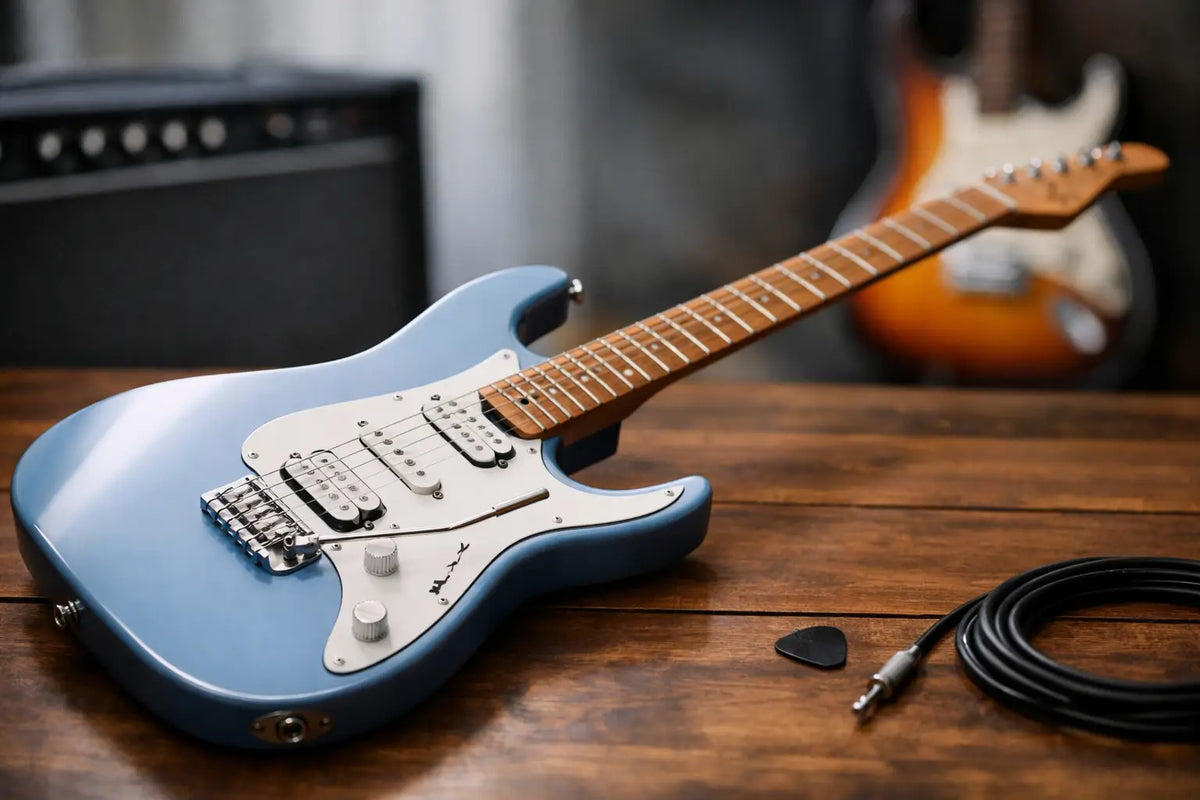
The Ibanez AZ is what happens when a company known for fast, hard-edged superstrats decides that players also want vintage feel, proper versatility and an instrument that behaves itself on a long gig. This Ibanez AZ guitar review looks beyond the familiar silhouette to explain why the range has become such a favourite with working guitarists, and where it may not suit every player.
It is easy to glance at an AZ and assume it is simply Ibanez taking on the modern Fender-style market. There is some truth in that: you will find bolt-on necks, tremolo bridges, sensible body shapes and pickup layouts that cover a great deal of ground. Yet an AZ feels distinctly like its own thing. The neck profile, fretwork, hardware and switching options are all aimed at the player who needs one electric guitar to move from clean chords to edge-of-breakup blues, chunky rock rhythms and articulate lead work without a fight.
What makes the Ibanez AZ different?
The AZ family is broad. Premium Japanese-made Prestige models sit at the top, while AZ Standard and AZ Essentials instruments make the core design more accessible. There are HSS, HSH and HH pickup configurations, hardtail and tremolo options, roasted maple and conventional maple necks, plus finishes ranging from understated to properly eye-catching. That choice matters, because the best AZ is not automatically the most expensive one. It is the one whose neck, pickups and bridge suit how you actually play.
Across the range, the defining idea is modern refinement without turning the guitar into a specialist machine. The bodies tend to be contoured and comfortable rather than aggressively sharp. The heel is sculpted for easy upper-fret access, but the instrument still balances well when standing. Most examples feel reassuringly familiar within minutes, particularly for players coming from an S-style guitar, while offering more precision once you start pushing them.
The neck is the headline act
For many players, the AZ neck is the deciding factor. It is generally fuller and rounder than the extremely thin necks associated with some classic Ibanez RG models. That does not mean it feels slow. Quite the opposite: the profile gives your fretting hand something to hold on to, while the flatter fingerboard radius and well-finished frets keep bends and fast runs easy.
Roasted maple necks feature heavily on Prestige models and selected Premium instruments. Aside from their handsome caramel colour, they can feel dry, stable and pleasantly played-in. Roasting does not magically make every neck better, but it is a worthwhile feature for players who prefer a smooth, less glossy sensation under the thumb.
The stainless-steel frets fitted to many higher-spec AZ guitars deserve a mention too. They resist wear brilliantly and give bends a slick, glassy feel. A good stainless fret job is a genuine long-term advantage, especially if you play regularly or use heavier strings. The trade-off is simple: when one eventually needs levelling or replacement, stainless steel is tougher work. It is a job for a properly equipped workshop rather than a rushed home repair.
Ibanez AZ guitar review: pickups and switching
An AZ rarely sounds like a one-trick high-output guitar. Even models with humbuckers are usually voiced for clarity and dynamic response rather than sheer aggression. Pick softly and they clean up. Dig in with a pick and the note jumps forward. That makes them a strong choice for players who use their volume control, swap between clean and driven channels, or cover varied material in a function band.
The Prestige AZ models are often fitted with Seymour Duncan Hyperion pickups, partnered with Ibanez’s dyna-MIX switching system. Depending on the configuration, this can provide convincing single-coil-style tones alongside fuller humbucker sounds. The additional switch is more than a spec-sheet novelty: it can give you a useful bright, wiry sound for funk rhythm work or cleaner chord parts without needing a second guitar on stage.
Still, expectations should be sensible. Coil-split and altered wiring settings can be extremely usable, but they will not turn every humbucker guitar into a dead-on vintage Strat or Telecaster. If that exact, scooped traditional single-coil character is the sound in your head, a dedicated single-coil instrument remains the honest answer. The AZ’s strength is not impersonation for its own sake. It is delivering several credible, musical voices from one well-made guitar.
HSS versions are often the safest all-round option. You get the familiar snap of a neck and middle single coil, a useful in-between rhythm position, and a bridge humbucker that handles gain without the thinness or hum that can frustrate on louder stages. An HH AZ may be the better call for heavier rock, fusion or players who prefer a quieter, thicker foundation, particularly when modern amp gain is involved.
Hardware that is built for real use
Many AZ models use Gotoh machineheads and tremolo hardware, and that is a meaningful part of their appeal. The tremolos tend to feel smooth and controlled rather than overly sensitive, while locking tuners make string changes quicker and help keep things stable. Set up well, an AZ tremolo can manage expressive vibrato, gentle dives and regular stage use with confidence.
As with any non-locking tremolo, tuning stability is not just about the bridge. Nut slots must be cut correctly, strings need to be fitted neatly, and the tremolo needs to be balanced for your preferred gauge and tuning. If you want to drop-tune between songs, a hardtail AZ is usually the more practical option. It offers the same modern comfort and flexible electronics, without the compromise that comes with a floating bridge.
The supplied set-up is often good, especially on premium instruments, but every guitarist’s touch is different. A workshop set-up can make an already excellent AZ feel completely personal: string gauge, action, relief, pickup height and tremolo tension all affect the final result. It is not glamorous, but it is often the difference between liking a guitar and reaching for it every day.
Prestige, Premium, Standard or Essentials?
The Japanese-built AZ Prestige models are where Ibanez shows its manufacturing muscle. Expect excellent fretwork, consistently tidy neck pockets, premium components and the kind of detail that makes an instrument feel composed from the first chord. For session players, serious enthusiasts and musicians buying a long-term main guitar, these are compelling instruments. Japanese-made Ibanez guitars also have a deserved following among collectors, particularly clean examples with their original case, paperwork and hardware.
Premium models can offer impressive specifications for less money, often including roasted maple, stainless frets and striking finishes. Individual examples are worth playing where possible, as the feel can vary slightly more than on Prestige instruments. That is not a criticism so much as sensible buying advice. The guitar that feels right is better than a list of features you never notice.
AZ Standard and Essentials models bring the shape and general philosophy to a lower price point. They may use more modest pickups, hardware and fret materials, but they can be cracking workhorses. For an advancing player, they offer a comfortable route into a genuinely versatile design. For an experienced guitarist, they can make an excellent platform for a future pickup upgrade, provided the neck and acoustic response already feel right.
Who should buy an Ibanez AZ?
The AZ makes a particularly strong case for the guitarist who has outgrown a beginner instrument and wants one dependable electric to cover rehearsals, home recording, pub stages and bigger gigs. It also suits players who love the ergonomics of a Strat-style guitar but want flatter-radius playability, quieter bridge tones and more sophisticated switching.
It may be less ideal for purists. If you want a chunky vintage neck, a three-saddle bridge, low-output pickups with plenty of old-school roughness, or a full locking tremolo for extreme dive-bombs, there are better focused options. Likewise, some players will simply prefer the raw personality of a vintage-inspired guitar. The AZ is polished by design, and its controlled nature can feel almost too tidy if you like an instrument with more fight in it.
Before buying, spend time with the neck profile, not just the finish or specification. Check whether you prefer HSS or HH, and decide honestly whether you will use a tremolo. If you are buying pre-owned, inspect fret condition, tremolo posts, nut wear, electronics and any modifications. A well-kept used AZ can be superb value, while a professionally assessed instrument removes much of the uncertainty that comes with private sales.
An Ibanez AZ rewards the player who wants to get on with making music rather than constantly compensating for their gear. Try one with your usual pick, play it clean as well as loud, and give the switching system a proper workout. The right one will not need much selling - it will simply make you want to play another song.
Share:
Baritone Guitar Buying for Players Who Tune Low
Fender Stratocaster versus Telecaster Guitars