A Fender is not automatically the right guitar just because it says Fender on the headstock. A good Fender guitar review should start with the player, not the logo: do you need crisp rhythm sounds, singing lead tones, dependable gigging hardware, or a characterful instrument that makes you play differently? That is where the range gets interesting.
From a well-played Mexican-built Stratocaster to a clean Japanese reissue or a USA-made workhorse, Fender guitars can feel very different in the hands. The family resemblance is there - clear notes, responsive dynamics and familiar shapes - but the details matter far more than the badge alone.
Fender Guitar Review: What Makes the Brand Different?
Fender’s great strength is immediacy. Plug a Telecaster into a clean amp and the note arrives with a sharp, percussive edge. Pick up a Stratocaster and you can move from glassy, scooped in-between sounds to a rounder neck-pickup lead voice without touching a pedal. These are guitars that reveal picking technique, for better and occasionally for worse.
That clarity is why Fenders have appeared in so many styles. Country, indie, blues, pop, punk, funk, shoegaze, jazz and hard rock players can all make them work. A Fender does not impose one narrow sound on you. It gives you a recognisable starting point and responds to what your hands, amp and pedals bring to it.
There is a trade-off. Players used to humbucker-equipped guitars may find traditional single coils noisier and less forgiving with high gain. They can hum under lights and expose sloppy muting. Some players love that honesty; others will prefer noiseless pickups, a humbucker in the bridge, or a different guitar entirely.
Build quality varies by series, year and individual instrument. That is true of any high-volume manufacturer, and it is especially worth remembering when comparing new and pre-owned examples. A sensible setup can transform a guitar that feels merely fine into one you do not want to put down.
The Main Fender Models Compared
Stratocaster: the versatile all-rounder
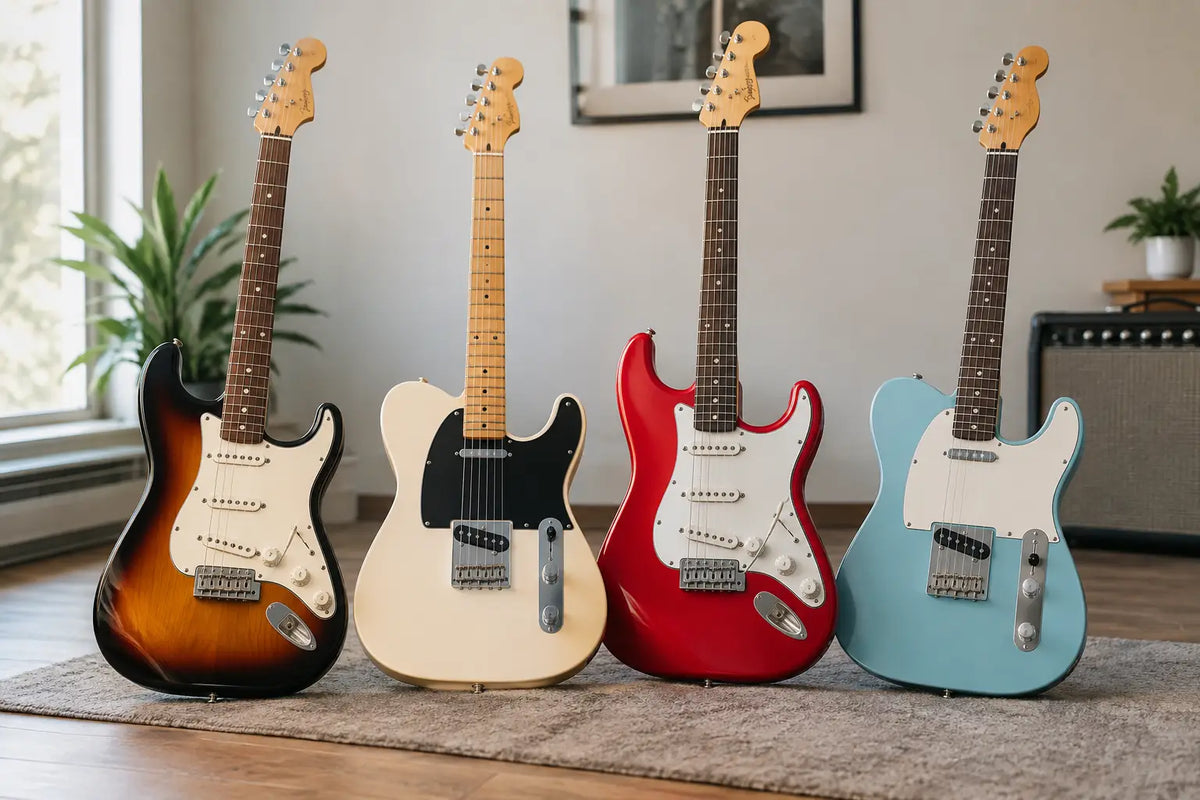
The Stratocaster remains the obvious choice for players who want one electric guitar to cover a lot of ground. Its contoured body sits comfortably against the ribs, the double cutaway gives easy access high up the neck, and the five-way switching offers more variety than its three-pickup layout first suggests.
Traditional Strat pickups have a bright, open sound with plenty of snap. The neck pickup can be wonderfully vocal for blues and melodic leads, while positions two and four deliver the clucky, hollow rhythm sounds heard on countless records. The bridge pickup is cutting and energetic, although some players find it thin unless the amp is set with care.
The vibrato bridge is part of the appeal. Used gently, it adds shimmer and movement that a fixed-bridge guitar cannot quite reproduce. Used aggressively without a well-cut nut, settled strings and careful setup, it can become frustrating. If you bend hard, tune down regularly or simply want maximum tuning stability, a hardtail Strat or Telecaster may be the better call.
Telecaster: simple, tough and full of authority
The Telecaster looks almost too straightforward to be special. Two pickups, a fixed bridge and a slab-like outline should be limiting on paper. In practice, it is one of the most direct and expressive electric guitars ever made.
The bridge pickup is bright, punchy and brilliant for cutting through a band. Its neck pickup is warmer and smoother than many expect, while the middle setting provides a useful blend for rhythm work. A Tele can handle clean chords, overdriven rock parts and fuzzy alternative sounds with remarkable confidence.
Its fixed bridge is a major practical advantage. String changes are uncomplicated, tuning is generally steady and the attack has a firm, immediate feel. The square-edged body can feel less comfortable than a Strat during a long standing set, however. It is a small issue for some players and a deal-breaker for others, so playing one before committing is worthwhile.
Jazzmaster and Jaguar: offsets with real personality
Offset Fenders are often bought for their looks, then kept because they do something different. Jazzmasters tend to sound broader and fuller than a Strat, helped by their distinctive wide single-coil pickups. They suit ambient textures, indie rhythm parts and driven sounds that need weight without becoming muddy.
Jaguars have a shorter 24-inch scale length, giving the strings a looser, slinkier feel. They can be great for smaller hands, fast chord changes and players who enjoy a slightly softer response. Their switching systems and bridge designs are part of the charm, but older-spec versions can require more patience than a basic Telecaster.
Neither model is only for indie players. They are capable instruments with a strong sonic identity. Just be honest about whether you want that identity, or whether you actually need the familiar flexibility of a Strat.
Precision and Jazz basses: the dependable foundations
Fender’s bass designs deserve mention in any proper review. The Precision Bass is thick, focused and wonderfully simple. It sits in a mix with very little fuss, making it a favourite for rock, soul, punk and countless working bands.
The Jazz Bass has a slimmer neck profile and a more detailed, articulate voice. Its two pickups can produce a tight, bright bridge sound or a fuller blended tone with plenty of definition. Neither is objectively better. A P Bass often feels like the strongest single answer; a Jazz Bass gives more tonal adjustment at the instrument.
Is Mexican, Japanese or USA Fender Best?
There is no universal winner, because the best value depends on what you want from the instrument. Modern Mexican-made Fender models are often excellent gigging guitars: familiar specifications, strong finishes and a price that leaves room for a professional setup, case or amplifier upgrade. For many players, this is the sensible sweet spot.
Japanese-made Fenders have a deserved following, particularly for reissues and unusual specifications. They are often beautifully finished, comfortable to play and appealing to collectors without always carrying the price of a USA vintage-style model. Specific years, factory origins, pickups and modifications still matter, so judge the actual guitar rather than buying on reputation alone.
USA-made ranges usually offer higher-grade hardware, more detailed finishing and specifications aimed at players who know exactly what they enjoy. American Professional instruments tend to favour modern practicality, while American Vintage models chase period-correct feel and appointments more closely. The latter can be superb, but vintage-style frets, neck shapes and hardware are not automatically more comfortable for every player.
At the top end, Custom Shop and genuinely vintage Fenders can be extraordinary. They can also be expensive, highly specific and less sensible as a first serious purchase. A brilliant used Japanese Strat that suits your hands is a better guitar for you than a prestigious collector piece you are afraid to take to rehearsal.
What to Check Before You Buy
Whether the guitar is new, used or described as MINT, start with feel. Check the neck profile, fret condition, action and weight. A Fender should feel alive when played unplugged, with notes that ring clearly and no obvious dead spots or persistent rattles.
Then test the practical bits. Operate every switch and control, listen for crackles, check the jack socket and make sure the tuners turn smoothly. On a vibrato-equipped model, see whether it returns to pitch after gentle use. With a pre-owned instrument, honest wear is not necessarily a problem - it can be part of the appeal - but it should be reflected fairly in the condition and price.
Modifications are not automatically a red flag. Upgraded pickups, compensated saddles, locking tuners or a replaced nut may make a guitar more useful. Originality matters more to collectors than to a player looking for a reliable tool. Keep the original parts where possible, especially on desirable older instruments.
A final setup is worth considering even on a good guitar. String gauge, pickup height, neck relief and intonation should suit your playing rather than a factory average. Chordplay Guitars' workshop sees this regularly: small adjustments make a startling difference to comfort, tuning and confidence.
Who Should Buy a Fender?
Fender is a safe choice only in the best sense: the designs are proven, easy to service and supported by a huge world of compatible parts and knowledge. A Telecaster is hard to beat for straightforward reliability and punch. A Stratocaster remains the broadest all-round electric option. An offset offers more colour and individuality, while a Precision or Jazz Bass can anchor almost any band.
The right one is the Fender that makes you forget you are comparing specifications and start playing another song. If that guitar has a few honest marks, an unusual finish or a story behind it, so much the better - instruments are made to earn their character.
Share:
Boss Katana Review: Still Worth Buying in 2026?