
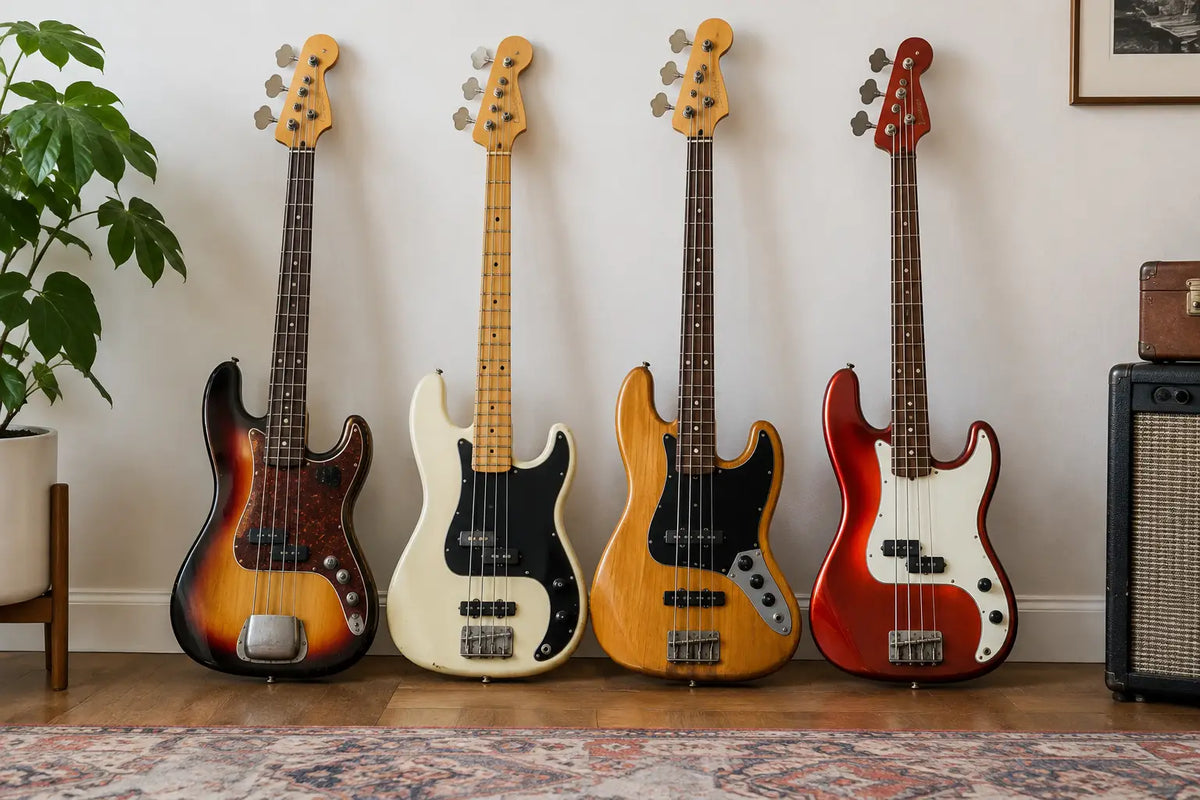
A proper guide to buying vintage basses starts with one slightly inconvenient truth: an old bass is not automatically a great bass. The right one can have a feel, voice and presence that no new instrument quite reproduces. The wrong one can be an expensive project wearing a desirable badge. The aim is to find an instrument with real character that still earns its place at rehearsal, on stage or in the studio.
Vintage basses reward patience. Whether you are hunting a road-worn Precision, a punchy seventies Jazz, a Japanese-built classic or an overlooked British oddity, the best purchase is rarely the cheapest or the shiniest. It is the bass whose originality, condition, playability and price all make sense together.
Start with the bass, not the year
It is easy to become fixated on a date stamp. A 1960s or 1970s instrument carries obvious appeal, but age alone does not create value. Some periods produced exceptional basses; others were inconsistent, and every instrument has had decades of use, storage and repairs to shape its current condition.
First, decide what you need it to do. A collector may prioritise original finish, pickups, hardware and documented history. A working player may happily accept a professional refret, replacement pots or a sympathetic respray if the bass sounds alive and plays beautifully. Neither approach is wrong, but they lead to different buying decisions and different prices.
Be honest about the sound in your head, too. A split-coil Precision has a very different job from a Jazz Bass with both pickups open, a short-scale hollowbody, or an active 1980s Japanese model. Vintage is a broad category, not a tone setting.
Originality matters, but so does the quality of the work
Originality is usually central to collector value. On a desirable vintage bass, original pickups, finish, tuners, bridge, plastics, wiring and case can all make a meaningful difference. That does not mean every part must be untouched for the instrument to be worth owning.
Frets are a good example. Original frets can be appealing, but severely worn frets make a bass difficult to set up accurately and can limit its usefulness. A well-executed refret by a skilled technician may reduce pure collector appeal, yet make the instrument far better for a musician. The same goes for a replaced nut, sensible shielding work, a fresh jack socket or reliable pots.
What should raise a flag is undisclosed or poorly executed work. A finish that has been stripped and sprayed badly, enlarged tuner holes, crude routing beneath the pickguard, damaged neck screws or non-matching electronics can affect both value and future repair options. Ask what has been changed, why it was changed and whether the original parts are included.
A bass described as all original should stand up to careful inspection. That phrase carries weight, so it deserves evidence rather than guesswork.
Learn the difference between wear and damage
Honest play wear is often part of the charm. Light buckle rash, worn lacquer, tarnished metal and a few dings tell the story of a bass that has been used. Artificial relic work and neglect are different matters entirely.
Look closely at the finish around the neck pocket, headstock, bridge and control cavity. Cracks in the lacquer may be harmless, particularly on older nitro finishes, but cracks extending through wood, evidence of a headstock repair, or signs of moisture damage deserve a closer look. A good repair is not always a deal-breaker, but it must be priced accordingly and disclosed clearly.
Check the neck before falling for the finish
The neck is the heart of any bass purchase. A beautiful, rare instrument with a twisted neck or a failed truss rod can quickly become a costly headache. Sight down the neck from the headstock towards the body and look for a consistent line. A small amount of relief is normal, but obvious humps, dips or twisting are not something to dismiss because the bass is old.
Play every area of the fingerboard if possible. Listen for choking notes, excessive buzzing and dead spots. Most basses have a few notes that respond differently, especially at volume, but widespread fret issues need assessment. Check that the truss rod moves and that there is room for sensible adjustment.
Neck profile is personal. Vintage basses can have anything from a substantial early-style carve to a slim, fast 1970s feel. Measurements are useful, but hands make the final call. If you can visit a showroom, take your usual strap, play standing up and give the bass more than a two-minute test. A bass that feels wonderful on a stool can sit very differently against your body on a strap.
Dates and serial numbers are clues, not proof
Serial numbers, pot codes, neck stamps and pickup dates can help build a picture, but they should agree with the rest of the instrument. A pot date tells you when that component was made, not necessarily when the bass left the factory. A neck plate can be swapped. A serial number can sit within a broad production range.
The most convincing vintage instruments have a story that is consistent across their details: the finish, logos, hardware style, routing, solder joints, dates and construction features all point to the same period. This is especially useful with popular models that have been heavily modified, assembled from parts or copied over the years.
Japanese-made basses deserve particular attention here. Many are superbly made and increasingly collectible, but factory history can be complex. Country of origin, factory markings, catalogue specifications and the details of a particular run all matter. Do not assume that Japanese-made automatically means one thing or another. Assess the individual bass.
Inspect electronics with your ears
Plug the bass into a familiar clean amp if you can. Turn each control slowly from end to end, switch between pickups and gently move the cable at the jack. Scratchy pots can often be cleaned, but intermittent output, loud crackling, hum that changes unexpectedly or a weak pickup may point to more involved work.
Original solder joints are valued by collectors, so avoid treating untouched wiring as automatically superior for a working instrument. Old components can fail. The key question is whether the circuit is functioning properly and whether any repairs have been carried out neatly and honestly.
Listen for balance between strings and pickups. A bass should not need extreme amp settings to sound full and even. If it does, work out whether the issue is setup, pickup height, tired strings, electronics or the bass itself before agreeing a price.
Price the whole package fairly
Vintage prices are shaped by rarity, brand, model, condition, originality, finish, provenance and current demand. The same model can vary hugely in value. A desirable custom colour, original hard case and strong paperwork can lift the price, while a refinish, changed pickups or structural repair can bring it down.
Avoid chasing a bargain without allowing for the work it needs. A bass that is £500 cheaper but requires a refret, electronics work, new hardware and a full setup may not be cheaper at all. Conversely, a professionally maintained player-grade instrument can represent tremendous value if you want a bass to use rather than keep in a case.
When comparing examples, compare like with like. Check the year, specification, finish, condition, modifications and included accessories. A vague comparison with the highest-priced listing online is not a valuation.
Buying vintage basses online with confidence
Buying remotely can work very well, but it calls for clear information and proper photographs. You should be able to see the front, back, neck, headstock, frets, hardware, control cavity where relevant, and any notable marks or repairs. Condition descriptions should explain the important points rather than hide behind phrases such as "vintage condition".
Before committing, make sure you understand these four things:
- the bass's known repairs, replaced parts and modifications
- the neck condition, fret life and current setup
- what is included, particularly original parts, case and paperwork
- the returns, shipping and packing arrangements
Do not overlook setup and ownership costs
Even a healthy vintage bass may need a setup after travelling, particularly through changing temperatures and humidity. Budget for fresh strings, a setup tailored to your preferred action and perhaps a check-over from a trusted technician. These are normal ownership costs, not evidence that you bought badly.
Store the bass sensibly once it is yours. Avoid radiators, damp garages, lofts with dramatic temperature swings and prolonged direct sunlight. Keep it supported in a good case or secure stand, and make small seasonal setup adjustments before forcing a truss rod or ignoring a developing issue.
The best vintage bass is not necessarily the rarest one in the room. It is the one that makes you want to pick it up again tomorrow, with a neck you trust, a sound that earns its place in the mix and a history you understand well enough to enjoy.
Share:
PRS SE versus S2 Guitars - Which Should You Buy?