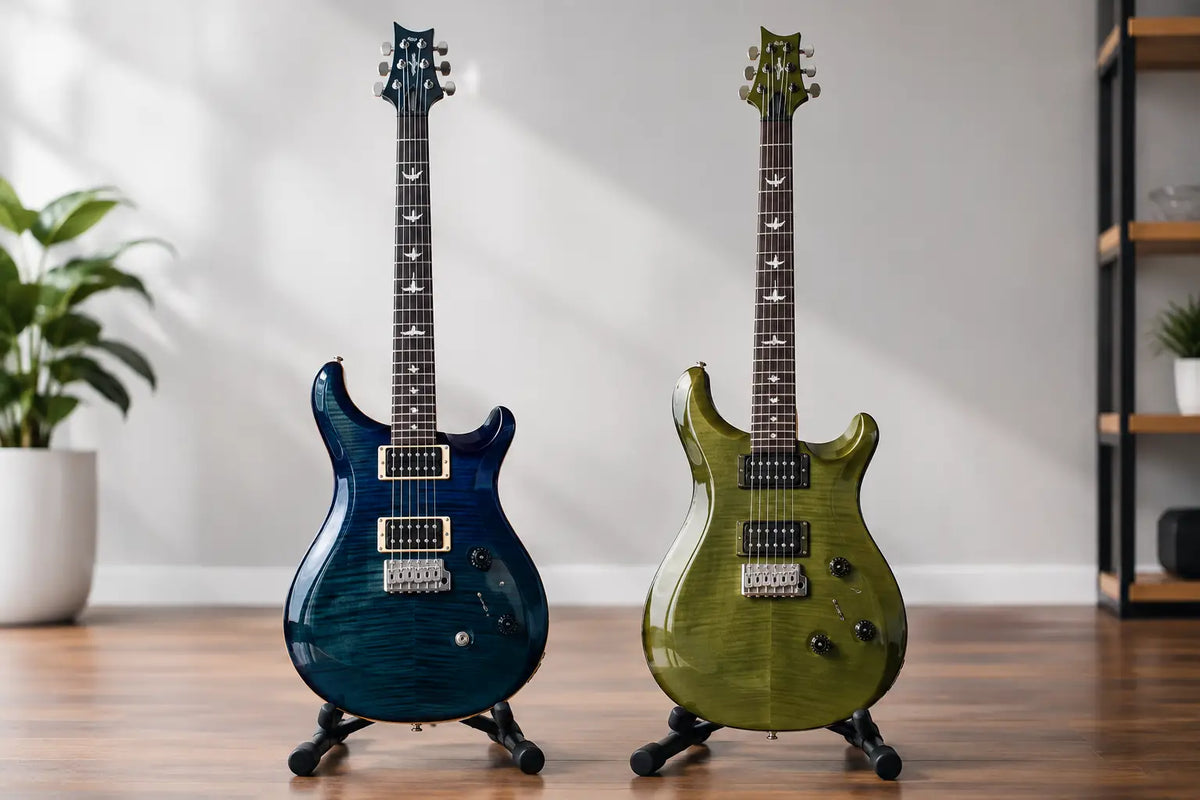
A PRS SE Custom 24 and an S2 Custom 24 can look remarkably similar on a stand. Both carry the familiar double-cut outline, carved-top styling, 25-inch scale length and a wide range of smart finishes. Plug them in, however, and the PRS SE versus S2 guitars question becomes less about the headstock logo and more about where you feel the extra money.
The straightforward answer is that SE guitars are PRS's overseas-built range, designed to put the PRS feel and design within reach of more players. S2 instruments are made in Maryland, USA, and sit between the SE and Core lines. They are not simply an SE with a higher price tag. The difference is found in the build process, components, finishing, pickups and, often, the way the guitar responds in your hands.
For some players, an SE is the sensible choice and all the guitar they will ever need. For others, an S2 has the immediacy, detail and long-term appeal that makes the step up worthwhile. Here is what to look for when choosing.
PRS SE versus S2 guitars: the key difference
An SE is built to a price point, but that does not mean cheaply designed. PRS has earned its reputation by keeping the important ingredients intact: comfortable necks, reliable tuning, handsome finishes and versatile electronics. Current SE models are predominantly built in Indonesia, while older examples may come from Korea or other PRS partner factories. Country of origin matters less than the individual guitar's condition and setup, but it can be useful context when comparing used examples.
An S2 is built at PRS's Maryland factory alongside the company's USA-made instruments. The S2 range uses production methods that make American manufacture more attainable than a Core model, including less elaborate body carving and finishing where appropriate. Yet the foundation is a USA-built PRS, with a noticeably more premium parts specification on many models.
That is why an S2 is not automatically twice as good as an SE, even when the price gap feels substantial. It is a different proposition: more American-made detail, more refined hardware and electronics, and a closer connection to the feel of a Core PRS.
Feel, build and finish
Pick up a good SE and the first impression is usually how complete it feels. The fretwork is generally tidy, the neck pocket is clean and the wide-thin or wide-fat neck shapes found across the range are familiar, playable profiles. A well-set-up SE can happily cover rehearsals, recording sessions and regular gigs.
S2 guitars tend to show their advantage in the small things. The fret ends, neck finish, nut work and overall sense of fit can feel more considered, particularly on a new or carefully looked-after example. This is not always dramatic in the first five minutes, but it can become clear over a long practice session or a full set. Notes may feel easier to control, bends may feel smoother, and the instrument can have a slightly more settled response.
Finish is also part of the equation. Many SE models use a gloss finish that is durable and visually striking, especially on flame veneer tops. S2 finishes vary by model and year, with newer guitars often using finishes intended to offer a more open, traditional feel. Do not buy solely on the finish specification, though. Two guitars with the same name can differ by production year, and personal preference counts for plenty. Some players love the glassy, polished SE look; others prefer the more understated, workhorse character of an S2.
Carved tops and body woods
The familiar PRS silhouette can conceal a meaningful construction difference. On many SE Custom models, the figured maple appearance comes from a maple veneer over a maple cap, usually paired with a mahogany body. It looks brilliant under stage lights and delivers the balanced PRS voice players expect.
S2 models generally use solid wood tops and bodies, although the exact recipe changes between models such as the Custom 24, McCarty 594, Standard and Vela. An S2 Custom 24, for example, has a carved maple top over mahogany, while an S2 Standard uses an all-mahogany body. The result is not simply better tone. It is a different tactile experience and often a little more acoustic presence before the guitar is even plugged in.
Pickups and electronics matter more than the logo
This is often the deciding factor. SE pickups are PRS-designed and made overseas. They are voiced to be versatile, covering clean pop, classic rock, modern gain and split-coil sounds without demanding a pedalboard full of corrective EQ. Recent SE models have improved enormously, and plenty of players keep the original pickups for years.
S2 guitars have increasingly benefited from USA-made PRS pickups and electronics, though specifications differ by model and production year. An S2 McCarty 594 with its vintage-leaning humbuckers is built for warmth, articulation and convincing lower-output drive. An S2 Custom 24 aims at the broader, more modern PRS sound: clear highs, tight lows and enough output for heavier work without becoming one-dimensional.
The practical difference is often clarity rather than output. S2 pickups can reveal more pick attack, separate chord voices more clearly under gain and clean up with the volume control in a more expressive way. If you mainly use high gain, a quality SE through a decent amp may get extremely close to the sound you need. If you ride the guitar's controls, record direct, or play cleaner and edge-of-breakup tones, the S2 upgrade is easier to hear.
Hardware follows a similar pattern. SE tuners, bridges and tremolos are dependable, but S2 hardware is usually a step up in precision and feel. Tremolo users may notice this most. A properly set up SE tremolo can be very stable, yet an S2 often returns to pitch with a little more confidence and has a more solid feel under the picking hand.
Which PRS suits your budget and playing?
The SE range makes a strong case for itself when you want maximum versatility per pound. An SE Custom 24 is an excellent first serious electric, a dependable backup guitar or a main instrument for a player who would rather spend the difference on an amp, lessons, effects or recording equipment. That last point matters. A modest guitar through a great amp and properly adjusted to play well will usually inspire more than an expensive guitar through an uninspiring setup.
An S2 makes sense when you are ready to buy fewer, better instruments. It is particularly attractive for working musicians who need dependable tuning and a guitar that feels familiar night after night, or for experienced players who want USA-made PRS character without moving into Core-series prices. It also has a stronger appeal to buyers who value origin, specification and resale desirability.
There is a sensible middle ground: buy the best SE you can find, then have it professionally set up. A fret polish, accurate nut adjustment, fresh strings and pickup-height setup can transform an already good guitar. If you still find yourself wanting more definition, different switching or a more premium playing feel, then an S2 is likely a genuine upgrade rather than a sideways move.
Do not overlook used examples
Pre-owned PRS guitars are well worth considering. A cared-for S2 can bring USA build quality within a more manageable budget, while a mint SE may include useful upgrades such as locking tuners, a replacement nut or upgraded pickups. Condition is crucial. Check fret wear, tremolo condition, tuning stability, neck relief and whether any modifications have been carried out cleanly.
This is where buying from a guitar shop with workshop knowledge can remove much of the guesswork. At Chordplay Guitars, a played-in instrument can be assessed as an instrument rather than just photographed as stock. For a guitar you intend to keep, that confidence is valuable.
The best choice is the one you will keep reaching for
Choose an SE if you want a brilliantly capable PRS without stretching the budget, especially if you are still discovering your sound or need one guitar to cover a lot of ground. Choose an S2 if the American build, upgraded components and more refined response genuinely make you want to play more.
The sensible test is not whether an S2 is objectively superior. In many details, it is. The better question is whether those details matter to your hands, your amp and your music. Spend time with both if you can, play them clean as well as loud, and pay attention to the guitar you are reluctant to put back on the stand.
Share:
Fender Guitar Review: Which One Suits You?
A Practical Guide to Buying Vintage Basses