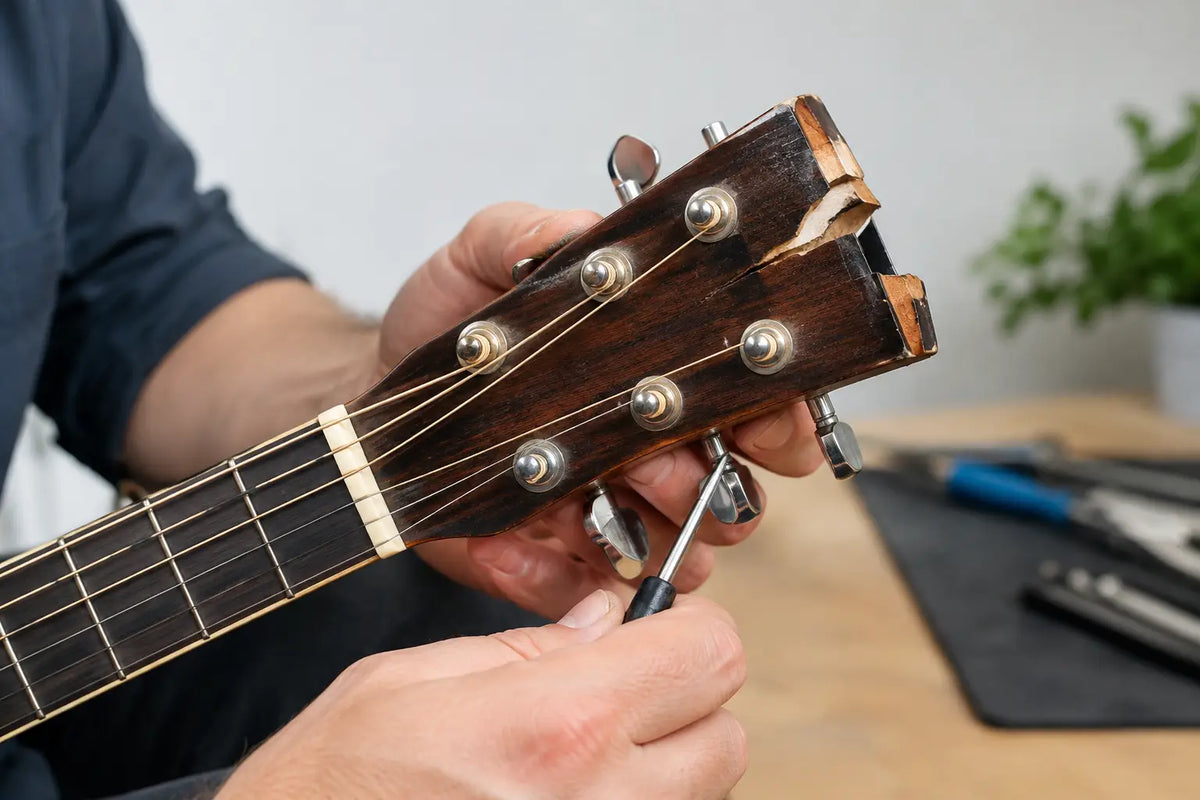
A guitar falling from a stand is one of those sounds no player forgets. The break is often sudden, dramatic and upsetting, especially when it involves a favourite Gibson-style instrument, a treasured vintage acoustic or the guitar you have played every weekend for years. The good news is that professional headstock repair is often far more successful than the break first suggests.
A snapped headstock does not automatically mean a guitar is finished. With the right assessment, careful clamping and proper structural work, many broken instruments return to regular playing life with excellent tuning stability, strength and feel. The key is acting calmly, avoiding quick fixes and getting the guitar examined before any pieces are lost or damaged further.
Why headstocks break so easily
The headstock is the part of the neck that holds the machine heads and anchors the strings. It also carries a great deal of pull. On a six-string guitar, string tension can place well over 100 pounds of force across the neck and headstock area. Most instruments handle that force comfortably, but a sharp impact can expose the weakest point in the design.
Angled headstocks are particularly vulnerable. Many Gibson, Epiphone, Gretsch and similar designs use a tilted headstock, creating a short-grain area just behind the nut. If the guitar drops backwards in its case, falls from a stand or takes a knock during transport, the leverage at that angle can cause the wood to crack or shear.
That does not mean a flat-headstock guitar cannot break. Fender-style necks can suffer damage around the nut, machine head holes or fingerboard, while acoustic guitars may crack through a volute or along the neck joint. The construction, timber, age of the instrument and direction of impact all matter.
The first hour after a break matters
If a headstock has snapped, resist the urge to glue it immediately. Household adhesives, excess glue and poorly aligned clamps can make a later professional repair more difficult, more costly and less tidy. A repairer needs clean wood fibres and a properly matching break to create the strongest possible joint.
First, slacken the strings if they are still under tension and can be safely released. Keep every loose piece of wood, veneer, binding or finish chip in a small container or sealed bag. Do not sand the break, pick at splinters or attempt to make the surfaces look neat.
Place the guitar somewhere stable and dry, away from radiators, direct sunlight and busy corners of the house. If it needs transporting, support both the neck and body inside a hard case where possible. A folded towel can prevent the instrument moving about, but do not put pressure directly on the damaged headstock.
What a professional headstock repair involves
No two breaks are quite alike, so a good workshop begins with an inspection rather than a one-price-fits-all answer. The repairer will look at the direction of the break, how much clean wood-to-wood contact remains, whether the truss rod area is involved, and whether there are missing fragments or previous repairs.
A clean, fresh break with interlocking wood fibres can be surprisingly favourable. When the two surfaces fit tightly back together, a quality wood glue can form an exceptionally strong bond. The difficult part is aligning everything precisely before clamping, ensuring the neck angle, nut position and string path are all correct.
The joint is carefully prepared, glued and clamped using shaped cauls that spread pressure without marking the finish. After adequate curing time, the repairer checks alignment and stability before carrying out any further work. This may include cleaning up the join, touching in damaged finish, replacing a nut, refitting machine heads and completing a full setup.
Where the break is more severe, reinforcement may be sensible. Splines, small sections of hardwood set into routed channels, can add strength across the repair. A backstrap repair may also be used where there is significant material loss or a break in a high-stress area. These approaches involve removing and refinishing more wood, so there is a trade-off between visual discretion and long-term reinforcement.
Structural repair versus cosmetic repair
A structurally sound repair and an invisible repair are not the same thing. A clean break on a solid-colour instrument can often be blended very effectively. On a natural mahogany neck, a high-gloss vintage finish or a figured headstock veneer, some evidence may remain even after excellent work.
That should not be confused with poor workmanship. The first priority is a safe, stable guitar that holds tune and plays properly. Cosmetic work can make a huge difference, but it adds workshop time and cost. For a working musician, a neat structural repair and setup may be the right decision. For a collector-grade instrument, a more detailed finish restoration can be worth discussing.
Can a repaired guitar still be trusted?
In many cases, yes. A professionally repaired headstock can be reliable enough for rehearsals, recording, gigs and everyday playing. Plenty of well-loved instruments with historic repairs remain in active use. Once the repair has cured fully and the guitar has been properly set up, the neck should be assessed under normal string tension rather than judged by appearance alone.
There are exceptions. A break that runs through the truss rod channel, destroys a large amount of wood or has been badly glued in the past can require more involved work. Very inexpensive guitars may not always justify an extensive cosmetic restoration, although a sensible structural repair can still make perfect practical sense if the instrument plays well or has sentimental value.
For vintage, rare and higher-value guitars, the conversation is different. Any headstock break generally affects resale value, even if the repair is superb. Buyers of collector instruments expect clear disclosure and photographs. Yet a properly repaired rare guitar can still be a brilliant player, and often represents a more accessible way into an otherwise costly model.
How long does headstock repair take?
The glue itself needs proper curing time. Rushing this stage to get a guitar back on the wall quickly is false economy. Once the joint is stable, the repair may need levelling, finish work, nut attention and a setup, each of which has its own timescale.
A straightforward structural repair can sometimes move through the workshop relatively promptly, but finish matching, lacquer curing and busy seasonal workloads can extend the process. Ask for an honest estimate after inspection rather than relying on a generic turnaround. The right workshop will explain what is being done, why it is needed and where the costs sit.
Preventing the next accident
Most headstock breaks happen during ordinary life, not on stage in some rock and roll disaster. A guitar leaning against a sofa, perched on an unstable stand or loosely packed for a car journey is at risk. A decent fitted hard case is the best protection for transport, particularly for angled-headstock guitars.
At home, use a stable stand with secure neck support, positioned away from doorways, pets and children. If the guitar is not being played regularly, keep it in its case. Check that the case does not allow the headstock to float unsupported or press tightly against the lid. Changes in temperature and humidity will not usually snap a headstock on their own, but they can stress timber and finishes, so avoid lofts, damp garages and spots beside radiators.
Choosing the right workshop
A headstock repair deserves more than a quick quote from a photograph. Photos are useful for an initial conversation, but the guitar needs to be inspected in person before the full scope of work is confirmed. Look for a repairer who is clear about structural options, potential cosmetic results and the effect on value.
At Chordplay Guitars, the workshop approach is practical and player-focused: assess the instrument honestly, recommend the work that suits its condition and value, then return it ready to be enjoyed rather than merely displayed. That may mean a sympathetic repair on a cherished first guitar or careful restoration planning for a rare, vintage piece.
If you are holding a guitar with a broken headstock, keep the pieces safe and let a skilled repairer see the full picture. The instrument may carry a scar afterwards, but that does not stop it becoming the guitar you reach for again and again.
Share:
Guitar Resale Trends UK Players Should Know
Gretsch Guitar Review: Which One Suits You?