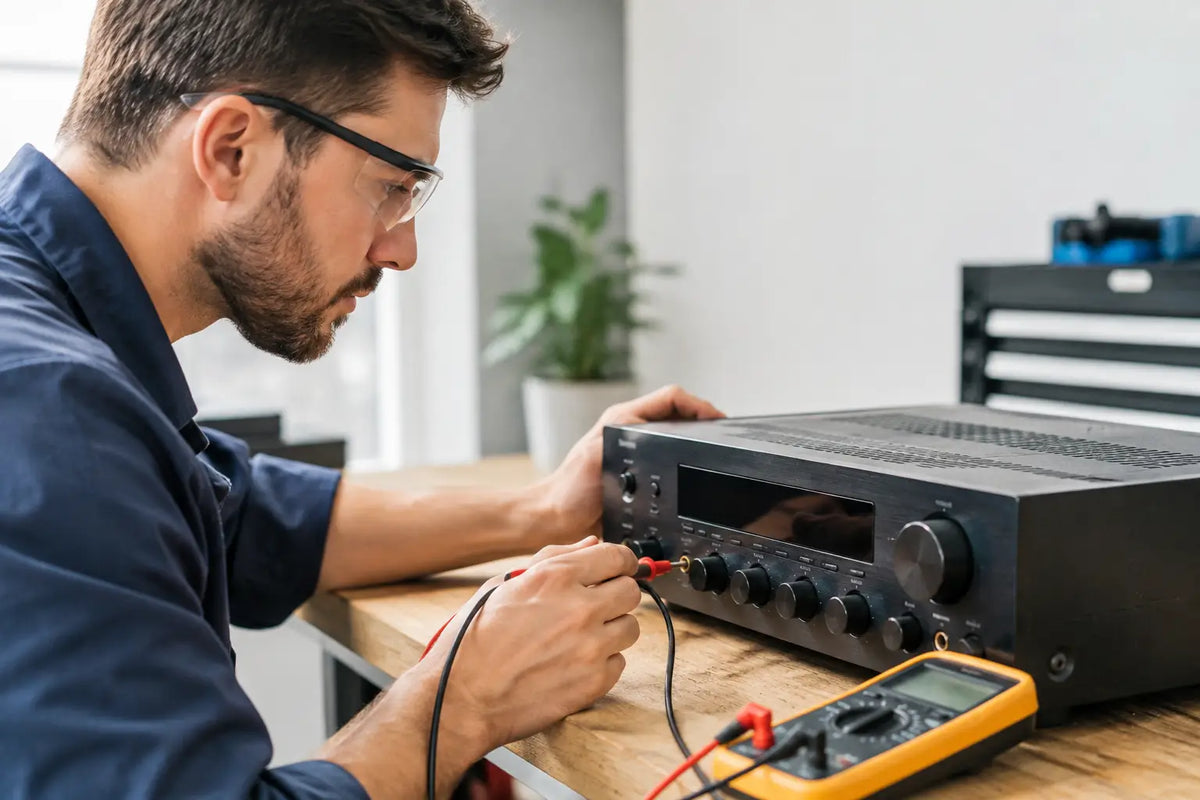
A second-hand amplifier can be the best value on the shop floor - a well-run-in valve combo, a discontinued solid-state classic, or a properly loud head with character already built in. But used amplifier testing is not simply a case of switching it on, hearing a chord and calling it good. An amp can sound brilliant for thirty seconds and still reveal a noisy control, tired valve or intermittent jack once it has warmed up and been used properly.
For players, that is the difference between buying exciting gear with confidence and inheriting somebody else’s problem. For a retailer, it is the difference between putting a great piece of equipment in front of a customer and hoping for the best. Here is what meaningful testing looks like, why it matters, and what you can check yourself when trying a pre-owned amp.
Used Amplifier Testing Starts Before the First Note
The first checks are practical ones. Is the cabinet structurally sound? Are the corners, handle, grille cloth, feet and control panel secure? Does the mains lead look safe and appropriate? A bit of road wear is normal, especially on older gigging amps, and a scuff on the tolex will not alter the sound. A split cabinet joint, loose baffle or damaged control panel deserves closer attention.
Then there is the basic specification. The amp should be identified correctly, including its model, speaker configuration, power rating and, where relevant, valve layout. This matters because replacement speakers, changed valves and modified circuitry can be either a useful upgrade or something a buyer should understand before committing. Originality carries extra weight on collectible British, American and Japanese-made amplifiers, while a sensible service upgrade may be exactly what a working musician wants.
Condition should be described honestly. “Good used condition” ought to mean more than “it turns on”. A properly assessed amp may show cosmetic marks while being electrically sound and ready to play. Equally, a near-mint cabinet should not distract from a crackling pot or an output that drops away after ten minutes.
Listening for Problems, Not Just Great Tone
An amplifier needs time to warm up. This is particularly true of valve models, where a fault may not show itself immediately. Testing should include a period at idle, followed by playing at low, medium and sensible gigging levels where the amp allows it. The goal is not merely to prove that sound comes out, but to see whether it stays stable.
At idle, listen for excessive hum, buzz, hiss, crackles and random pops. No amplifier is perfectly silent, especially a high-gain valve design, and single-coil guitars can add their own background noise. What matters is whether the noise is reasonable for that model and whether it changes unexpectedly when controls are moved or the amp warms up.
A clean channel should remain clear as intended, while a drive channel should respond consistently rather than cutting in and out. Play single notes, open chords and sustained notes. Listen for rattles that could point to a loose valve, cabinet hardware or speaker issue. Switch pickups and try more than one guitar if possible, because a guitar with a scratchy volume pot or weak lead can easily be mistaken for an amplifier fault.
Volume testing needs common sense. Nobody needs to flatten the showroom to establish that a 100-watt stack works, but an amp should be exercised enough to reveal issues that only appear under load. A speaker that sounds fine at bedroom volume may buzz or distort harshly once it starts moving air.
Controls, switches and connections
Every front-panel control deserves a turn. Gain, volume, EQ, reverb, presence, master volume and channel controls should operate predictably across their range. Slight crackle from a control that has sat unused can sometimes clear with careful movement or cleaning, but persistent scratching, dead spots or sudden level jumps need investigating.
Switches should be tested repeatedly: standby, channel select, boost, bright, voicing options and built-in effects. On amps supplied with a footswitch, that footswitch should be checked too. It is frustrating to take home a two-channel amp and discover that the channel switching only works from the panel, or only works intermittently.
Inputs and outputs are equally important. A proper check includes the guitar input, effects loop send and return where fitted, headphone output, line out, external speaker sockets and footswitch jack. Effects loops can be overlooked, yet a faulty return jack can make an amp appear dead or weak. External speaker outputs must also be treated carefully: incorrect impedance pairing can damage an amplifier, particularly a valve head.
Valves, Speakers and the Parts That Tell the Story
Valve amps deserve a little extra attention, not because they are unreliable by nature, but because valves are consumable components. A healthy set can last a long time. A tired preamp valve may cause hiss, microphonic ringing or inconsistent gain; worn power valves may lead to weak output, strange distortion, loss of volume or red-plating in serious cases.
Visual inspection can help, but it is not a full diagnosis. Valves should not be handled carelessly or removed without a reason. The useful question is whether the amp sounds stable, performs as it should, and shows signs of having been maintained. If an amp has recently been serviced or revalved, that is valuable information, but the quality of the work matters more than a vague claim that it has been “looked at”.
Speakers are central to an amp’s voice. Check that the correct speaker is fitted, that mounting screws are secure, and that the cone has no obvious damage. A replacement speaker is not automatically bad news. Plenty of players deliberately fit Celestion, Jensen, Eminence or other alternatives to shape the response of an amp. It simply needs to be disclosed accurately, along with the impedance and the reason it suits the amp.
For combo amps, listen for cabinet resonance and speaker rattle on low notes. For heads and cabs, check the speaker cable as well as the cabinet itself. A guitar lead is not a substitute for a proper speaker cable.
Why Professional Checks Are Worth It
Private sales can uncover genuine bargains, especially when you know exactly what you are looking at. They also put the burden of inspection, safe transport and any future repair squarely on the buyer. That can be a fair trade-off for an experienced technician buying a project, but it is less appealing when you need a dependable amp for rehearsal next week.
A specialist retailer has the chance to assess an amplifier before it is offered for sale, describe its condition clearly and deal with issues found during testing. At Chordplay Guitars, that musician-first approach matters whether the amp is a tidy first practice combo or a rare vintage valve piece with a story behind it. A good used amp should be judged on performance and condition, not just the badge on the grille.
There is still room for judgement. An older amplifier may have a little more background hiss than a modern digital model, and that may be completely normal. A vintage amp with original components may be more collectable, while a working player may prefer one that has been serviced with reliable modern parts. Neither choice is automatically better. It depends on whether you are chasing originality, a particular sound, everyday reliability, or all three.
What to Ask When You Try a Used Amp
Ask how the amp has been tested and whether any work has been carried out. Find out whether the speaker is original, whether valves have been changed, and whether a footswitch, cover or original paperwork is included. For a higher-value vintage model, ask about modifications and whether any original parts are retained.
When you are in the showroom, bring your own guitar if you can. It is the quickest way to hear how the amp responds to your pickups, playing touch and pedals. Take a few minutes with the controls rather than trying to recreate a full gig in one loud minute. You are listening for consistency: a clean signal, usable controls, stable volume and a feel that makes you want to keep playing.
The right pre-owned amplifier should have more than a tempting price tag. It should feel like a piece of gear you can take to the next rehearsal, session or stage without wondering what will happen when the first chord rings out.
Share:
What Your Guitar Setup Price Really Covers
Boss Katana Review: Still Worth Buying in 2026?