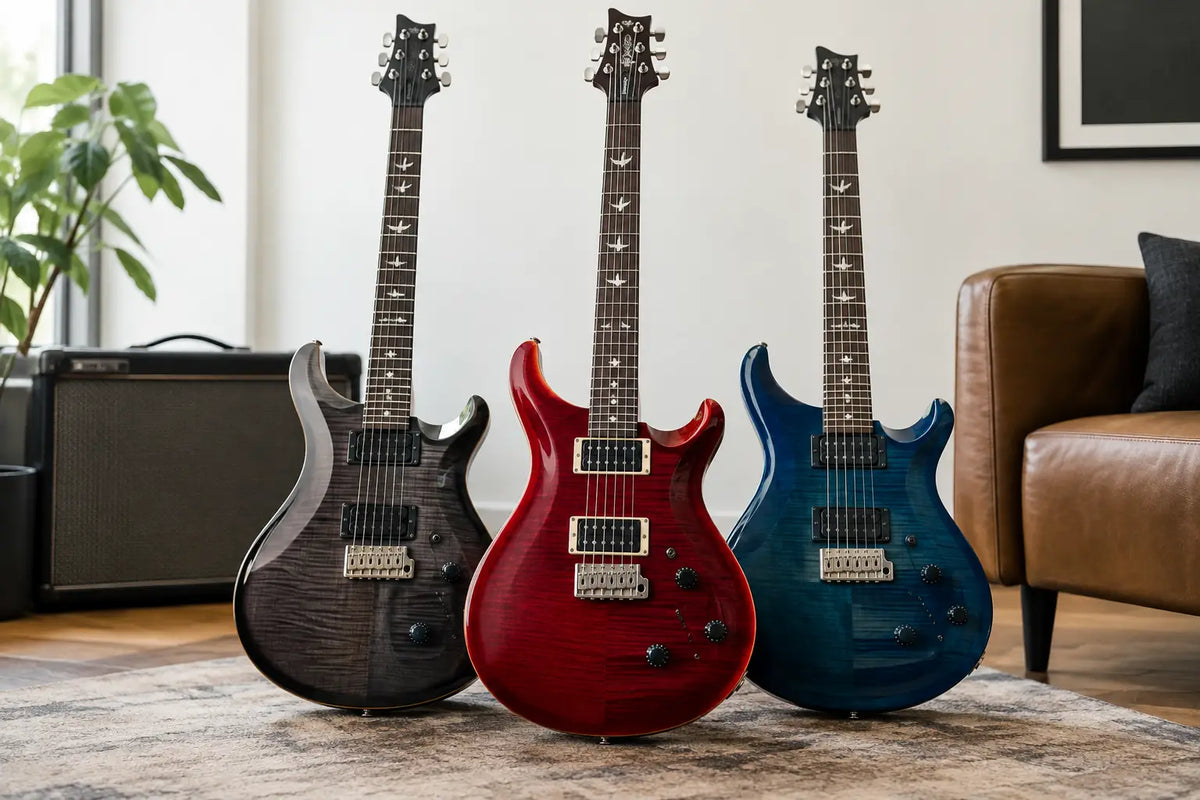
A PRS SE guitar is often the instrument that makes a player stop thinking of PRS as an aspirational name on a showroom wall and start thinking, "I could genuinely gig this." That is the real point of this PRS SE review. These are not budget guitars wearing a premium logo. At their best, they are properly capable working instruments with a recognisable PRS feel, strong specifications and enough model choice to suit players far beyond the first upgrade stage.
The important question is not simply whether an SE is good. Most are. The better question is which SE suits the way you play, and whether its character is what you want from a guitar.
What the PRS SE range gets right
PRS has spent years refining the SE formula, and it shows in the fundamentals. The neck pockets are generally tidy, frets are usually well finished, tuners feel dependable and the guitars tend to arrive with a level of consistency that makes trying one a pleasure rather than a gamble. Production takes place overseas, but the design language and quality control are unmistakably PRS.
The feel is a major part of the appeal. A typical PRS SE sits comfortably against the body, balances well on a strap and gives easy access high up the neck. The familiar double-cut shape is practical, not just handsome. Players coming from a Les Paul may appreciate the lighter, more contoured body; players used to a Strat-style guitar may enjoy the shorter-scale response and fuller humbucker sound.
There is also a lot of guitar for the money. Features once reserved for far dearer instruments - figured maple veneers, set necks, coil-splitting, quality vibratos and attractive binding - appear throughout the SE catalogue. They look smart under stage lights, but more importantly, they are built to be picked up and played regularly.
That said, an SE should not be judged as a discounted USA Core model. The woods, hardware, finishing process and final detail work are not identical, and they are not meant to be. Think of the SE range as its own well-considered family: affordable enough to be realistic, refined enough not to feel like a compromise.
PRS SE review: sound, feel and real-world value
Most PRS SE models use humbuckers voiced for clarity as well as output. That is a sensible choice for a guitar expected to cover rehearsal rooms, pub stages, worship sets, recording sessions and a wide mix of home playing. With gain, they deliver a focused midrange, firm low end and enough cut to avoid becoming woolly in a band mix. Clean tones are usually rounded and articulate rather than harsh.
The coil-split settings deserve sensible expectations. They can give useful brighter textures and make a two-humbucker guitar more flexible, but they do not turn an SE into a true single-coil Fender-style instrument. There is still a little humbucker weight and compression beneath the sound. For many players, that is exactly the attraction: one guitar that can move from indie rhythm work to classic rock lead tones without a pedalboard full of solutions.
Pickup preference remains personal. Some players find the stock pickups excellent and never feel a need to change them. Others, especially those chasing very low-output vintage tones, modern metal tightness or the raw edge of a P-90, may eventually swap them. That is not a criticism. Pickup changes are common on guitars at every price point, and an SE is a solid enough platform to reward personalising.
The same applies to setup. Even a beautifully made guitar can benefit from a professional once-over after shipping, seasonal changes or a change in string gauge. A good setup can make the difference between a guitar that is merely good and one you reach for first. It is worth checking the nut slots, neck relief, fretboard condition, intonation and tremolo balance rather than assuming any new instrument is automatically perfect for your hands.
Which PRS SE model should you choose?
The SE Custom 24 is the all-rounder. Its 24 frets, versatile switching and comfortable double-cut body make it an easy recommendation for players who need one electric guitar to handle a broad setlist. It is particularly strong for modern rock, pop, blues-rock, funkier clean sounds and lead playing where upper-fret access matters.
The SE McCarty 594 is the better bet for players drawn to a more traditional, vintage-leaning voice. Its shorter scale length, fuller neck feel and dual volume and tone controls invite a different style of playing. It suits classic rock, blues, roots music and players who enjoy working the guitar's controls instead of relying entirely on pedals. If you love the idea of a single-cut guitar but want a little more comfort and tuning stability than some traditional designs offer, it is well worth a look.
The SE DGT models lean into feel and dynamics. They are designed with expressive playing in mind, responding well to pick attack and volume-knob changes. They are not necessarily the obvious choice for a first electric, but for a player who wants to hear more of their touch in the sound, they can be seriously rewarding.
For those watching the budget closely, the SE CE 24 Standard Satin models make plenty of sense. The satin finish and all-mahogany construction give them a more straightforward look, but the core PRS ergonomics and switching remain. They are ideal for a dependable rehearsal, gigging or modding guitar, especially if flashy figuring is less important than a lively instrument that feels right.
Then there are the more specialised choices. Semi-hollow SE models bring extra air and warmth without becoming difficult at sensible stage volume. The SE Silver Sky offers a PRS take on the bolt-on, three-single-coil format. Baritone options suit lower tunings without turning the string tension to mush. There is no single best PRS SE - only the one that matches your hands, amplifier and music.
The trade-offs to know before buying
An honest review needs to cover the compromises. SE hardware is good, but it does not always feel as substantial or as finely engineered as higher-end PRS hardware. The tremolo systems are smooth and musical when properly set up, though frequent extreme whammy use may justify careful maintenance or a later upgrade. Finishes are impressive at the price, but close inspection will not reveal the same depth of carve or hand-finished detail found on far more expensive instruments.
Neck shape also matters more than online specifications can suggest. PRS offers several profiles across the SE line, from slimmer, faster-feeling options to chunkier vintage-inspired shapes. A neck that one guitarist calls perfectly substantial may feel too full to another. If possible, spend time with the instrument standing up with a strap, not only sat down for five minutes.
Weight can vary too. Two guitars with the same model name and finish may not feel identical, particularly where wood is involved. That is why an in-person visit can be valuable, and why buying from a guitar shop that can answer practical questions about condition, weight and setup gives useful peace of mind.
Are PRS SE guitars good for beginners?
Yes, with one qualification: they are often better described as first serious guitars than entry-level starter instruments. A complete beginner can absolutely learn on an SE, and the easy playability may encourage more practice. However, if the budget is tight, it can be smarter to buy a more modest guitar and amplifier package, then upgrade once playing habits and musical tastes become clearer.
For a committed learner, an SE can remove many of the frustrations associated with cheaper instruments. Stable tuning, comfortable fretwork and dependable electronics mean more time playing and less time fighting the guitar. It is also a guitar you are unlikely to outgrow quickly.
The verdict for UK players
PRS SE guitars earn their reputation because they feel like instruments designed by people who understand what working players need. They are attractive without being fragile, versatile without becoming bland and polished without losing the fun of plugging in and making a racket.
The Custom 24 remains the safest all-purpose choice, while the McCarty 594, DGT, Silver Sky and specialist models reward a clearer idea of your sound. Try more than one if you can, pay attention to neck profile and weight, and budget for a setup tailored to your preferred strings and action.
A good PRS SE should make you want to stay for one more song. If you are choosing one from Chordplay Guitars, that is the test worth trusting - not the logo, the spec sheet or the finish alone, but whether it feels like your guitar the moment it is in your hands.
Share:
Fender Stratocaster versus Telecaster Guitars
Can Old Guitars Be Restored? What to Check