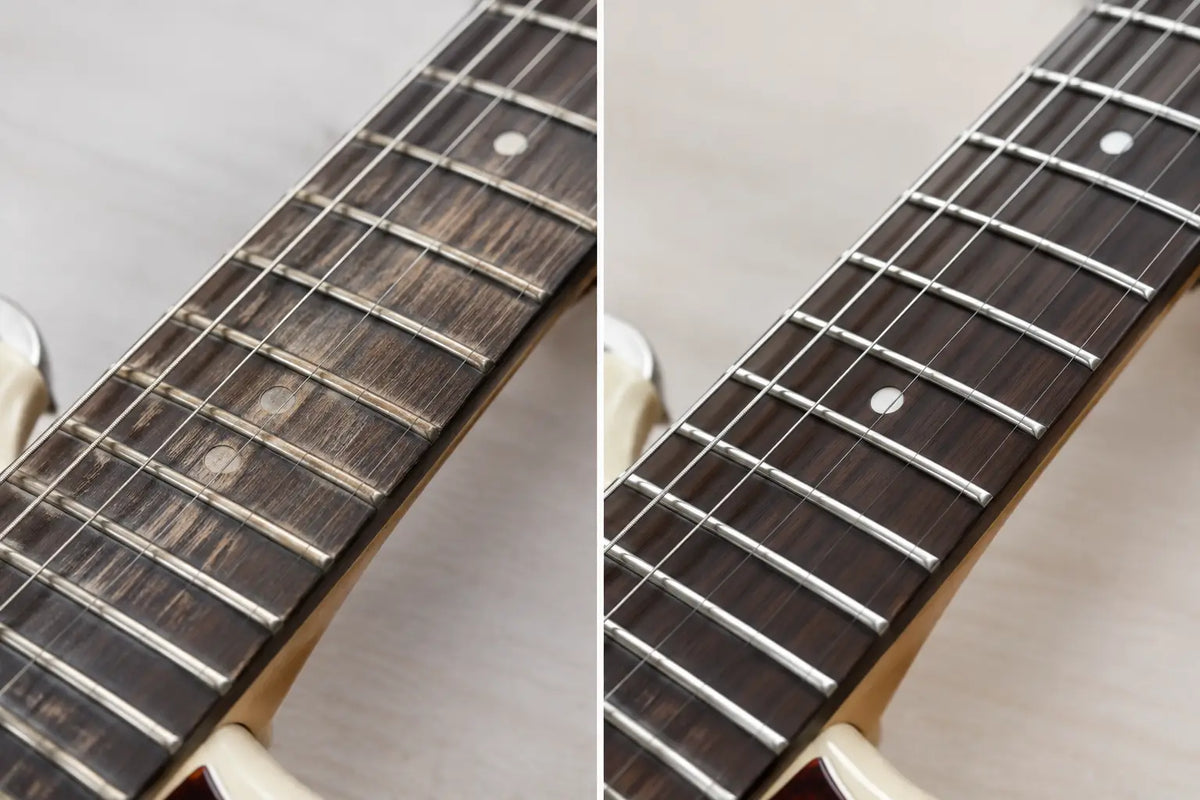
A refret before and after comparison can be one of the most satisfying transformations in guitar maintenance. The instrument may look almost unchanged at first glance, yet feel completely different under your hands: cleaner bends, more reliable intonation, lower action without choking out and far less fight from the fretting hand. For a well-loved guitar with worn frets, it can bring back the reason you picked it up in the first place.
But a refret is not simply a case of pulling old wire out and fitting new wire in. It is detailed workshop work, and the result depends on the neck, fretboard, fret choice and the quality of the preparation. Done properly, it can give a great guitar many more years of proper playing. Done when unnecessary, or without considering the wider condition of the instrument, it can be money spent in the wrong place.
What worn frets look and feel like
Frets do not usually wear evenly. The first few positions take the brunt of open chords, riffs and repeated bends, while a player who favours certain scales may create noticeable grooves farther up the neck. On a maple fretboard, worn spots can be especially easy to see. On rosewood, ebony or pau ferro, you may feel them before you spot them.
The common signs are flattened fret crowns, small dents beneath the plain strings, buzzing that appears in particular positions and notes that sound dull or die when bent. You might also find that the guitar only behaves with a higher action than you would normally choose. That is often the frustrating part: the setup has been adjusted as far as it reasonably can, but the fret tops are no longer giving the strings a consistent surface.
Do not assume every buzz means a refret is needed. Changes in humidity, a neck that needs a small relief adjustment, a loose nut slot or one high fret can produce similar symptoms. A decent inspection should establish the cause before anyone reaches for the fret pullers.
Refret before and after: the changes that matter
The most obvious difference after a successful refret is the feel. Fresh frets have a clean, rounded crown, so strings move smoothly when you bend or add vibrato. Chords can feel more accurate because the string meets the fret at a clear, consistent point rather than sitting against a flattened patch.
Playability is where most of the value lies. With the neck correctly assessed, the fretboard levelled where appropriate and the new frets levelled, crowned and polished, a guitar can often accept a more comfortable action. That does not mean every refretted guitar should be set ultra-low. A heavy-handed player, a vintage-style radius or a guitar used for aggressive bends may need a little more room. The right setup is the one that suits how you actually play.
Intonation can improve too, particularly when old frets are badly flattened. There is a limit, though. A refret cannot cure a poorly positioned bridge, a twisted neck or a fundamentally awkward design. It improves the playing surface. It does not rewrite the geometry of the guitar.
Visually, the change can range from subtle to dramatic. Nickel-silver fretwire begins bright and gradually takes on a softer, played-in look. Stainless steel tends to stay bright for far longer and is extremely resistant to wear. It also feels very slick to many players. Others prefer the familiar feel and slightly softer character of traditional nickel-silver wire. Neither choice is automatically better - it depends on the guitar and the player.
When a fret dress is enough
A full refret is not always the first answer. If the frets still have enough height, a fret level, crown and polish can remove shallow dents and restore an even playing surface. It is a more economical option and preserves the original frets, which may matter on certain vintage or collector instruments.
The trade-off is simple: levelling removes material. If the frets are already low, levelling them further can leave a guitar feeling cramped and make future work more limited. Very deep grooves may also require removing more height than is sensible. At that point, new frets are often the better long-term repair.
A workshop should measure rather than guess. A guitar that looks heavily played may only need a tidy fret dress, while a clean-looking instrument can have low frets that have already been dressed several times over the years.
What happens during a professional refret
The process starts with the neck and fretboard, not the new wire. The technician checks neck relief, fret height, fingerboard condition, nut condition and any signs of movement around the frets. On an older guitar, this assessment is particularly important. A refret can expose issues that worn frets had been disguising.
The old frets are carefully removed to minimise chipping, especially on finished maple boards and brittle older fretboards. The slots are cleaned and checked, and the board may be levelled if required. This is a crucial judgement call. The aim is to create a sound foundation while preserving as much original material and character as possible.
New fretwire is then selected to suit the instrument. Width and height affect feel more than many players expect. Tall, narrow wire can make a light touch feel fast and precise, while wider medium-jumbo wire is a popular all-round choice for electric guitars. A vintage-spec instrument may call for lower, narrower wire to retain its period feel. The best choice is not always the biggest wire available.
After installation, the frets are trimmed, levelled, crowned and polished. The nut may need attention because new fret height changes the relationship between open strings and the first fret. Finally, the guitar receives a proper setup with fresh strings: relief, action, intonation and pickup height are all checked. The setup is what turns excellent fretwork into a guitar that is ready to play.
Fretwire choices and their trade-offs
Nickel-silver is the traditional choice, despite the name containing no silver in the usual sense. It is easy to work with, feels familiar and suits the majority of electric, acoustic and bass guitars. It will wear with use, especially under players who bend hard or use heavier strings, but it can also be dressed in the future.
Stainless steel costs more to fit because it is much harder on tools and takes longer to finish well. In return, it offers exceptional durability. For a gigging guitar that sees constant use, that can be a very sensible investment. Some players feel it produces a slightly brighter attack, though pickup choice, amp settings, strings and playing touch have far more influence on the final sound.
Gold EVO-style wire sits between the two in hardness and offers a distinctive gold appearance. It can look fantastic on the right guitar, but it is not a default upgrade for every instrument. On a classic vintage piece, an obviously non-original fretwire choice may affect collector appeal.
Will a refret affect value?
For a regularly played modern guitar, a professional refret can make it easier to sell and more enjoyable to own. Buyers value clean, healthy frets because they know they are not immediately facing workshop costs. A worn-out neck can put off even a keen buyer, particularly on an otherwise desirable instrument.
Vintage and collector guitars need more thought. Original frets carry historical value, especially if they remain playable. However, a guitar with frets worn down to almost nothing is not necessarily more desirable simply because they are original. A carefully documented, sympathetic refret using appropriate wire can be the right decision and may protect the instrument from being left unplayed in its case.
If resale matters, keep workshop paperwork and be clear about the work carried out. Honest condition information is always better than leaving the next owner to discover it later.
Getting the best result from your refret
Before booking the work, think about the guitar you want when it comes back. Tell the technician how you play, what strings you use, whether you favour low action, how much you bend and whether the guitar is mainly for home, studio or stage use. A Telecaster used for punchy rhythm work may want a different setup from a superstrat built for wide bends and fast lead lines.
Bring the instrument in as you normally play it where possible. Your string gauge, tuning and even capo use all help inform the final setup. At Chordplay Guitars, the useful conversation is often as important as the repair itself: a good refret should suit the musician, not just meet a generic measurement.
A refret should leave you wanting to play more, not worrying about the work that has been done. If your guitar still has the neck profile, pickups and character you love but its frets are holding it back, fresh fretwire may be the most meaningful upgrade it can receive.
Share:
How to Restring Locking Tuners Without Fuss
What Your Guitar Setup Price Really Covers